


A Biocompatible Alkene Hydrogenation Merges Organic Synthesis with Microbial Metabolism**
Supporting Files

-
7 21 2014
File Language:
English
Details
-
Alternative Title:Angew Chem Int Ed Engl
-
Personal Author:
-
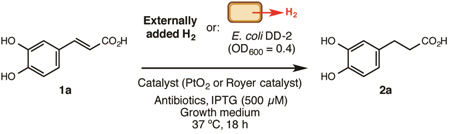
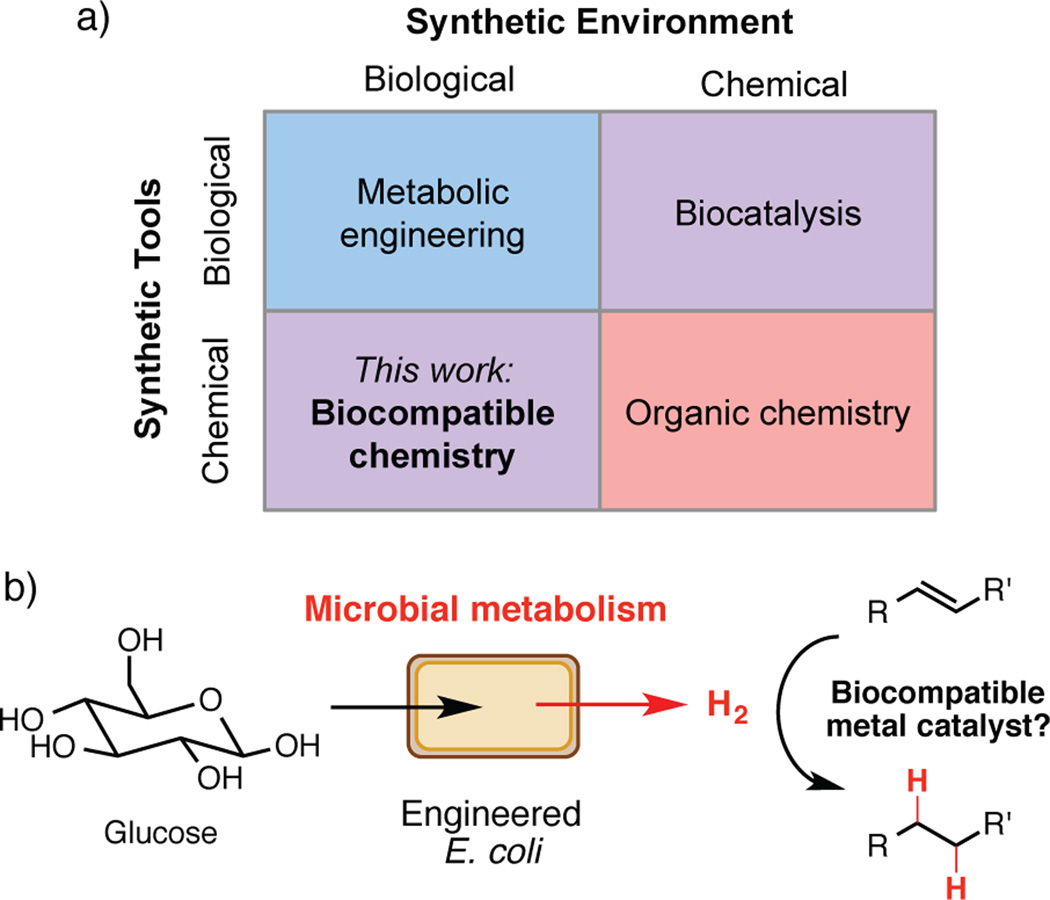
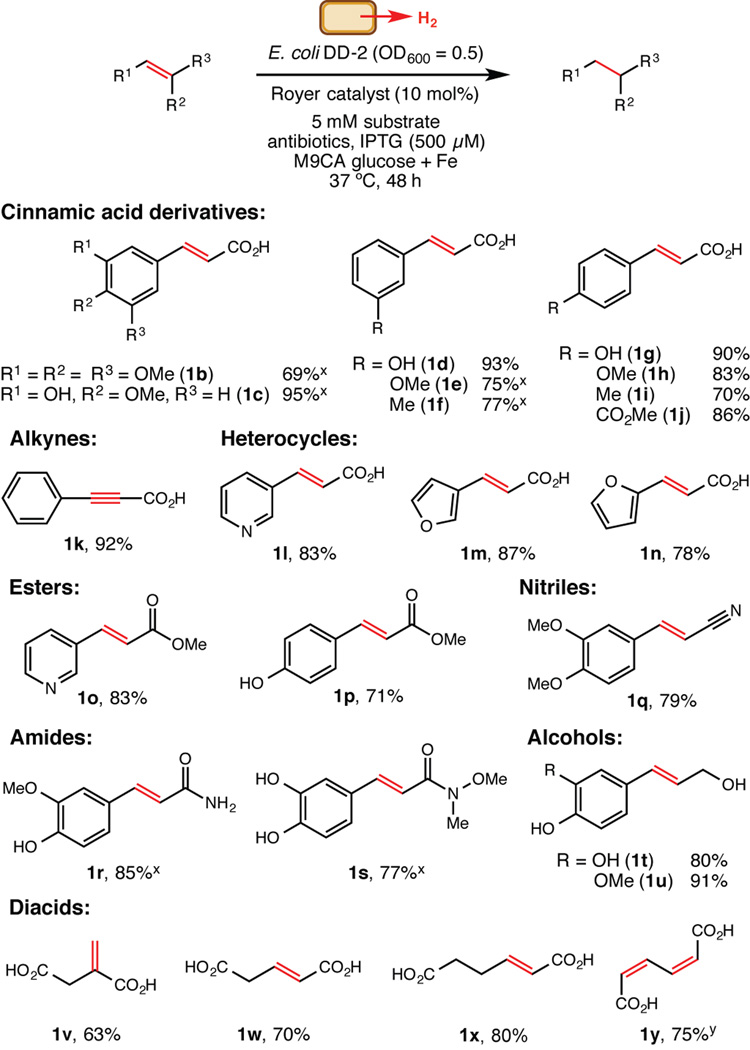
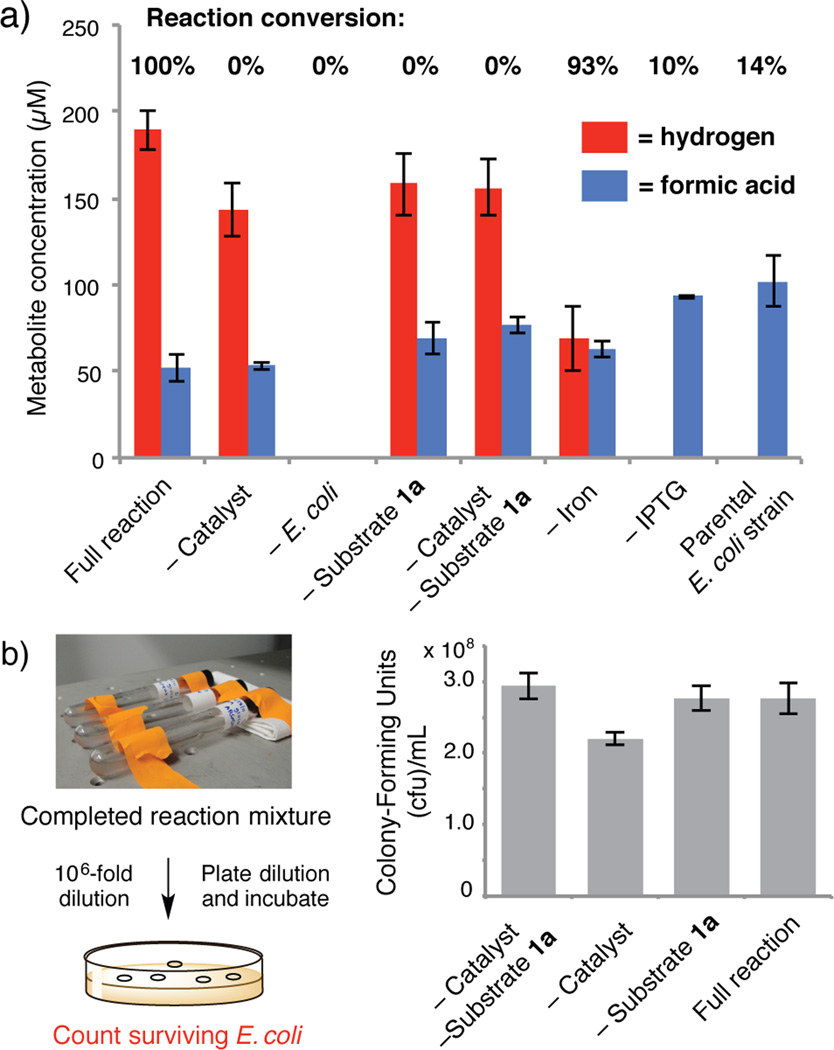
Description:Organic chemists and metabolic engineers use orthogonal technologies to construct essential small molecules such as pharmaceuticals and commodity chemicals. While chemists have leveraged the unique capabilities of biological catalysts for small-molecule production, metabolic engineers have not likewise integrated reactions from organic synthesis with the metabolism of living organisms. Reported herein is a method for alkene hydrogenation which utilizes a palladium catalyst and hydrogen gas generated directly by a living microorganism. This biocompatible transformation, which requires both catalyst and microbe, and can be used on a preparative scale, represents a new strategy for chemical synthesis that combines organic chemistry and metabolic engineering.
-
Subjects:
-
Keywords:
-
Source:Angew Chem Int Ed Engl. 2013; 53(30):7785-7788
-
Pubmed ID:24916924
-
Pubmed Central ID:PMC4127630
-
Document Type:
-
Funding:
-
Volume:53
-
Issue:30
-
Collection(s):
-
Main Document Checksum:urn:sha256:661c95e5865dd25405eb6e7317d0c6002be9060f2ca7b7fd86df1637be4db629
-
Download URL:
-
File Type:
 [PDF
- 952.69 KB
]
[PDF
- 952.69 KB
]
Supporting Files


File Language:
English
ON THIS PAGE


CDC STACKS serves as an archival repository of CDC-published products including
scientific findings,
journal articles, guidelines, recommendations, or other public health information authored or
co-authored by CDC or funded partners.
As a repository, CDC STACKS retains documents in their original published format to ensure public access to scientific information.
As a repository, CDC STACKS retains documents in their original published format to ensure public access to scientific information.
You May Also Like
COLLECTION
CDC Public Access