



Discovery of Cryptic Polyketide Metabolites from Dermatophytes using Heterologous Expression in Aspergillus nidulans
Supporting Files

-
11 15 2013 ; 11-15-
-
Available in CDC Stacks on 2014-11-15T00:00:00Z
File Language:
English
Details
-
Alternative Title:ACS Synth Biol
-
Personal Author:
-
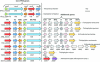
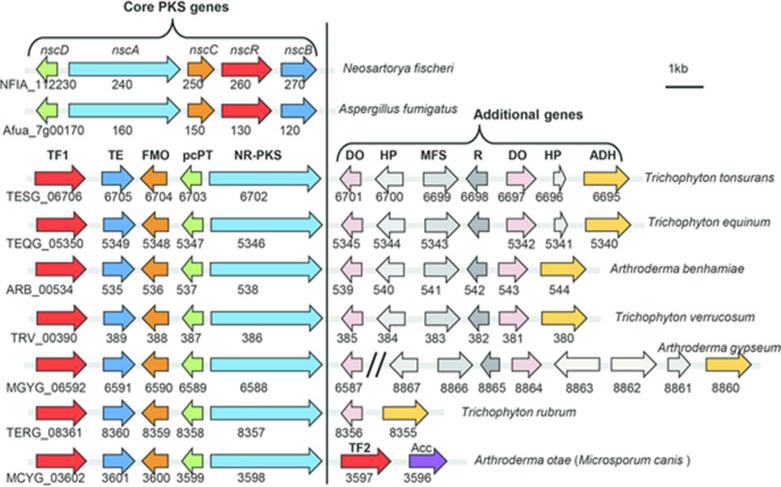
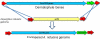
Description:Dermatophytes belonging to the Trichophyton and Arthroderma genera cause skin infections in humans and animals. From genome sequencing data, we mined a conserved gene cluster among dermatophytes that are homologous to one that produces an immunosuppressive polyketide in Aspergillus fumigatus. Using a recombination-based cloning strategy in yeast, we constructed fungal heterologous expression vectors that encode the cryptic clusters. When integrated into the model Aspergillus nidulans host, a structurally related compound neosartoricin B was formed, suggesting a possible role of this compound in the pathogenesis of these strains.
-
Subjects:
-
Source:ACS Synth Biol. 2(11):629-634
-
Pubmed ID:23758576
-
Pubmed Central ID:PMC3795930
-
Document Type:
-
Funding:
-
Volume:2
-
Issue:11
-
Download URL:
-
File Type:
 [PDF - 882.77 KB]
 -
Collection(s):
-
Main Document Checksum:urn:sha256:f7b879b91493a7f9f9123664be12adb05c38e4eae677696b8298bb6292a28988
Supporting Files


File Language:
English
 Was this page helpful?
 Found an issue?




CDC STACKS serves as an archival repository of CDC-published products including
scientific findings, journal articles, guidelines, recommendations, or other public health information authored or
co-authored by CDC or funded partners.
As a repository, CDC STACKS retains documents in their original published format to ensure public access to scientific information.
As a repository, CDC STACKS retains documents in their original published format to ensure public access to scientific information.
You May Also Like
COLLECTION
CDC Public Access