


Evaluation of Two Influenza Surveillance Systems in South Africa
Supporting Files

-
Mar 30 2015
-
Details
-
Alternative Title:PLoS One
-
Personal Author:
-
Description:Background
The World Health Organisation recommends outpatient influenza-like illness (ILI) and inpatient severe acute respiratory illness (SARI) surveillance. We evaluated two influenza surveillance systems in South Africa: one for ILI and another for SARI.
Methodology
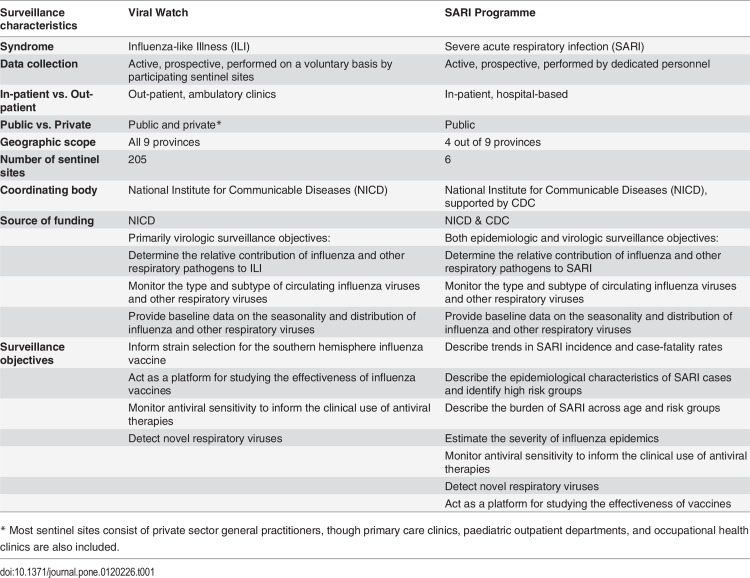
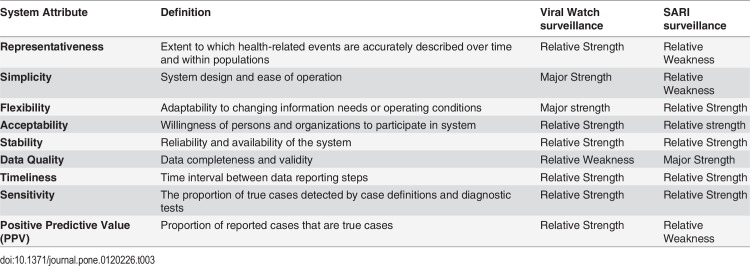
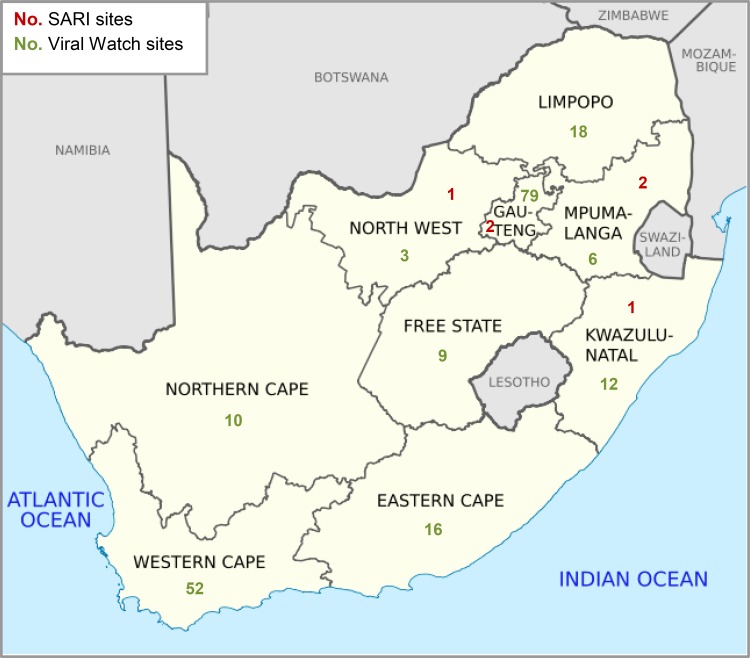
The Viral Watch (VW) programme has collected virological influenza surveillance data voluntarily from patients with ILI since 1984 in private and public clinics in all 9 South African provinces. The SARI surveillance programme has collected epidemiological and virological influenza surveillance data since 2009 in public hospitals in 4 provinces by dedicated personnel. We compared nine surveillance system attributes from 2009–2012.
Results
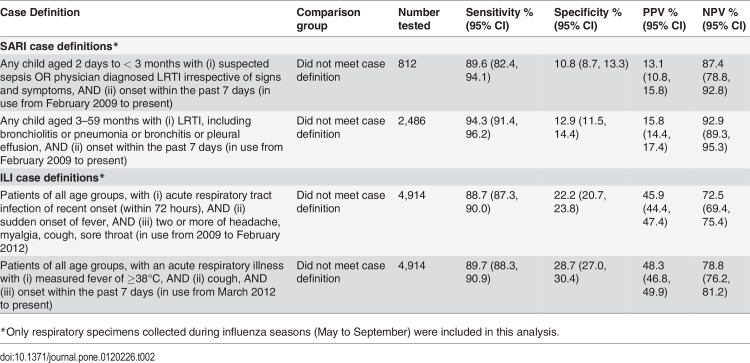
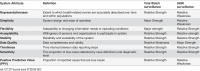
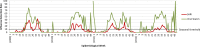
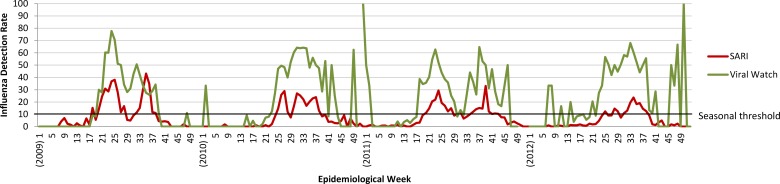
We analysed data from 18,293 SARI patients and 9,104 ILI patients. The annual proportion of samples testing positive for influenza was higher for VW (mean 41%) than SARI (mean 8%) and generally exceeded the seasonal threshold from May to September (VW: weeks 21–40; SARI: weeks 23–39). Data quality was a major strength of SARI (most data completion measures >90%; adherence to definitions: 88–89%) and a relative weakness of the VW programme (62% of forms complete, with limited epidemiologic data collected; adherence to definitions: 65–82%). Timeliness was a relative strength of both systems (e.g. both collected >93% of all respiratory specimens within 7 days of symptom onset). ILI surveillance was more nationally representative, financially sustainable and expandable than the SARI system. Though the SARI programme is not nationally representative, the high quality and detail of SARI data collection sheds light on the local burden and epidemiology of severe influenza-associated disease.
Conclusions
To best monitor influenza in South Africa, we propose that both ILI and SARI should be under surveillance. Improving ILI surveillance will require better quality and more systematic data collection, and SARI surveillance should be expanded to be more nationally representative, even if this requires scaling back on information gathered.
-
Subjects:
-
Source:PLoS One. 10(3).
-
Pubmed ID:25822719
-
Pubmed Central ID:PMC4379032
-
Document Type:
-
Funding:
-
Volume:10
-
Issue:3
-
Collection(s):
-
Main Document Checksum:urn:sha256:a1b778bbf4e9e855a9b37b86a844ae88e81dda9cad90971b2fbc87e242544f33
-
Download URL:
-
File Type:
 [PDF
- 1.02 MB
]
[PDF
- 1.02 MB
]
Supporting Files


ON THIS PAGE



CDC STACKS serves as an archival repository of CDC-published products including
scientific findings,
journal articles, guidelines, recommendations, or other public health information authored or
co-authored by CDC or funded partners.
As a repository, CDC STACKS retains documents in their original published format to ensure public access to scientific information.
As a repository, CDC STACKS retains documents in their original published format to ensure public access to scientific information.
You May Also Like
COLLECTION
CDC Public Access