



Integrating ReSET with Glycosyl Iodide Glycosylation in Step-Economy Syntheses of Tumor-Associated Carbohydrate Antigens and Immunogenic Glycolipids
Supporting Files

-
Feb 07 2014
-
Available in CDC Stacks on 2015-02-03T00:00:00Z
Details
-
Alternative Title:J Org Chem
-
Personal Author:
-
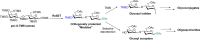
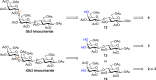
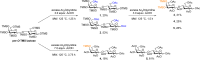
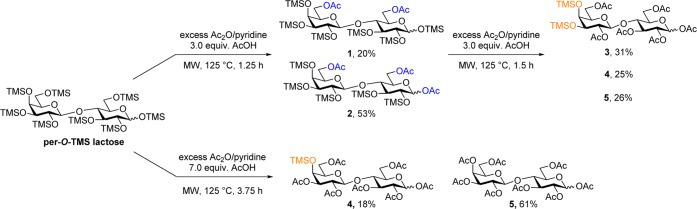
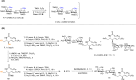
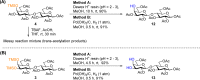
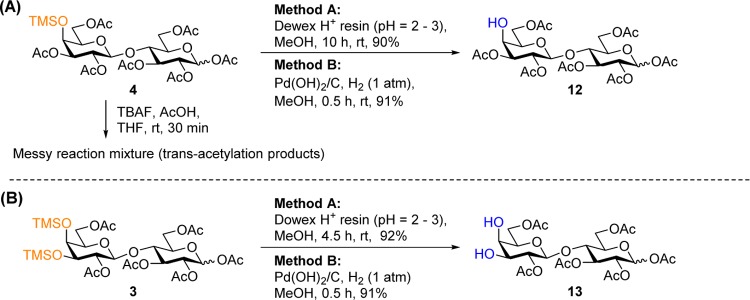
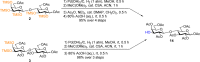
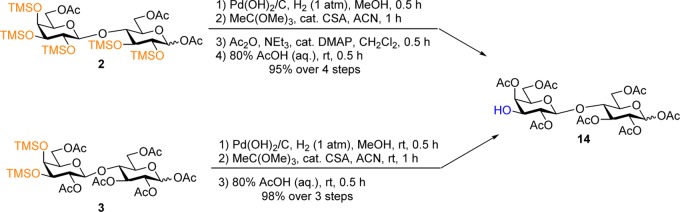
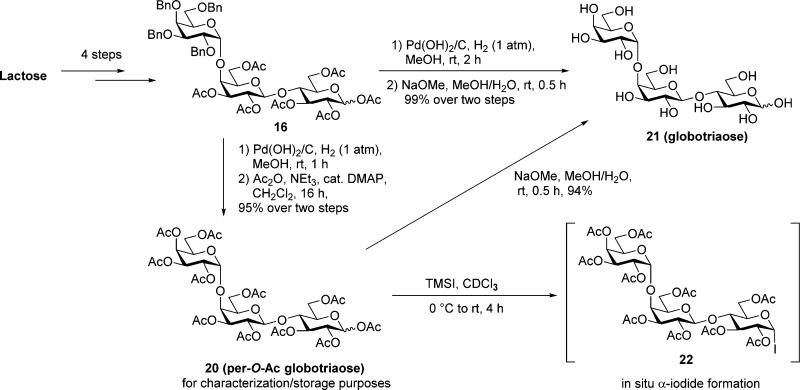
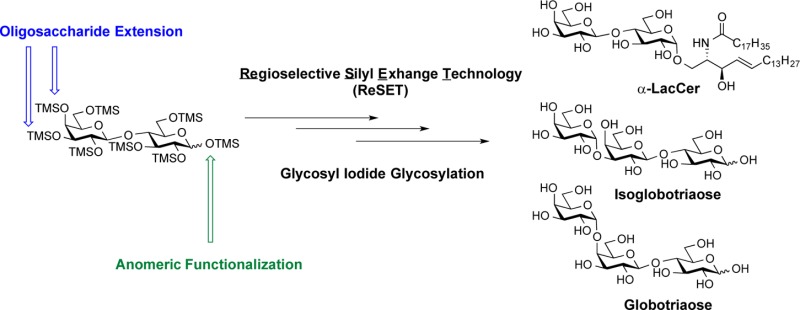
Description:Carbohydrates mediate a wide range of biological processes, and understanding these events and how they might be influenced is a complex undertaking that requires access to pure glycoconjugates. The isolation of sufficient quantities of carbohydrates and glycolipids from biological samples remains a significant challenge that has redirected efforts toward chemical synthesis. However, progress toward complex glycoconjugate total synthesis has been slowed by the need for multiple protection and deprotection steps owing to the large number of similarly reactive hydroxyls in carbohydrates. Two methodologies, regioselective silyl exchange technology (ReSET) and glycosyl iodide glycosylation have now been integrated to streamline the synthesis of the globo series trisaccharides (globotriaose and isoglobotriaose) and α-lactosylceramide (α-LacCer). These glycoconjugates include tumor-associated carbohydrate antigens (TACAs) and immunostimulatory glycolipids that hold promise as immunotherapeutics. Beyond the utility of the step-economy syntheses afforded by this synthetic platform, the studies also reveal a unique electronic interplay between acetate and silyl ether protecting groups. Incorporation of acetates proximal to silyl ethers attenuates their reactivity while reducing undesirable side reactions. This phenomenon can be used to fine-tune the reactivity of silylated/acetylated sugar building blocks.
-
Subjects:
-
Source:J Org Chem. 2014; 79(4):1736-1748.
-
Pubmed ID:24490844
-
Pubmed Central ID:PMC3985971
-
Document Type:
-
Funding:
-
Volume:79
-
Issue:4
-
Download URL:
-
File Type:
 [PDF - 2.27 MB]
 -
Collection(s):
-
Main Document Checksum:urn:sha256:9c291c3a9ab481c82e93bfac04b8c3babf546df6c471e0e92d5564100ba3f7bf
Supporting Files


 Was this page helpful?
 Found an issue?










CDC STACKS serves as an archival repository of CDC-published products including
scientific findings, journal articles, guidelines, recommendations, or other public health information authored or
co-authored by CDC or funded partners.
As a repository, CDC STACKS retains documents in their original published format to ensure public access to scientific information.
As a repository, CDC STACKS retains documents in their original published format to ensure public access to scientific information.
You May Also Like
COLLECTION
CDC Public Access