


Has Tanzania Embraced the Green Leaf? Results from Outlet and Household Surveys before and after Implementation of the Affordable Medicines Facility -Malaria
Supporting Files

-
May 09 2014
-
File Language:
English
Details
-
Alternative Title:PLoS One
-
Personal Author:Thomson, Rebecca ; Festo, Charles ; Johanes, Boniface ; Kalolella, Admirabilis ; Bruxvoort, Katia ; Nchimbi, Happy ; Tougher, Sarah ; Cairns, Matthew ; Taylor, Mark ; Kleinschmidt, Immo ; Ye, Yazoume ; Mann, Andrea ; Ren, Ruilin ; Willey, Barbara ; Arnold, Fred ; Hanson, Kara ; Kachur, S. Patrick ; Goodman, Catherine
-
Description:Background
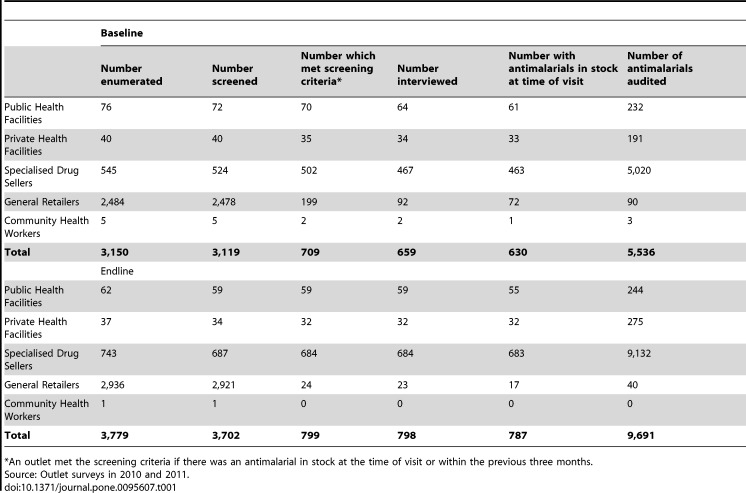
The Affordable Medicines Facility - malaria (AMFm) is primarily an artemisinin combination therapy (ACT) subsidy, aimed at increasing availability, affordability, market share and use of quality-assured ACTs (QAACTs). Mainland Tanzania was one of eight national scale programmes where AMFm was introduced in 2010. Here we present findings from outlet and household surveys before and after AMFm implementation to evaluate its impact from both the supply and demand side.
Methods
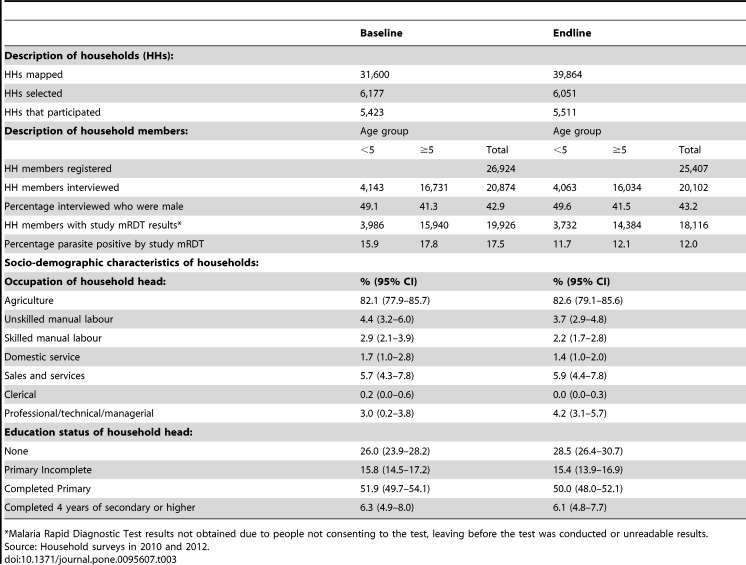
Outlet surveys were conducted in 49 randomly selected wards throughout mainland Tanzania in 2010 and 2011, and data on outlet characteristics and stocking patterns were collected from outlets stocking antimalarials. Household surveys were conducted in 240 randomly selected enumeration areas in three regions in 2010 and 2012. Questions about treatment seeking for fever and drugs obtained were asked of individuals reporting fever in the previous two weeks.
Results
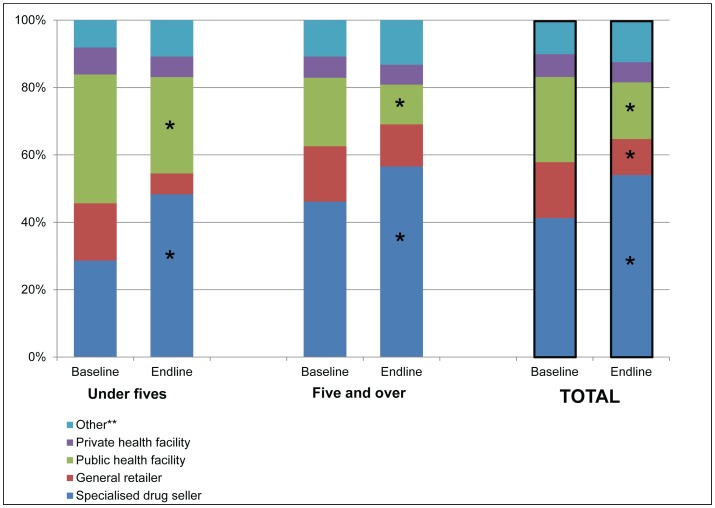
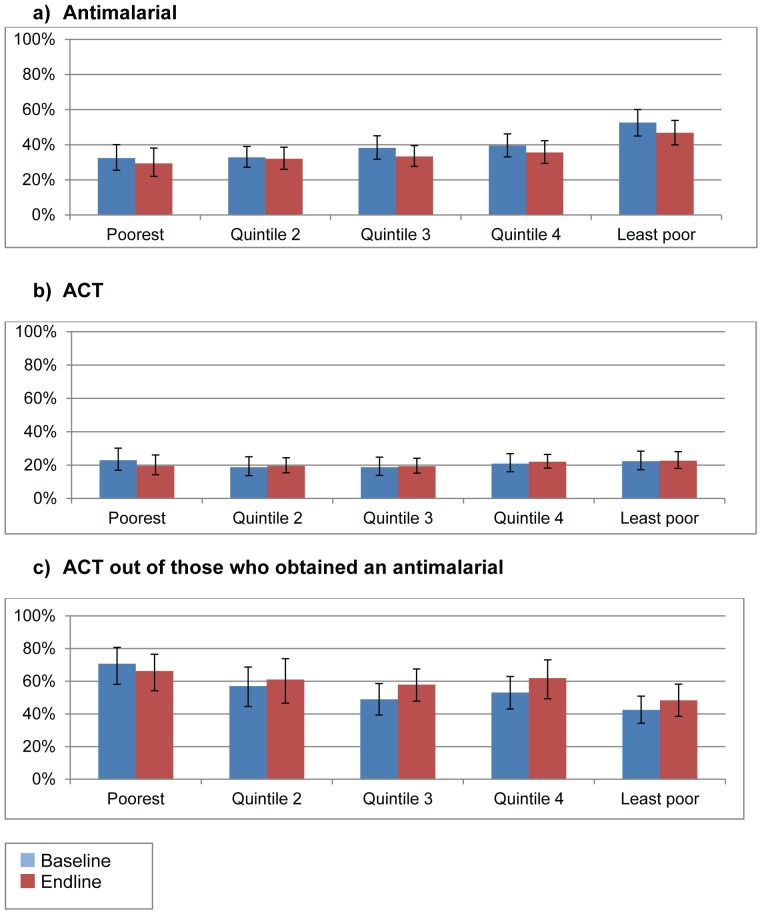
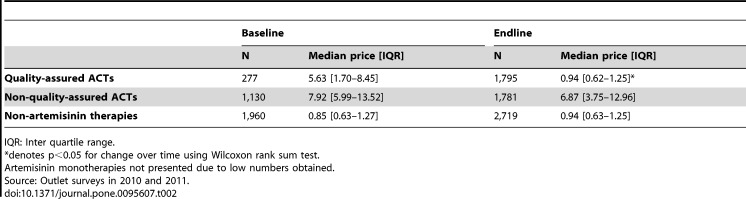
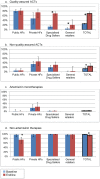
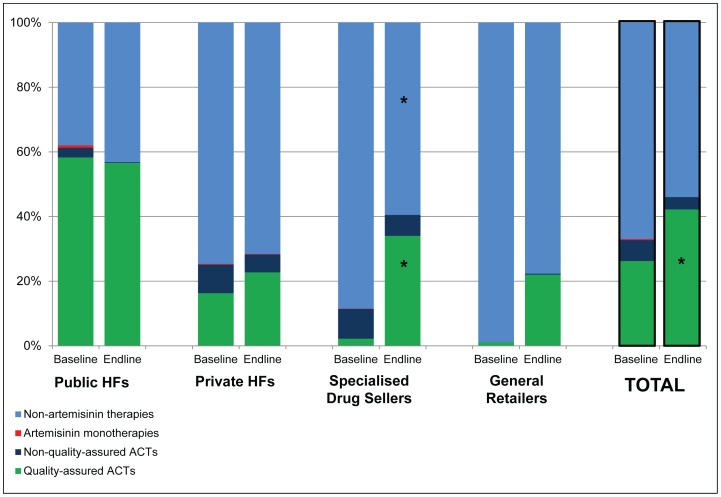
The availability of QAACTs increased from 25.5% to 69.5% among all outlet types, with the greatest increase among pharmacies and drug stores, together termed specialised drug sellers (SDSs), where the median QAACT price fell from $5.63 to $0.94. The market share of QAACTs increased from 26.2% to 42.2%, again with the greatest increase in SDSs. Household survey results showed a shift in treatment seeking away from the public sector towards SDSs. Overall, there was no change in the proportion of people with fever obtaining an antimalarial or ACT from baseline to endline. However, when broken down by treatment source, ACT use increased significantly among clients visiting SDSs.
Discussion
Unchanged ACT use overall, despite increases in QAACT availability, affordability and market share in the private sector, reflected a shift in treatment seeking towards private providers. The reasons for this shift are unclear, but likely reflect both persistent stockouts in public facilities, and the increased availability of subsidised ACTs in the private sector.
-
Subjects:
-
Source:PLoS One. 2014; 9(5).
-
Document Type:
-
Funding:
-
Place as Subject:
-
Volume:9
-
Issue:5
-
Collection(s):
-
Main Document Checksum:urn:sha256:9d4502b9556dd37f69ff1bd267fddcf0e5d386a84b62705629e618543f49222e
-
Download URL:
-
File Type:
 [PDF
- 886.42 KB
]
[PDF
- 886.42 KB
]
Supporting Files


File Language:
English
ON THIS PAGE







CDC STACKS serves as an archival repository of CDC-published products including
scientific findings,
journal articles, guidelines, recommendations, or other public health information authored or
co-authored by CDC or funded partners.
As a repository, CDC STACKS retains documents in their original published format to ensure public access to scientific information.
As a repository, CDC STACKS retains documents in their original published format to ensure public access to scientific information.
You May Also Like
COLLECTION
CDC Public Access