



Association between alcohol and cardiovascular disease: Mendelian randomisation analysis based on individual participant data
Supporting Files

-
-
By Show All

-
File Language:
English
Details
-
Alternative Title:BMJ
-
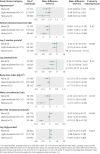
Description:To use the rs1229984 variant in the alcohol dehydrogenase 1B gene (ADH1B) as an instrument to investigate the causal role of alcohol in cardiovascular disease.|Mendelian randomisation meta-analysis of 56 epidemiological studies.|261 991 individuals of European descent, including 20 259 coronary heart disease cases and 10 164 stroke events. Data were available on ADH1B rs1229984 variant, alcohol phenotypes, and cardiovascular biomarkers.|Odds ratio for coronary heart disease and stroke associated with the ADH1B variant in all individuals and by categories of alcohol consumption.|Carriers of the A-allele of ADH1B rs1229984 consumed 17.2% fewer units of alcohol per week (95% confidence interval 15.6% to 18.9%), had a lower prevalence of binge drinking (odds ratio 0.78 (95% CI 0.73 to 0.84)), and had higher abstention (odds ratio 1.27 (1.21 to 1.34)) than non-carriers. Rs1229984 A-allele carriers had lower systolic blood pressure (-0.88 (-1.19 to -0.56) mm Hg), interleukin-6 levels (-5.2% (-7.8 to -2.4%)), waist circumference (-0.3 (-0.6 to -0.1) cm), and body mass index (-0.17 (-0.24 to -0.10) kg/m(2)). Rs1229984 A-allele carriers had lower odds of coronary heart disease (odds ratio 0.90 (0.84 to 0.96)). The protective association of the ADH1B rs1229984 A-allele variant remained the same across all categories of alcohol consumption (P=0.83 for heterogeneity). Although no association of rs1229984 was identified with the combined subtypes of stroke, carriers of the A-allele had lower odds of ischaemic stroke (odds ratio 0.83 (0.72 to 0.95)).|Individuals with a genetic variant associated with non-drinking and lower alcohol consumption had a more favourable cardiovascular profile and a reduced risk of coronary heart disease than those without the genetic variant. This suggests that reduction of alcohol consumption, even for light to moderate drinkers, is beneficial for cardiovascular health.
-
Subjects:
-
Document Type:
-
Funding:0090049/Department of Health/United Kingdom ; 064947/Z/01/Z/Wellcome Trust/United Kingdom ; 076113/Wellcome Trust/United Kingdom ; 078557/Wellcome Trust/United Kingdom ; 081081/Z/06/Z/Wellcome Trust/United Kingdom ; 090532/Z/09/Z/Wellcome Trust/United Kingdom ; 092731/Wellcome Trust/United Kingdom ; 1R01 AG23522/AG/NIA NIH HHS/United States ; AA021223-01/AA/NIAAA NIH HHS/United States ; AA11181/AA/NIAAA NIH HHS/United States ; AG023629/AG/NIA NIH HHS/United States ; AG13196/AG/NIA NIH HHS/United States ; AG1764406S1/AG/NIA NIH HHS/United States ; CA55075/CA/NCI NIH HHS/United States ; CA87969/CA/NCI NIH HHS/United States ; CH/98001/British Heart Foundation/United Kingdom ; F32DA024920/DA/NIDA NIH HHS/United States ; G0000934/Medical Research Council/United Kingdom ; G0701863/Medical Research Council/United Kingdom ; G0802432/Medical Research Council/United Kingdom ; G0902144/Medical Research Council/United Kingdom ; G1000143/Medical Research Council/United Kingdom ; G1000718/Medical Research Council/United Kingdom ; HHSN268200625226C/PHS HHS/United States ; HHSN268200800007C/PHS HHS/United States ; HHSN268200900009C/PHS HHS/United States ; HHSN268200960009C/PHS HHS/United States ; HHSN268201100001C/PHS HHS/United States ; HHSN268201100002C/PHS HHS/United States ; HHSN268201100003C/PHS HHS/United States ; HHSN268201100004C/PHS HHS/United States ; HHSN268201100005C/PHS HHS/United States ; HHSN268201100006C/PHS HHS/United States ; HHSN268201100007C/PHS HHS/United States ; HHSN268201100008C/PHS HHS/United States ; HHSN268201100009C/PHS HHS/United States ; HHSN268201100010C/PHS HHS/United States ; HHSN268201100011C/PHS HHS/United States ; HHSN268201100012C/PHS HHS/United States ; HHSN268201100046C/PHS HHS/United States ; HHSN268201200036C/PHS HHS/United States ; HHSN271201100004C/PHS HHS/United States ; HL 114901/HL/NHLBI NIH HHS/United States ; HL080295/HL/NHLBI NIH HHS/United States ; HL34594/HL/NHLBI NIH HHS/United States ; HL35464/HL/NHLBI NIH HHS/United States ; HL36310/HL/NHLBI NIH HHS/United States ; HL46380/HL/NHLBI NIH HHS/United States ; MC_U106179471/Medical Research Council/United Kingdom ; MC_UU_12013/1/Medical Research Council/United Kingdom ; MC_UU_12013/8/Medical Research Council/United Kingdom ; MC_UU_12015/1/Medical Research Council/United Kingdom ; MC_UU_12019/1/Medical Research Council/United Kingdom ; MR/K013351/1/Medical Research Council/United Kingdom ; MRC G0601653/Medical Research Council/United Kingdom ; N01 HC55222/HC/NHLBI NIH HHS/United States ; N01-HC-48047/HC/NHLBI NIH HHS/United States ; N01-HC-48048/HC/NHLBI NIH HHS/United States ; N01-HC-48049/HC/NHLBI NIH HHS/United States ; N01-HC-48050/HC/NHLBI NIH HHS/United States ; N01-HC-95095/HC/NHLBI NIH HHS/United States ; N01HC65226/HC/NHLBI NIH HHS/United States ; N01HC85079/HC/NHLBI NIH HHS/United States ; N01HC85080/HC/NHLBI NIH HHS/United States ; N01HC85081/HC/NHLBI NIH HHS/United States ; N01HC85082/HC/NHLBI NIH HHS/United States ; N01HC85083/HC/NHLBI NIH HHS/United States ; N01HC85086/HC/NHLBI NIH HHS/United States ; NF-SI-0512-10114/Department of Health/United Kingdom ; NF-SI-0512-10135/Department of Health/United Kingdom ; NHLBI 33014/PHS HHS/United States ; NIH HL075451/HL/NHLBI NIH HHS/United States ; P20MD006899/MD/NIMHD NIH HHS/United States ; P30 DK063491/DK/NIDDK NIH HHS/United States ; PG/07/131/24254/British Heart Foundation/United Kingdom ; PG/09/022/British Heart Foundation/United Kingdom ; PG/13/66/30442/British Heart Foundation/United Kingdom ; PG/2008/008/British Heart Foundation/United Kingdom ; R01 42733/PHS HHS/United States ; R01 NS39987/NS/NINDS NIH HHS/United States ; R01HL086694/HL/NHLBI NIH HHS/United States ; R01HL087641/HL/NHLBI NIH HHS/United States ; R01HL59367/HL/NHLBI NIH HHS/United States ; RG/07/005/23633/British Heart Foundation/United Kingdom ; RG/08/013/25942/British Heart Foundation/United Kingdom ; RG/10/12/28456/British Heart Foundation/United Kingdom ; RG/98002/British Heart Foundation/United Kingdom ; RG2008/014/British Heart Foundation/United Kingdom ; U01 DK062418/DK/NIDDK NIH HHS/United States ; U01HG004402/HG/NHGRI NIH HHS/United States ; UL1 TR000124/TR/NCATS NIH HHS/United States ; UL1RR025005/RR/NCRR NIH HHS/United States ; WT087997MA/Wellcome Trust/United Kingdom ; WT088806/Wellcome Trust/United Kingdom
-
Volume:349
-
Download URL:
-
File Type:
 [PDF - 2.80 MB]
-
Collection(s):
-
Main Document Checksum:urn:sha256:04d5ed163316789849fd80ad40a12ef9e196dfb3c566a0ed5a3974f60942ac0e
Supporting Files


File Language:
English
 Was this page helpful?
 Found an issue?



CDC STACKS serves as an archival repository of CDC-published products including
scientific findings, journal articles, guidelines, recommendations, or other public health information authored or
co-authored by CDC or funded partners.
As a repository, CDC STACKS retains documents in their original published format to ensure public access to scientific information.
As a repository, CDC STACKS retains documents in their original published format to ensure public access to scientific information.
You May Also Like
COLLECTION
CDC Public Access