



Sequelae of Foodborne Illness Caused by 5 Pathogens, Australia, Circa 2010
Supporting Files
Public Domain

-
Nov 2014
File Language:
English
Details
-
Alternative Title:Emerg Infect Dis
-
Personal Author:
-
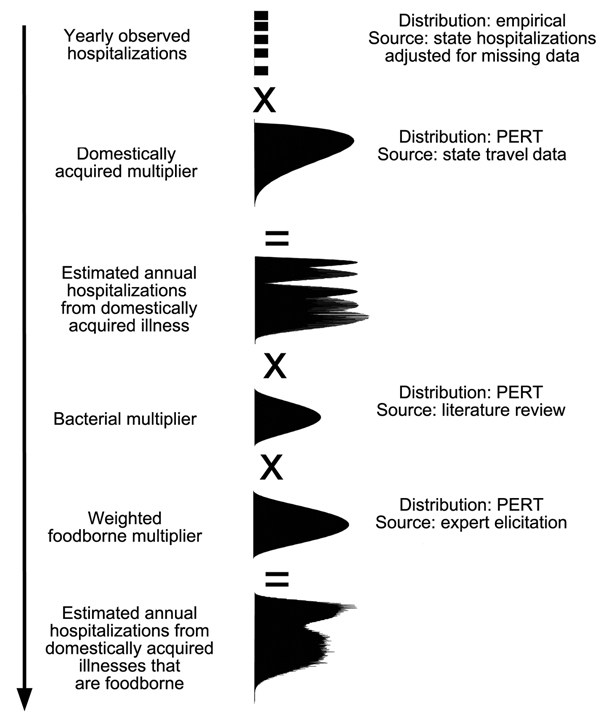
Description:In Australia circa 2010, 4.1 million (90% credible interval CrI 2.3-6.4 million) episodes of foodborne gastroenteritis occurred, many of which might have resulted in sequelae. We estimated the number of illnesses, hospitalizations, and deaths from Guillain-Barré syndrome, hemolytic uremic syndrome, irritable bowel syndrome, and reactive arthritis that were associated with contaminated food in Australia. Data from published studies, hospital records, and mortality reports were combined with multipliers to adjust for different transmission routes. We used Monte Carlo simulation to estimate median estimates and 90% CrIs. In Australia, circa 2010, we estimated that 35,840 (90% CrI 25,000-54,000) illnesses, 1,080 (90% CrI 700-1,600) hospitalizations, and 10 (90% CrI 5-14) deaths occurred from foodborne gastroenteritis-associated sequelae. Campylobacter spp. infection was responsible for 80% of incident cases. Reducing the incidence of campylobacteriosis and other foodborne diseases would minimize the health effects of sequelae.
-
Subjects:
-
Source:Emerg Infect Dis. 20(11):1865-1871.
-
Document Type:
-
Genre:
-
Place as Subject:
-
Volume:20
-
Issue:11
-
Download URL:
-
File Type:
 [PDF - 1.02 MB]
 -
Collection(s):
-
Main Document Checksum:urn:sha256:986377441b06856386507a3be6a00da86c165ea5f2e97b3312599132bde18875
Supporting Files


File Language:
English
 Was this page helpful?
 Found an issue?


CDC STACKS serves as an archival repository of CDC-published products including
scientific findings, journal articles, guidelines, recommendations, or other public health information authored or
co-authored by CDC or funded partners.
As a repository, CDC STACKS retains documents in their original published format to ensure public access to scientific information.
As a repository, CDC STACKS retains documents in their original published format to ensure public access to scientific information.
You May Also Like
COLLECTION
Emerging Infectious Diseases