



Lineage-specific Virulence Determinants of Haemophilus influenzae Biogroup aegyptius
Supporting Files

-
Mar 2012
Details
-
Alternative Title:Emerg Infect Dis
-
Personal Author:
-
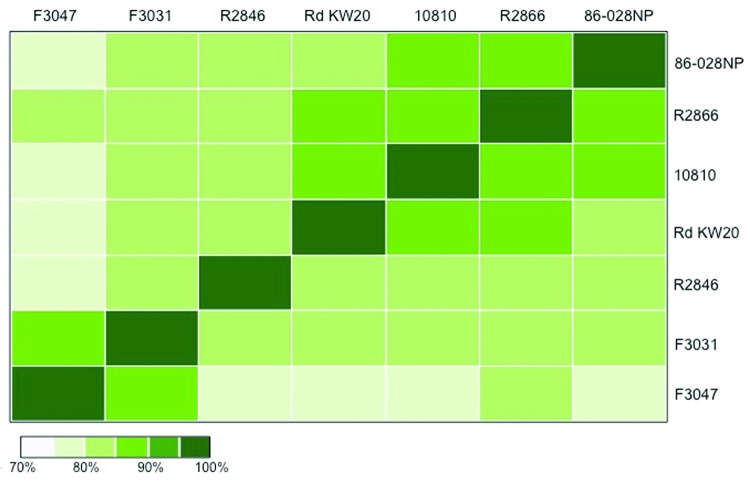
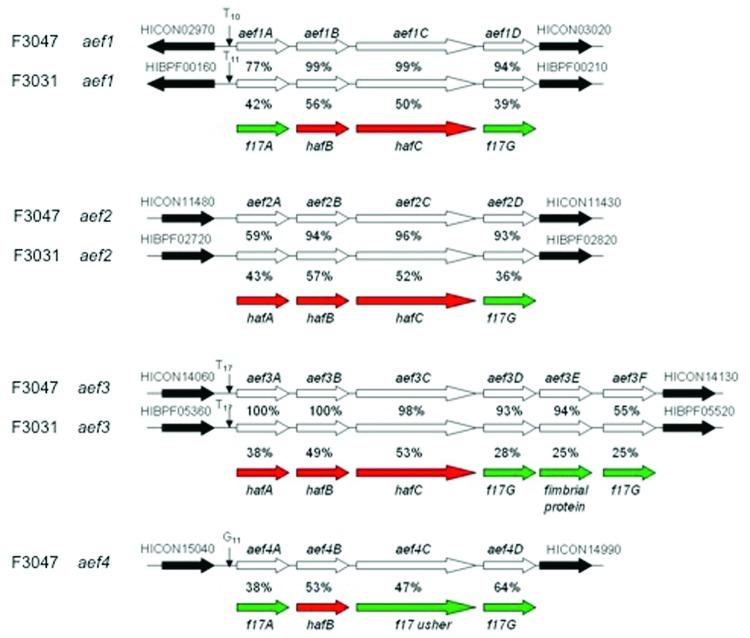
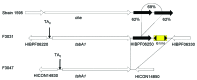
Description:An emergent clone of Haemophilus influenzae biogroup aegyptius (Hae) is responsible for outbreaks of Brazilian purpuric fever (BPF). First recorded in Brazil in 1984, the so-called BPF clone of Hae caused a fulminant disease that started with conjunctivitis but developed into septicemic shock; mortality rates were as high as 70%. To identify virulence determinants, we conducted a pan-genomic analysis. Sequencing of the genomes of the BPF clone strain F3031 and a noninvasive conjunctivitis strain, F3047, and comparison of these sequences with 5 other complete H. influenzae genomes showed that >77% of the F3031 genome is shared among all H. influenzae strains. Delineation of the Hae accessory genome enabled characterization of 163 predicted protein-coding genes; identified differences in established autotransporter adhesins; and revealed a suite of novel adhesins unique to Hae, including novel trimeric autotransporter adhesins and 4 new fimbrial operons. These novel adhesins might play a critical role in host-pathogen interactions.
-
Subjects:
- Research
- Haemophilus influenzae
- Brazilian purpuric fever
- BPF
- Haemophilus influenzae biogroup aegyptius
- Haemophilus aegyptius
- trimeric autotransporter
- trimeric autotransporter adhesins
- adhesin
- sepsis
- pathogenicity
- bacteria
- virulence
- Adhesins, Bacterial
- Gene Order
- Genome, Bacterial
- Haemophilus Infections
- Host-Pathogen Interactions
- Humans
- Molecular Sequence Annotation
- Molecular Sequence Data
- Operon
- Phylogeny
- Sequence Homology
- Virulence
- Virulence Factors
-
Source:Emerg Infect Dis. 18(3):449-457.
-
Document Type:
-
Funding:
-
Volume:18
-
Issue:3
-
Download URL:
-
File Type:
 [PDF - 316.89 KB]
 -
Collection(s):
-
Main Document Checksum:urn:sha256:3fd953c55dcc017f71fccf3f78ed416447b946202dcae47579df896d9989261c
Supporting Files


 Was this page helpful?
 Found an issue?







CDC STACKS serves as an archival repository of CDC-published products including
scientific findings, journal articles, guidelines, recommendations, or other public health information authored or
co-authored by CDC or funded partners.
As a repository, CDC STACKS retains documents in their original published format to ensure public access to scientific information.
As a repository, CDC STACKS retains documents in their original published format to ensure public access to scientific information.
You May Also Like
COLLECTION
Emerging Infectious Diseases