



Racial disparities in invasive Haemophilus influenzae disease — United States, 2008–2017
Supporting Files

-
11 02 2021 ; 11-02-
-
Available in CDC Stacks on August 08, 2024, 12:00 AM
File Language:
English
Details
-
Alternative Title:Clin Infect Dis
-
Personal Author:
-
Description:Background:
Since the introduction of Haemophilus influenzae serotype b (Hib) conjugate vaccines in the United States, invasive H. influenzae disease (Hi) epidemiology has changed and racial disparities have not been recently described.
Methods:
Active population- and laboratory-based surveillance for Hi was conducted through Active Bacterial Core surveillance (ABCs) at 10 U.S. sites. Data from 2008–2017 was used to estimate projected nationwide annual incidence in cases/100,000.
Results:
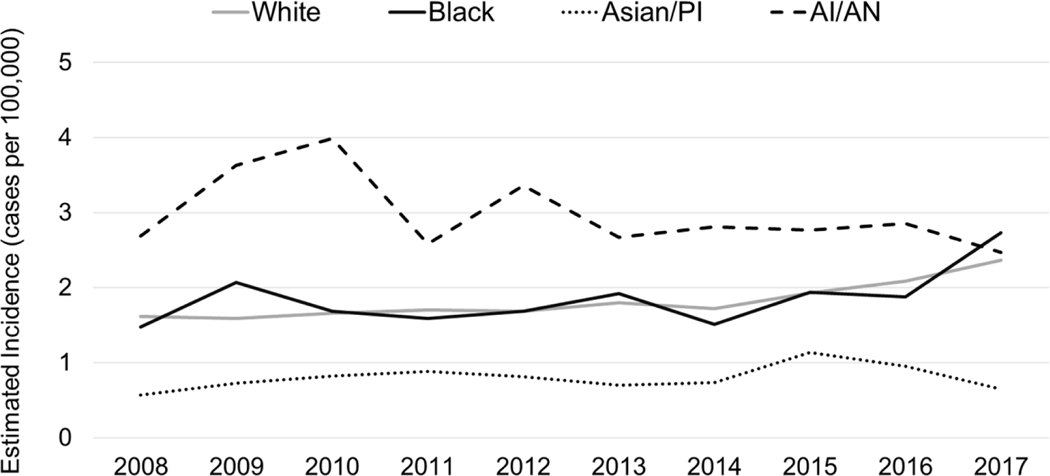
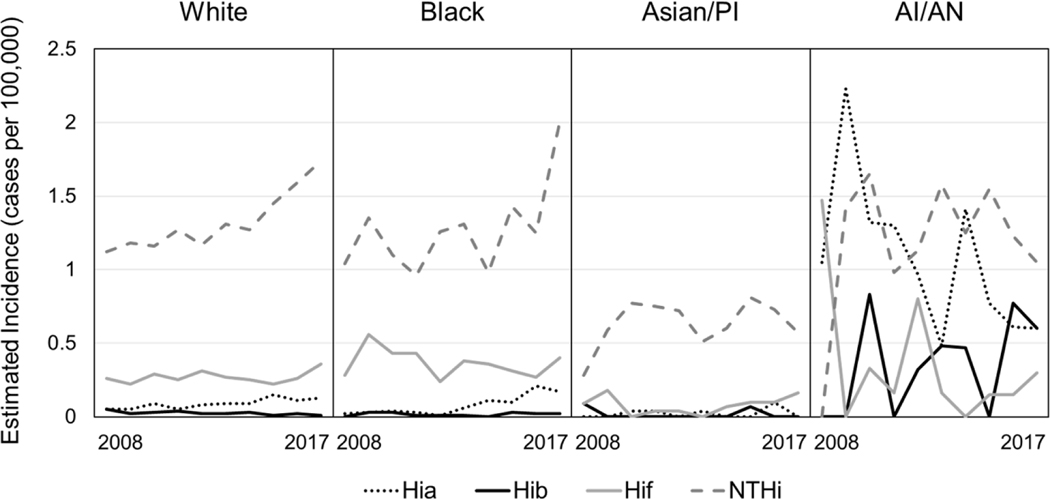
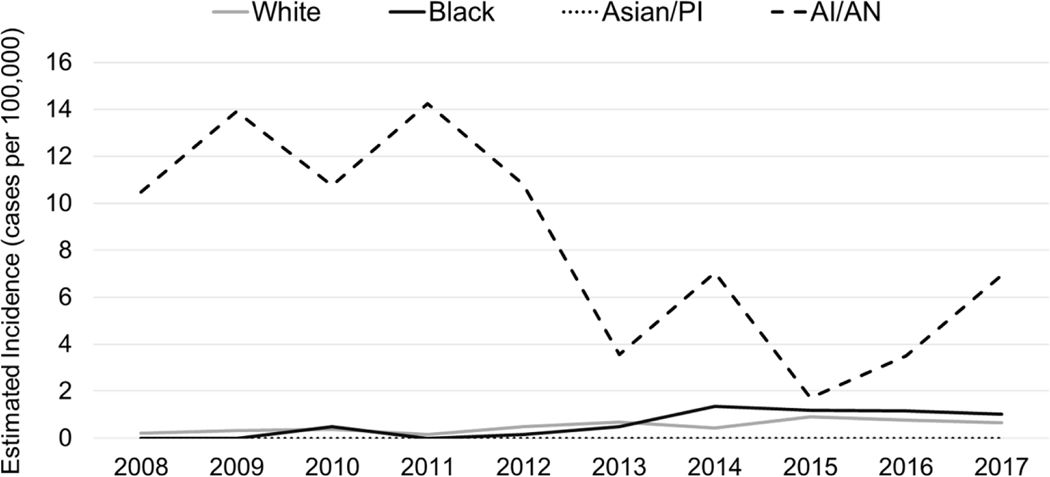
During 2008–2017, ABCs identified 7379 Hi cases. Of 6705 (90.9%) patients with reported race, 76.2% were White, 18.6% were Black, 2.8% were Asian/Pacific Islander (PI), and 2.4% were American Indian and Alaska Native (AI/AN). Nationwide annual incidence was 1.8 cases/100,000. By race, incidence was highest among AI/AN populations (3.1) and lowest among Asian/PI populations (0.8). Nontypeable Hi (NTHi) caused the largest incidence within all races (1.3), with no striking disparities identified. Among AI/AN children aged <5 years, incidence of Hi serotype a (Hia) was 16.7 times higher and Hib incidence was 22.4 times higher than among White children. Though Hia incidence was lower among White and Black populations compared to AI/AN, Hia incidence increased 13.6% annually among White children and 40.4% annually among Black children aged <5 years.
Conclusions:
While NTHi causes the largest Hi burden overall, AI/AN populations experience disproportionately high rates of Hia and Hib, with the greatest disparity among AI/AN children aged <5 years. Prevention tools are needed to reduce disparities affecting AI/AN children and address increasing Hia incidence in other communities. -
Subjects:
-
Keywords:
-
Source:Clin Infect Dis. 73(9):1617-1624
-
Pubmed ID:33993217
-
Pubmed Central ID:PMC11307574
-
Document Type:
-
Funding:
-
Volume:73
-
Issue:9
-
Download URL:
-
File Type:
 [PDF - 1.11 MB]
 -
Collection(s):
-
Main Document Checksum:urn:sha-512:3931b6f6684a07a5d254a31c7017516f39cdded4420fea4d4b2a3677bc5ce03b68526b26e09b5ca5462f75b763023a17c2e79e8bab86cf0d49eb546495b23eeb
Supporting Files


File Language:
English
 Was this page helpful?
 Found an issue?


CDC STACKS serves as an archival repository of CDC-published products including
scientific findings, journal articles, guidelines, recommendations, or other public health information authored or
co-authored by CDC or funded partners.
As a repository, CDC STACKS retains documents in their original published format to ensure public access to scientific information.
As a repository, CDC STACKS retains documents in their original published format to ensure public access to scientific information.
You May Also Like
COLLECTION
CDC Public Access