



A Pilot Study of Host Genetic Variants Associated with Influenza-associated Deaths among Children and Young Adults1
Supporting Files
Public Domain

-
Dec 2011
File Language:
English
Details
-
Alternative Title:Emerg Infect Dis
-
Personal Author:
-
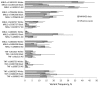
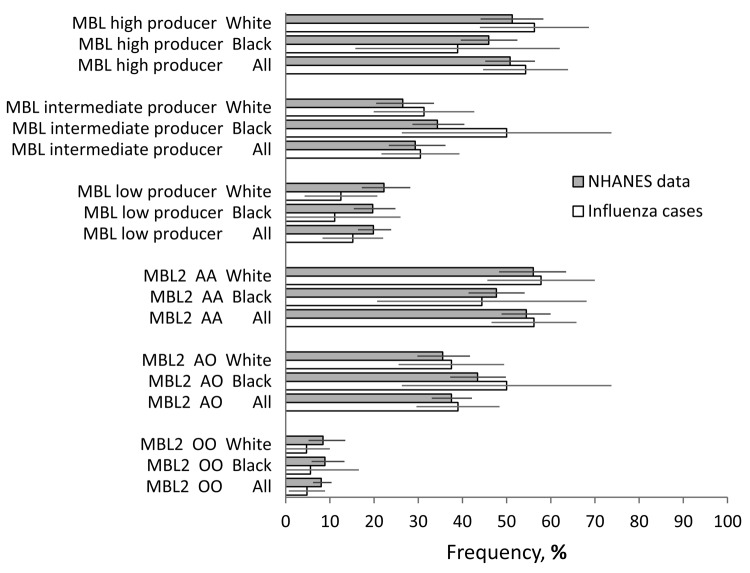
Description:We compared the prevalence of 8 polymorphisms in the tumor necrosis factor and mannose-binding lectin genes among 105 children and young adults with fatal influenza with US population estimates and determined in subanalyses whether these polymorphisms were associated with sudden death and bacterial co-infection among persons with fatal influenza. No differences were observed in genotype prevalence or minor allele frequencies between persons with fatal influenza and the reference sample. Fatal cases with low-producing MBL2 genotypes had a 7-fold increased risk for invasive methicillin-resistant Staphylococcus aureus (MRSA) co-infection compared with fatal cases with high- and intermediate-producing MBL2 genotypes (odds ratio 7.1, 95% confidence interval 1.6-32.1). Limited analysis of 2 genes important to the innate immune response found no association between genetic variants and fatal influenza infection. Among children and young adults who died of influenza, low-producing MBL2 genotypes may have increased risk for MRSA co-infection.
-
Subjects:
- Research
- Adolescent
- Adult
- Child
- Child, Preschool
- Coinfection
- Female
- Gene Frequency
- Genetic Variation
- Host-Pathogen Interactions
- Humans
- Infant
- Infant, Newborn
- Influenza, Human
- Male
- Mannose-Binding Lectin
- Methicillin-Resistant Staphylococcus aureus
- Pilot Projects
- Polymorphism, Single Nucleotide
- Risk Factors
- Staphylococcal Infections
- Tumor Necrosis Factor-alpha
- Young Adult
-
Source:Emerg Infect Dis. 17(12):2294-2302.
-
Document Type:
-
Place as Subject:
-
Location:
-
Volume:17
-
Issue:12
-
Download URL:
-
File Type:
 [PDF - 210.38 KB]
 -
Collection(s):
-
Main Document Checksum:urn:sha256:a6706db9fa6fbe3b12626da5c7d9129862bc5bcd26b5fbb8a8c31fa19ba60552
Supporting Files


File Language:
English
 Was this page helpful?
 Found an issue?


CDC STACKS serves as an archival repository of CDC-published products including
scientific findings, journal articles, guidelines, recommendations, or other public health information authored or
co-authored by CDC or funded partners.
As a repository, CDC STACKS retains documents in their original published format to ensure public access to scientific information.
As a repository, CDC STACKS retains documents in their original published format to ensure public access to scientific information.
You May Also Like
COLLECTION
Emerging Infectious Diseases