


DR6 as a Diagnostic and Predictive Biomarker in Adult Sarcoma
Supporting Files

-
May 02 2012
-
File Language:
English
Details
-
Alternative Title:PLoS One
-
Personal Author:
-
Description:Background
The Death Receptor 6 (DR6) protein is elevated in the serum of ovarian cancer patients. We tested DR6 serum protein levels as a diagnostic/predictive biomarker in several epithelial tumors and sarcomas.
Methods
DR6 gene expression profiles were screened in publically available arrays of solid tumors. A quantitative immunofluorescent western blot analysis was developed to test the serum of healthy controls and patients with sarcoma, uterine carcinosarcoma, bladder, liver, and pancreatic carcinomas. Change in DR6 serum levels was used to assay the ability of DR6 to predict the response to therapy of sarcoma patients.
Results
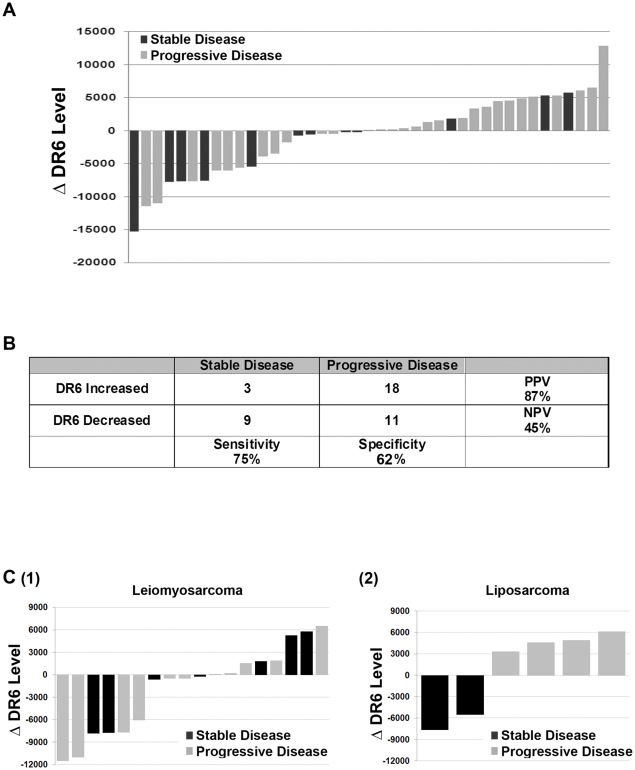
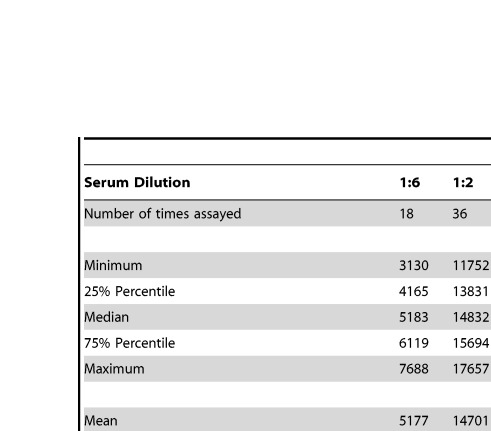
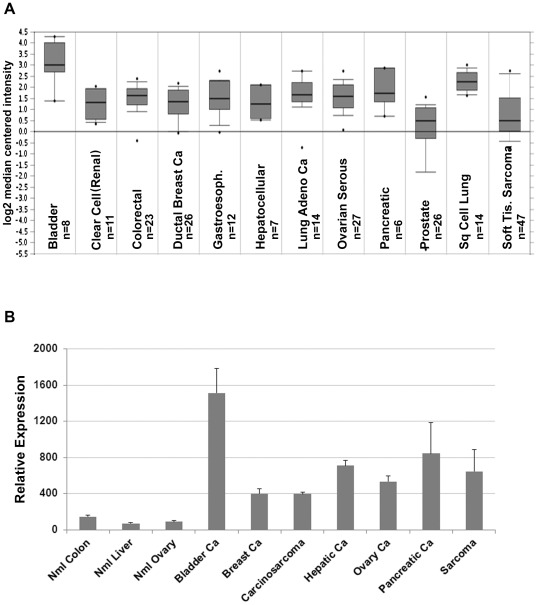
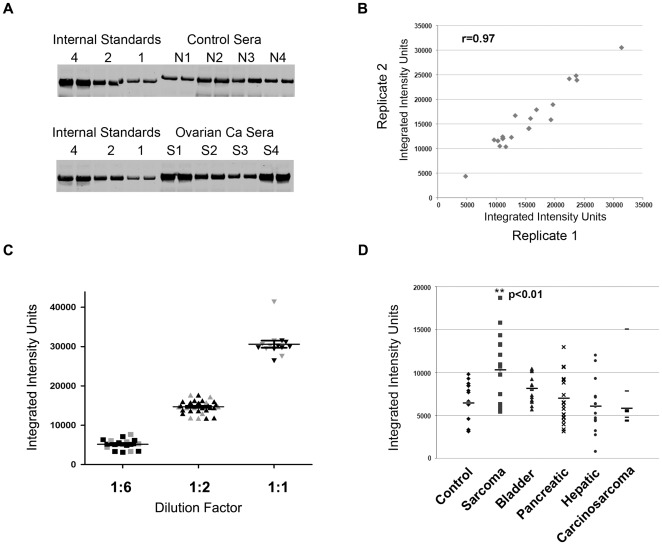
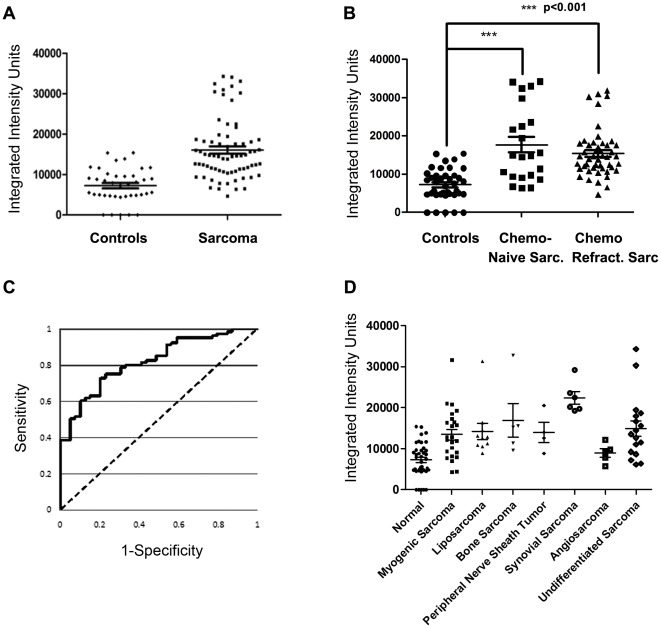
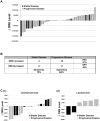
DR6 mRNA is highly expressed in all tumor types assayed. Western blot analysis of serum DR6 protein demonstrated high reproducibility (r = 0.97). Compared to healthy donor controls, DR6 serum levels were not elevated in patients with uterine carcinosarcoma, bladder, liver, or pancreatic cancers. Serum DR6 protein levels from adult sarcoma patients were significantly elevated (p<0.001). This was most evident for patients with synovial sarcoma. Change in serum DR6 levels during therapy correlated with clinical benefit from therapy (sensitivity 75%, and positive predictive value 87%).
Conclusion
DR6 may be a clinically useful diagnostic and predictive serum biomarker for some adult sarcoma subtypes.
Impact
Diagnosis of sarcoma can be difficult and can lead to improper management of these cancers. DR6 serum protein may be a tool to aid in the diagnosis of some sarcomatous tumors to improve treatment planning. For patients with advanced disease, rising DR6 levels predict non-response to therapy and may expedite therapeutic decision making and reduce reliance on radiologic imaging.
-
Subjects:
-
Source:PLoS One. 2012; 7(5).
-
Pubmed ID:22567163
-
Pubmed Central ID:PMC3342254
-
Document Type:
-
Funding:
-
Volume:7
-
Issue:5
-
Collection(s):
-
Main Document Checksum:urn:sha256:fe1f5b0f9ac21dadbeb2a2579409d83269bcd230a7c5fc7aabaddd097798546d
-
Download URL:
-
File Type:
 [PDF
- 1.90 MB
]
[PDF
- 1.90 MB
]
Supporting Files


File Language:
English
ON THIS PAGE




CDC STACKS serves as an archival repository of CDC-published products including
scientific findings,
journal articles, guidelines, recommendations, or other public health information authored or
co-authored by CDC or funded partners.
As a repository, CDC STACKS retains documents in their original published format to ensure public access to scientific information.
As a repository, CDC STACKS retains documents in their original published format to ensure public access to scientific information.
You May Also Like
COLLECTION
CDC Public Access