


Tumor necrosis factor receptors 1 and 2 are associated with early glomerular lesions in type 2 diabetes
Supporting Files

-
Jan 04 2016
-
File Language:
English
Details
-
Alternative Title:Kidney Int
-
Personal Author:
-
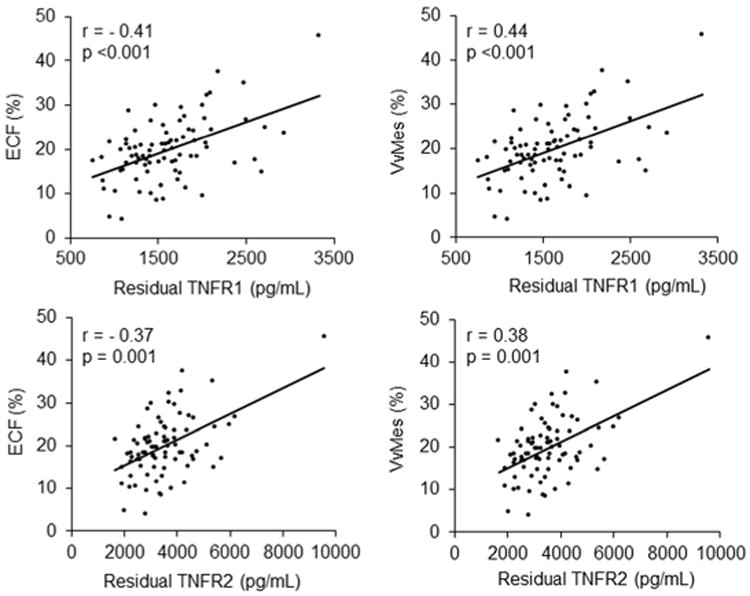
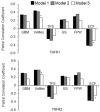
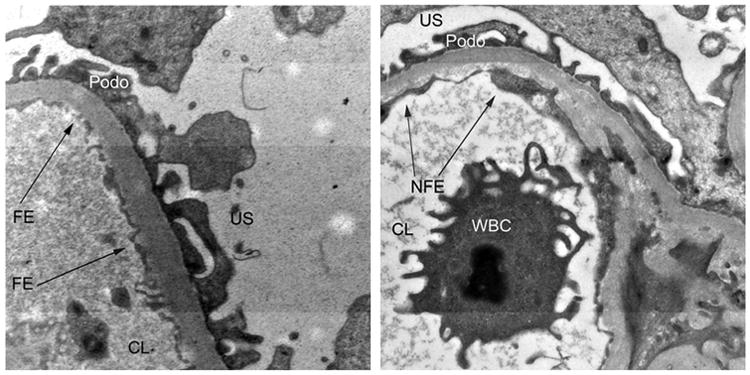
Description:Elevated serum tumor necrosis factor receptor 1 (TNFR1) and 2 (TNFR2) concentrations are strongly associated with increased risk of end-stage renal disease in type 2 diabetes. However, little is known about the early glomerular structural lesions that develop in patients when these markers are elevated. Here, we examined the relationships between TNFRs and glomerular structure in 83 American Indians with type 2 diabetes. Serum TNFRs and glomerular filtration rate (GFR, iothalamate) were measured during a research exam performed within a median of 0.9 months from a percutaneous kidney biopsy. Associations of TNFRs with glomerular structural variables were quantified by Spearman's correlations and by multivariable linear regression after adjustment for age, gender, diabetes duration, hemoglobin A1c, body mass index, and mean arterial pressure. The baseline mean age was 46 years, median GFR 130 ml/min, median albumin/creatinine ratio 26 mg/g, median TNFR1 1500 pg/ml, and median TNFR2 3284 pg/ml. After multivariable adjustment, TNFR1 and TNFR2 significantly correlated inversely with the percentage of endothelial cell fenestration and the total filtration surface per glomerulus. There were significant positive correlations with mesangial fractional volume, glomerular basement membrane width, podocyte foot process width, and percentage of global glomerular sclerosis. Thus, TNFRs may be involved in the pathogenesis of early glomerular lesions in diabetic nephropathy.
-
Subjects:
-
Source:Kidney Int. 89(1):226-234.
-
Pubmed ID:26398493
-
Pubmed Central ID:PMC4805514
-
Document Type:
-
Funding:
-
Volume:89
-
Issue:1
-
Collection(s):
-
Main Document Checksum:urn:sha256:2611261a2185ff7adeae2b15f9d0f750e8d23e222d2adfc403451b08b76fa2b6
-
Download URL:
-
File Type:
 [PDF
- 306.74 KB
]
[PDF
- 306.74 KB
]
Supporting Files


File Language:
English
ON THIS PAGE




CDC STACKS serves as an archival repository of CDC-published products including
scientific findings,
journal articles, guidelines, recommendations, or other public health information authored or
co-authored by CDC or funded partners.
As a repository, CDC STACKS retains documents in their original published format to ensure public access to scientific information.
As a repository, CDC STACKS retains documents in their original published format to ensure public access to scientific information.
You May Also Like
COLLECTION
CDC Public Access