


Biomimicry Enhances Sequential Reactions of Tethered Glycolytic Enzymes, TPI and GAPDHS
Supporting Files

-
Apr 23 2013
-
File Language:
English
Details
-
Alternative Title:PLoS One
-
Personal Author:
-
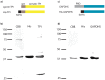
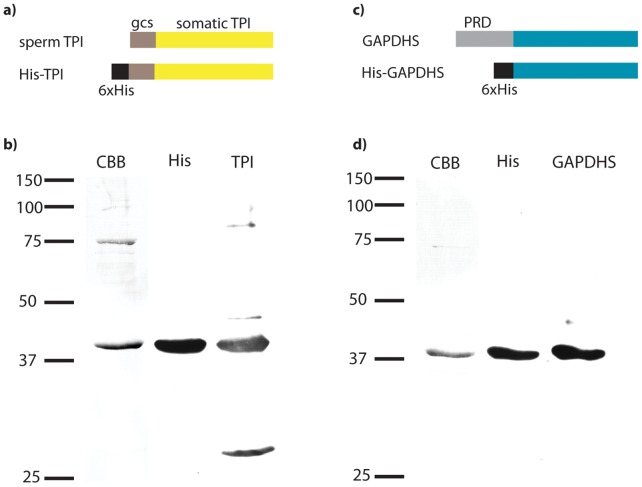
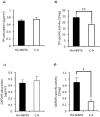
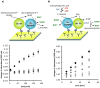
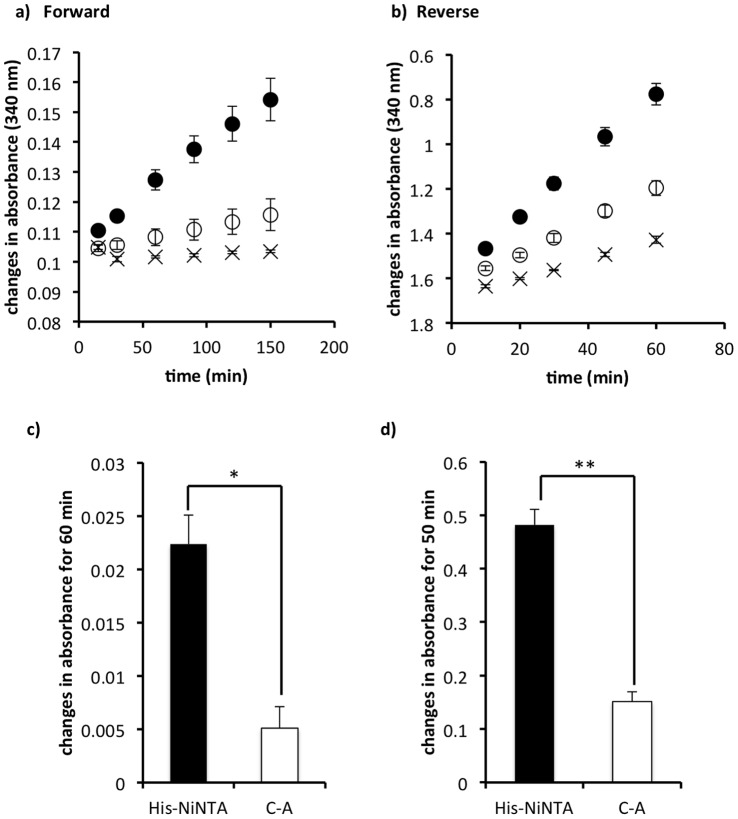
Description:Maintaining activity of enzymes tethered to solid interfaces remains a major challenge in developing hybrid organic-inorganic devices. In nature, mammalian spermatozoa have overcome this design challenge by having glycolytic enzymes with specialized targeting domains that enable them to function while tethered to a cytoskeletal element. As a step toward designing a hybrid organic-inorganic ATP-generating system, we implemented a biomimetic site-specific immobilization strategy to tether two glycolytic enzymes representing different functional enzyme families: triose phosphoisomerase (TPI; an isomerase) and glyceraldehyde 3-phosphate dehydrogenase (GAPDHS; an oxidoreductase). We then evaluated the activities of these enzymes in comparison to when they were tethered via classical carboxyl-amine crosslinking. Both enzymes show similar surface binding regardless of immobilization method. Remarkably, specific activities for both enzymes were significantly higher when tethered using the biomimetic, site-specific immobilization approach. Using this biomimetic approach, we tethered both enzymes to a single surface and demonstrated their function in series in both forward and reverse directions. Again, the activities in series were significantly higher in both directions when the enzymes were coupled using this biomimetic approach versus carboxyl-amine binding. Our results suggest that biomimetic, site-specific immobilization can provide important functional advantages over chemically specific, but non-oriented attachment, an important strategic insight given the growing interest in recapitulating entire biological pathways on hybrid organic-inorganic devices.
-
Subjects:
-
Source:PLoS One. 2013; 8(4).
-
Pubmed ID:23626684
-
Pubmed Central ID:PMC3634084
-
Document Type:
-
Funding:
-
Volume:8
-
Issue:4
-
Collection(s):
-
Main Document Checksum:urn:sha256:b7d1009711f0f9d6f5ac9cb74d897e9e5a0d9ab8079742093ab8e22237edacdd
-
Download URL:
-
File Type:
 [PDF
- 1.54 MB
]
[PDF
- 1.54 MB
]
Supporting Files


File Language:
English
ON THIS PAGE















CDC STACKS serves as an archival repository of CDC-published products including
scientific findings,
journal articles, guidelines, recommendations, or other public health information authored or
co-authored by CDC or funded partners.
As a repository, CDC STACKS retains documents in their original published format to ensure public access to scientific information.
As a repository, CDC STACKS retains documents in their original published format to ensure public access to scientific information.
You May Also Like
COLLECTION
CDC Public Access