


Defects in Base Excision Repair Sensitize Cells to Manganese in S. cerevisiae
Supporting Files

-
Oct 27 2013
-
File Language:
English
Details
-
Alternative Title:Biomed Res Int
-
Personal Author:
-
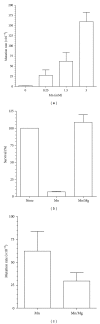
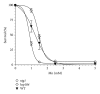
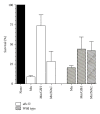
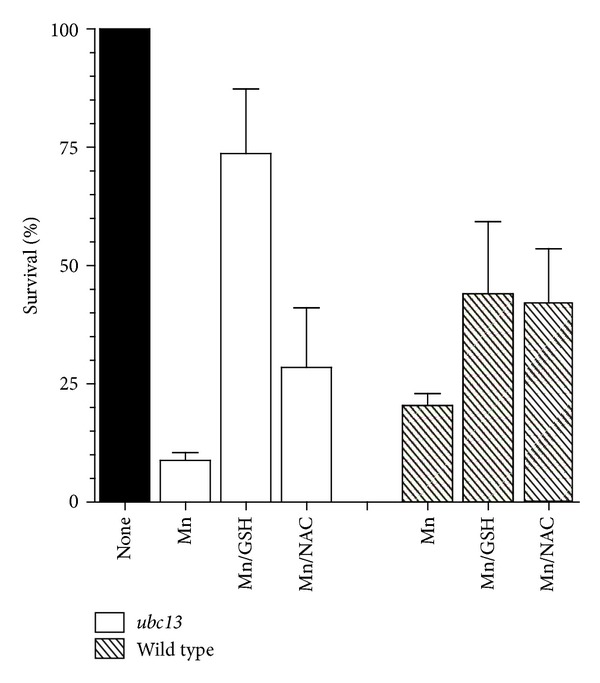
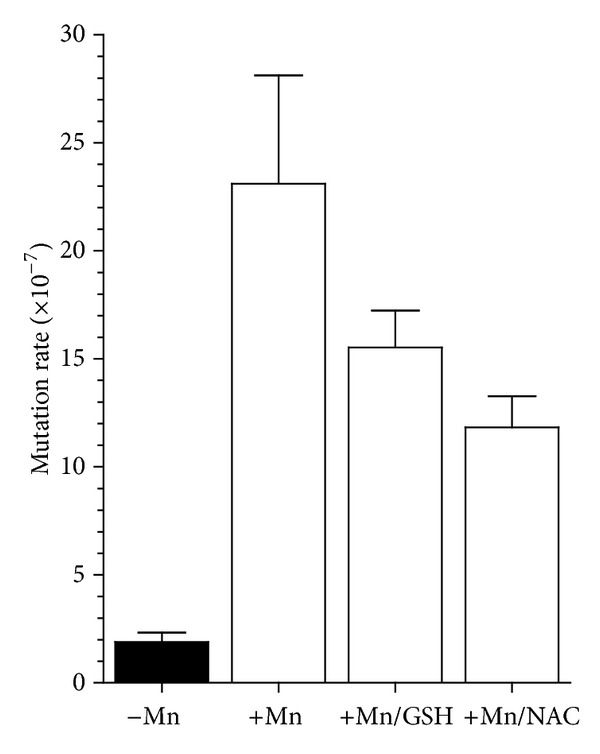
Description:Manganese (Mn) is essential for normal physiologic functioning; therefore, deficiencies and excess intake of manganese can result in disease. In humans, prolonged exposure to manganese causes neurotoxicity characterized by Parkinson-like symptoms. Mn(2+) has been shown to mediate DNA damage possibly through the generation of reactive oxygen species. In a recent publication, we showed that Mn induced oxidative DNA damage and caused lesions in thymines. This study further investigates the mechanisms by which cells process Mn(2+)-mediated DNA damage using the yeast S. cerevisiae. The strains most sensitive to Mn(2+) were those defective in base excision repair, glutathione synthesis, and superoxide dismutase mutants. Mn(2+) caused a dose-dependent increase in the accumulation of mutations using the CAN1 and lys2-10A mutator assays. The spectrum of CAN1 mutants indicates that exposure to Mn results in accumulation of base substitutions and frameshift mutations. The sensitivity of cells to Mn(2+) as well as its mutagenic effect was reduced by N-acetylcysteine, glutathione, and Mg(2+). These data suggest that Mn(2+) causes oxidative DNA damage that requires base excision repair for processing and that Mn interferes with polymerase fidelity. The status of base excision repair may provide a biomarker for the sensitivity of individuals to manganese.
-
Subjects:
-
Source:Biomed Res Int. 2013; 2013.
-
Pubmed ID:24282812
-
Pubmed Central ID:PMC3825218
-
Document Type:
-
Funding:
-
Volume:2013
-
Collection(s):
-
Main Document Checksum:urn:sha256:6065748260c0987fea42910abc27eb1a848608950bacaa3cd7c96848d8544df5
-
Download URL:
-
File Type:
 [PDF
- 1.04 MB
]
[PDF
- 1.04 MB
]
Supporting Files


File Language:
English
ON THIS PAGE




CDC STACKS serves as an archival repository of CDC-published products including
scientific findings,
journal articles, guidelines, recommendations, or other public health information authored or
co-authored by CDC or funded partners.
As a repository, CDC STACKS retains documents in their original published format to ensure public access to scientific information.
As a repository, CDC STACKS retains documents in their original published format to ensure public access to scientific information.
You May Also Like
COLLECTION
CDC Public Access