


Novel Betacoronavirus in Dromedaries of the Middle East, 2013
Supporting Files
Public Domain

-
Apr 2014
-
File Language:
English
Details
-
Alternative Title:Emerg Infect Dis
-
Personal Author:
-
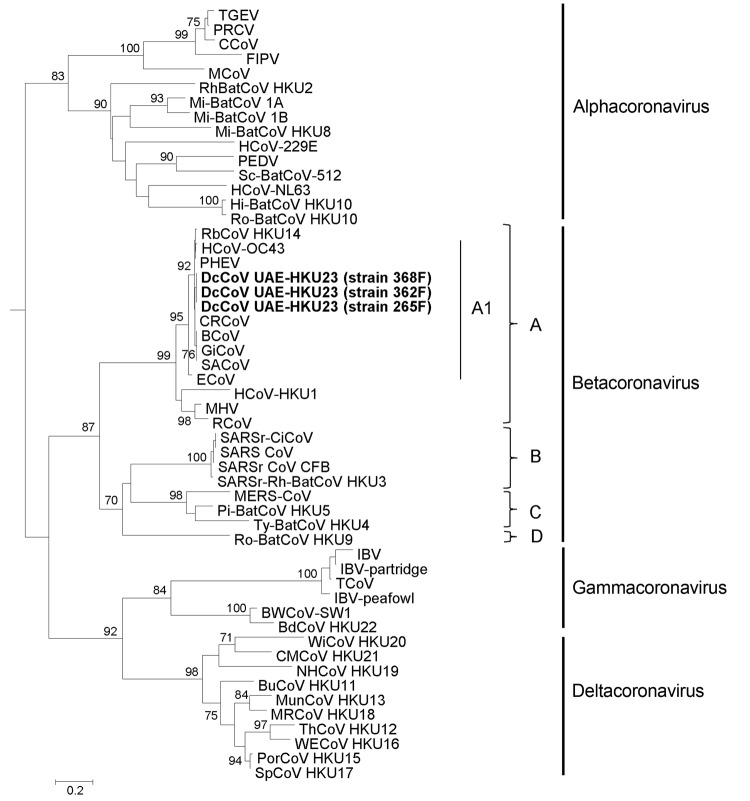
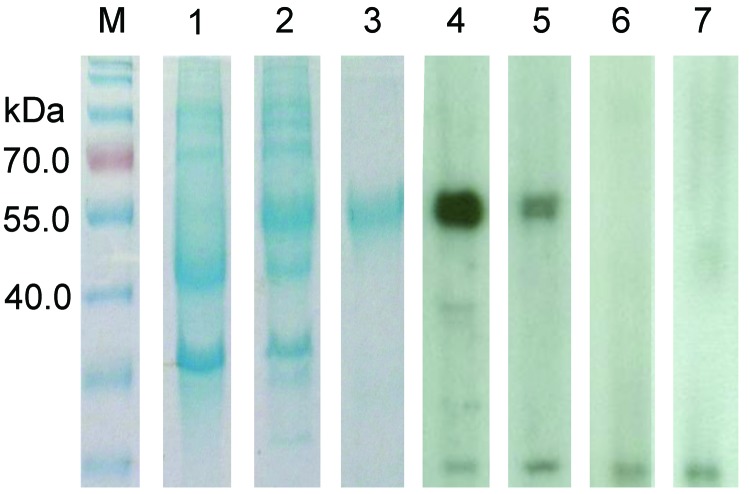
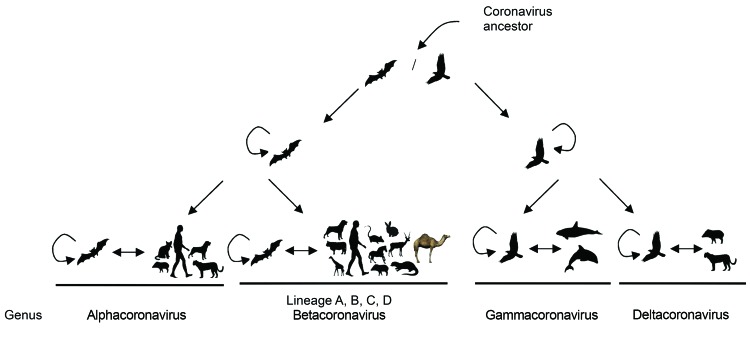
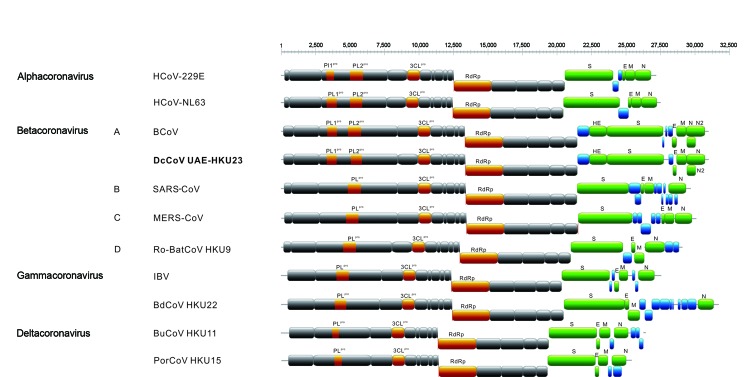
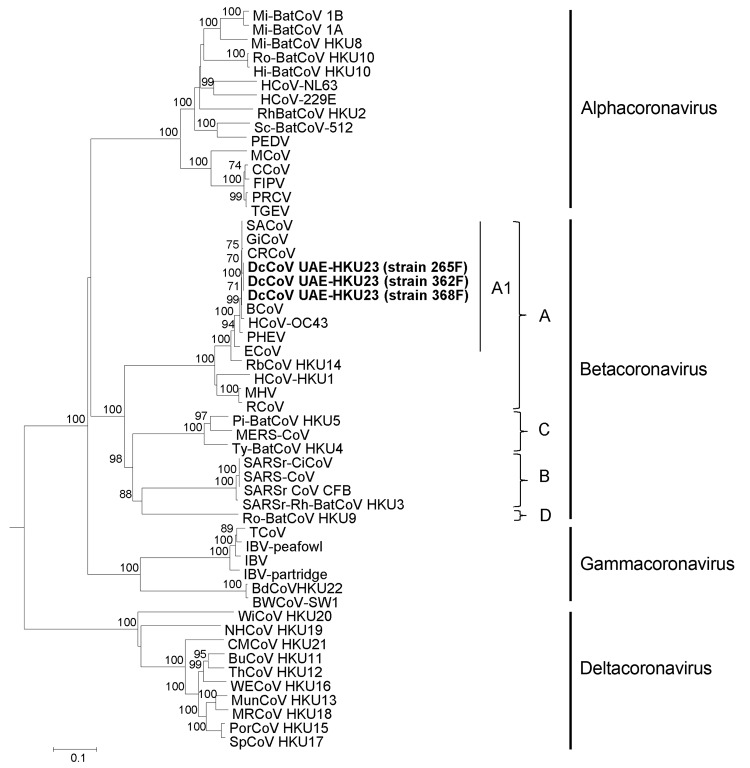
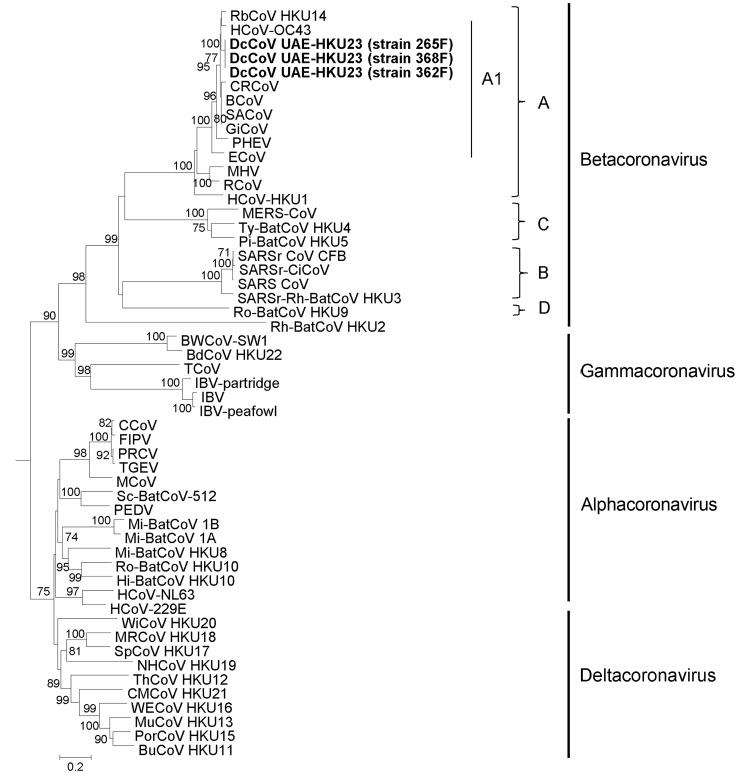
Description:In 2013, a novel betacoronavirus was identified in fecal samples from dromedaries in Dubai, United Arab Emirates. Antibodies against the recombinant nucleocapsid protein of the virus, which we named dromedary camel coronavirus (DcCoV) UAE-HKU23, were detected in 52% of 59 dromedary serum samples tested. In an analysis of 3 complete DcCoV UAE-HKU23 genomes, we identified the virus as a betacoronavirus in lineage A1. The DcCoV UAE-HKU23 genome has G+C contents; a general preference for G/C in the third position of codons; a cleavage site for spike protein; and a membrane protein of similar length to that of other betacoronavirus A1 members, to which DcCoV UAE-HKU23 is phylogenetically closely related. Along with this coronavirus, viruses of at least 8 other families have been found to infect camels. Because camels have a close association with humans, continuous surveillance should be conducted to understand the potential for virus emergence in camels and for virus transmission to humans.
-
Subjects:
-
Source:Emerg Infect Dis. 20(4):560-572.
-
Document Type:
-
Place as Subject:
-
Location:
-
Volume:20
-
Issue:4
-
Collection(s):
-
Main Document Checksum:urn:sha256:8aca953ea88bbb65d2858b45cc5c8c5b26fc59f3b9bace9441a5ffaee15eac7c
-
Download URL:
-
File Type:
 [PDF
- 749.11 KB
]
[PDF
- 749.11 KB
]
Supporting Files


File Language:
English
ON THIS PAGE




CDC STACKS serves as an archival repository of CDC-published products including
scientific findings,
journal articles, guidelines, recommendations, or other public health information authored or
co-authored by CDC or funded partners.
As a repository, CDC STACKS retains documents in their original published format to ensure public access to scientific information.
As a repository, CDC STACKS retains documents in their original published format to ensure public access to scientific information.
You May Also Like
COLLECTION
Emerging Infectious Diseases