


Travel-associated Illness Trends and Clusters, 2000–2010
Supporting Files
Public Domain

-
Jul 2013
-
File Language:
English
Details
-
Alternative Title:Emerg Infect Dis
-
Personal Author:
-
Corporate Authors:
-
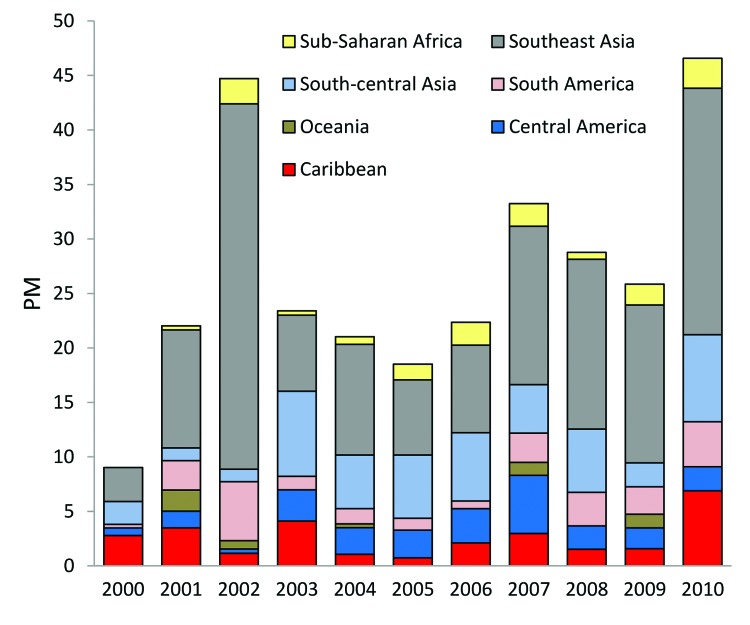
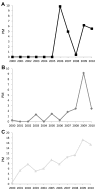
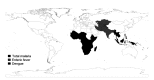
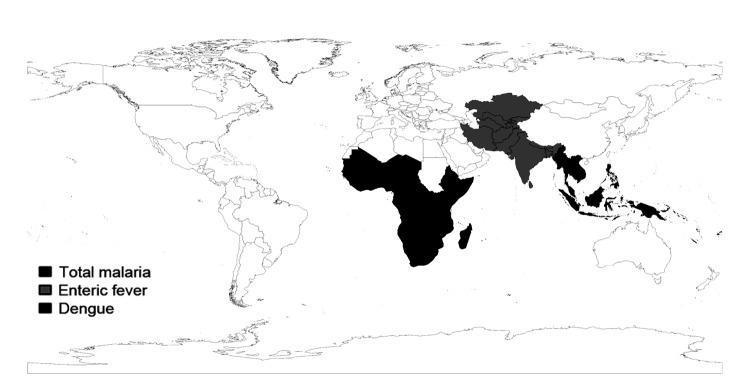
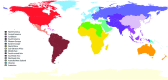
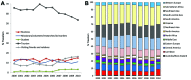
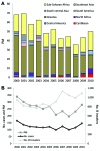
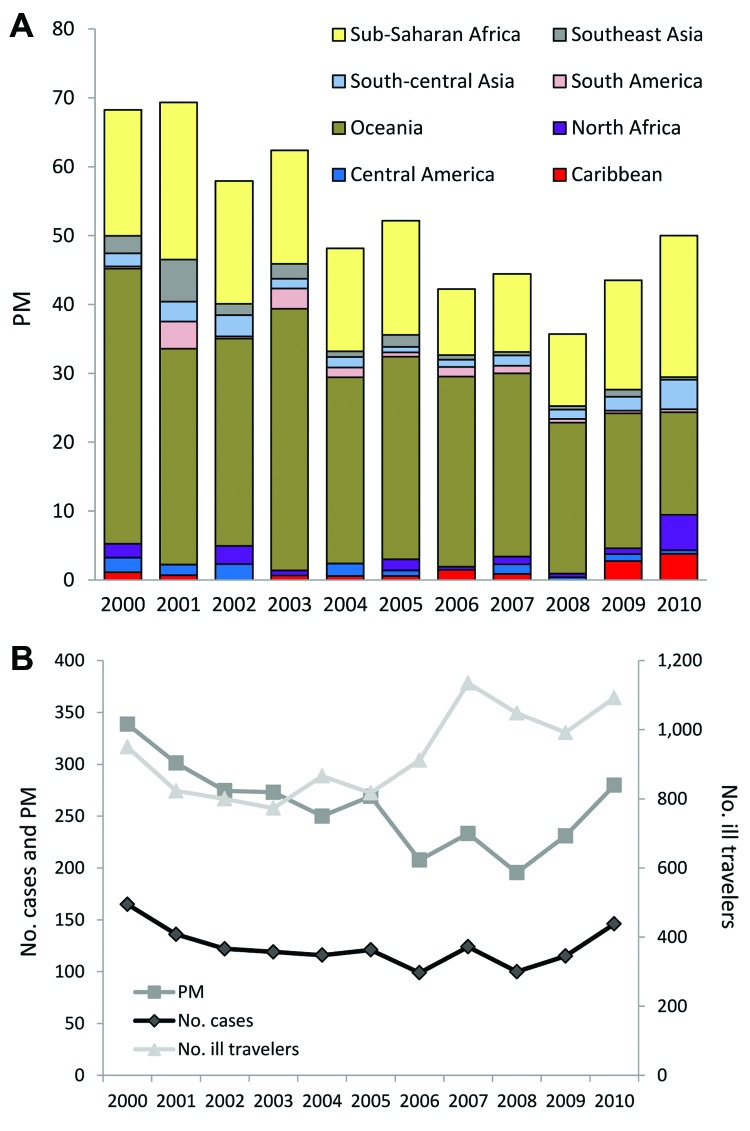
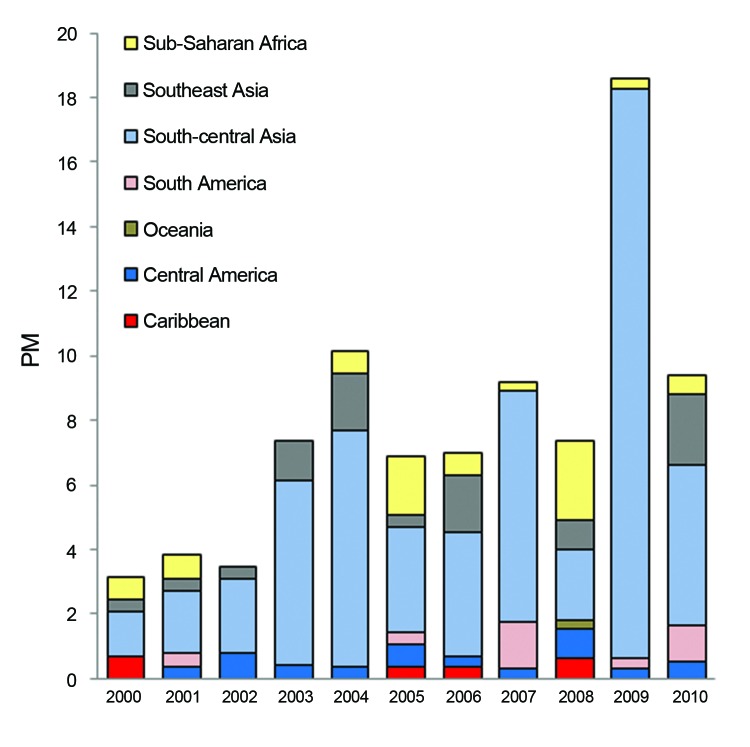
Description:Longitudinal data examining travel-associated illness patterns are lacking. To address this need and determine trends and clusters in travel-related illness, we examined data for 2000-2010, prospectively collected for 42,223 ill travelers by 18 GeoSentinel sites. The most common destinations from which ill travelers returned were sub-Saharan Africa (26%), Southeast Asia (17%), south-central Asia (15%), and South America (10%). The proportion who traveled for tourism decreased significantly, and the proportion who traveled to visit friends and relatives increased. Among travelers returning from malaria-endemic regions, the proportionate morbidity (PM) for malaria decreased; in contrast, the PM trends for enteric fever and dengue (excluding a 2002 peak) increased. Case clustering was detected for malaria (Africa 2000, 2007), dengue (Thailand 2002, India 2003), and enteric fever (Nepal 2009). This multisite longitudinal analysis highlights the utility of sentinel surveillance of travelers for contributing information on disease activity trends and an evidence base for travel medicine recommendations.
-
Subjects:
-
Source:Emerg Infect Dis. 19(7):1049-1073.
-
Document Type:
-
Volume:19
-
Issue:7
-
Collection(s):
-
Main Document Checksum:urn:sha-512:eb30d76da9bd99008f4a10aba634318c490c076c6d49a86a8fa5965e371d7fa3ec6b5308fd4cfa360d65070f801f81db561429d48e368fd00335fa641cf58c97
-
Download URL:
-
File Type:
 [PDF
- 1.41 MB
]
[PDF
- 1.41 MB
]
Supporting Files


File Language:
English
ON THIS PAGE





CDC STACKS serves as an archival repository of CDC-published products including
scientific findings,
journal articles, guidelines, recommendations, or other public health information authored or
co-authored by CDC or funded partners.
As a repository, CDC STACKS retains documents in their original published format to ensure public access to scientific information.
As a repository, CDC STACKS retains documents in their original published format to ensure public access to scientific information.
You May Also Like
COLLECTION
Emerging Infectious Diseases