


Zoonotic Chlamydiaceae Species Associated with Trachoma, Nepal
Supporting Files
Public Domain

-
Dec 2013
-
Details
-
Alternative Title:Emerg Infect Dis
-
Personal Author:
-
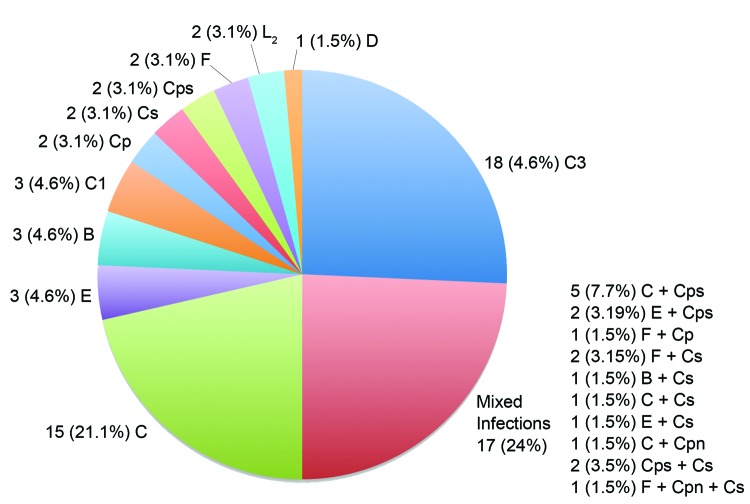
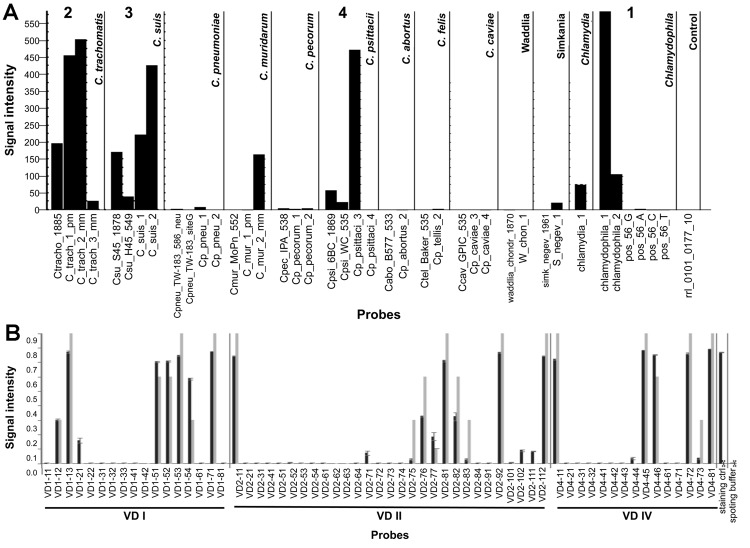
Description:Trachoma is the leading cause of preventable blindness. Commercial assays do not discriminate among all Chlamydiaceae species that might be involved in trachoma. We investigated whether a commercial Micro-ArrayTube could discriminate Chlamydiaceae species in DNA extracted directly from conjunctival samples from 101 trachoma patients in Nepal. To evaluate organism viability, we extracted RNA, reverse transcribed it, and subjected it to quantitative real-time PCR. We found that 71 (70.3%) villagers were infected. ArrayTube sensitivity was 91.7% and specificity was 100% compared with that of real-time PCR. Concordance between genotypes detected by microarray and ompA genotyping was 100%. Species distribution included 54 (76%) single infections with Chlamydia trachomatis, C. psittaci, C. suis, or C. pecorum, and 17 (24%) mixed infections that includied C. pneumoniae. Ocular infections were caused by 5 Chlamydiaceae species. Additional studies of trachoma pathogenesis involving Chlamydiaceae species other than C. trachomatis and their zoonotic origins are needed.
-
Subjects:
-
Source:Emerg Infect Dis. 19(12):1948-1955.
-
Document Type:
-
Volume:19
-
Issue:12
-
Collection(s):
-
Main Document Checksum:urn:sha256:7f988d06d4aa5e92ff9fc34c28c5fe5034fea661a21966a259f6f54e5a5dc6a9
-
Download URL:
-
File Type:
 [PDF
- 626.07 KB
]
[PDF
- 626.07 KB
]
Supporting Files


ON THIS PAGE


CDC STACKS serves as an archival repository of CDC-published products including
scientific findings,
journal articles, guidelines, recommendations, or other public health information authored or
co-authored by CDC or funded partners.
As a repository, CDC STACKS retains documents in their original published format to ensure public access to scientific information.
As a repository, CDC STACKS retains documents in their original published format to ensure public access to scientific information.
You May Also Like
COLLECTION
Emerging Infectious Diseases