


High Rates of Mycobacterium tuberculosis among Socially Marginalized Immigrants in Low-Incidence Area, 1991–2010, Europe
Supporting Files
Public Domain

-
2013
-
Details
-
Alternative Title:Emerg Infect Dis
-
Personal Author:
-
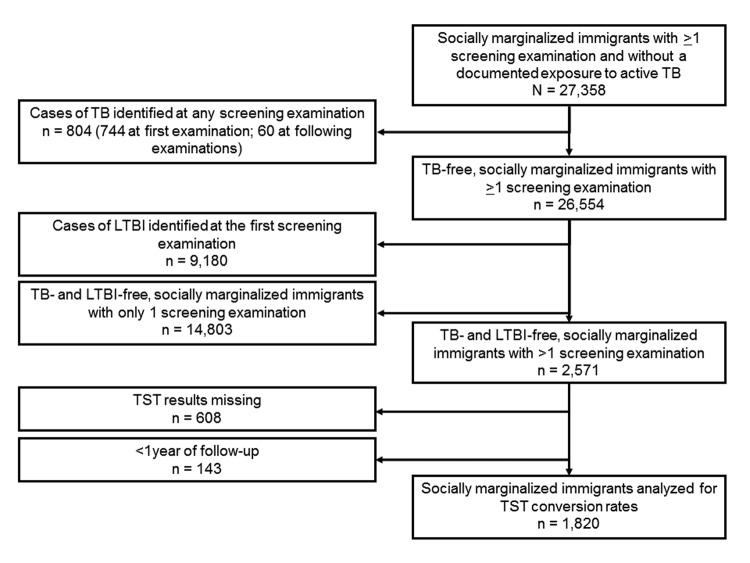
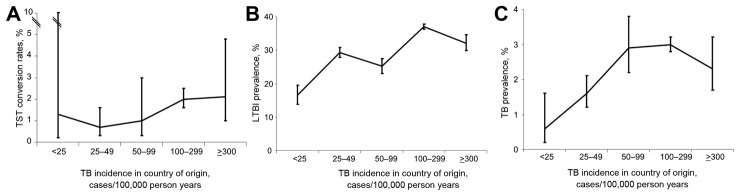
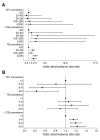
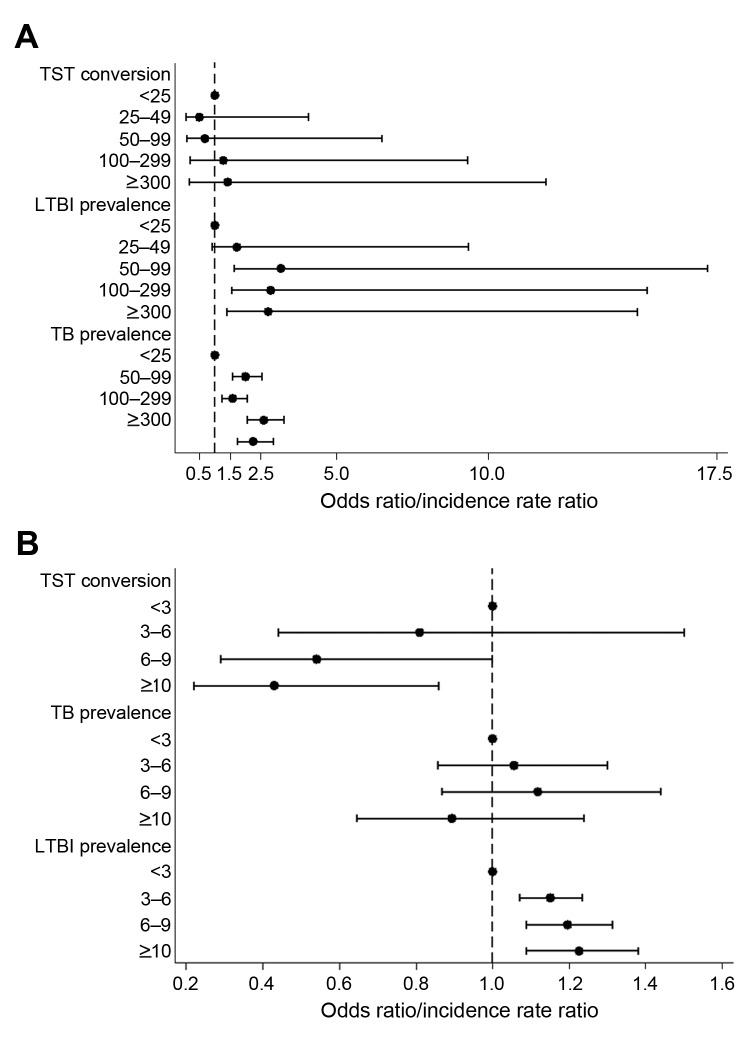
Description:Migration from low- and middle-income countries to high-income countries increasingly determines the severity of tuberculosis (TB) cases in the adopted country. Socially marginalized groups, about whom little is known, may account for a reservoir of TB among the immigrant populations. We investigated the rates of and risk factors for Mycobacterium tuberculosis transmission, infection, and disease in a cohort of 27,358 socially marginalized immigrants who were systematically screened (1991-2010) in an area of Europe with low TB incidence. Overall TB and latent TB infection prevalence and annual tuberculin skin testing conversion rates (i.e., incidence of new infection) were 2.7%, 34.6%, and 1.7%, respectively. Prevalence of both TB and latent TB infection and incidence of infection increased as a function of the estimated TB incidence in the immigrants' countries of origin. Annual infection incidence decreased with time elapsed since immigration. These findings have implications for control policy and immigrant screening in countries with a low prevalence of TB.
-
Subjects:
-
Source:Emerg Infect Dis. 19(9):1437-1445.
-
Document Type:
-
Volume:19
-
Issue:9
-
Collection(s):
-
Main Document Checksum:urn:sha256:54a51bd9e857f8e60f483234fdfc7066c069ec1001d22cc21267458fd7719a7a
-
Download URL:
-
File Type:
 [PDF
- 723.59 KB
]
[PDF
- 723.59 KB
]
Supporting Files


ON THIS PAGE

CDC STACKS serves as an archival repository of CDC-published products including
scientific findings,
journal articles, guidelines, recommendations, or other public health information authored or
co-authored by CDC or funded partners.
As a repository, CDC STACKS retains documents in their original published format to ensure public access to scientific information.
As a repository, CDC STACKS retains documents in their original published format to ensure public access to scientific information.
You May Also Like
COLLECTION
Emerging Infectious Diseases