


Serotype IV and Invasive Group B Streptococcus Disease in Neonates, Minnesota, USA, 2000–20101
Supporting Files
Public Domain

-
Apr 2013
-
File Language:
English
Details
-
Alternative Title:Emerg Infect Dis
-
Personal Author:
-
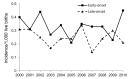
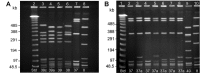
Description:Group B Streptococcus (GBS) is a major cause of invasive disease in neonates in the United States. Surveillance of invasive GBS disease in Minnesota, USA, during 2000-2010 yielded 449 isolates from 449 infants; 257 had early-onset (EO) disease (by age 6 days) and 192 late-onset (LO) disease (180 at age 7-89 days, 12 at age 90-180 days). Isolates were characterized by capsular polysaccharide serotype and surface-protein profile; types III and Ia predominated. However, because previously uncommon serotype IV constitutes 5/31 EO isolates in 2010, twelve type IV isolates collected during 2000-2010 were studied further. By pulsed-field gel electrophoresis, they were classified into 3 profiles; by multilocus sequence typing, representative isolates included new sequence type 468. Resistance to clindamycin or erythromycin was detected in 4/5 serotype IV isolates. Emergence of serotype IV GBS in Minnesota highlights the need for serotype prevalence monitoring to detect trends that could affect prevention strategies.
-
Subjects:
-
Source:Emerg Infect Dis. 19(4):551-558.
-
Document Type:
-
Place as Subject:
-
Location:
-
Volume:19
-
Issue:4
-
Collection(s):
-
Main Document Checksum:urn:sha256:68af47dd41cdb63a0ddf4a0b122fa2a2596767934447bde31ee76aa20666c33f
-
Download URL:
-
File Type:
 [PDF
- 532.58 KB
]
[PDF
- 532.58 KB
]
Supporting Files


File Language:
English
ON THIS PAGE




CDC STACKS serves as an archival repository of CDC-published products including
scientific findings,
journal articles, guidelines, recommendations, or other public health information authored or
co-authored by CDC or funded partners.
As a repository, CDC STACKS retains documents in their original published format to ensure public access to scientific information.
As a repository, CDC STACKS retains documents in their original published format to ensure public access to scientific information.
You May Also Like
COLLECTION
Emerging Infectious Diseases