



Population Diversity among Bordetella pertussis Isolates, United States, 1935–2009
Supporting Files
Public Domain

-
Aug 2012
File Language:
English
Details
-
Alternative Title:Emerg Infect Dis
-
Personal Author:
-
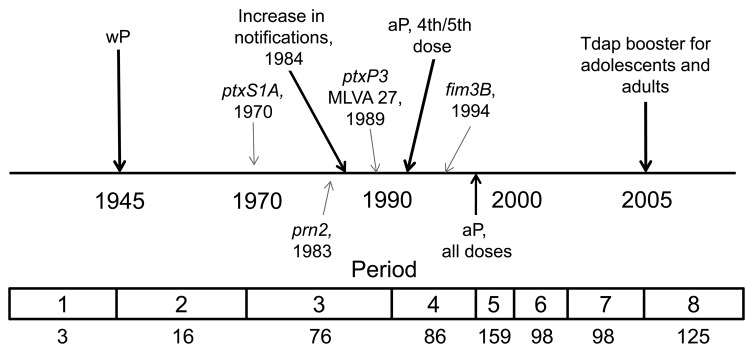
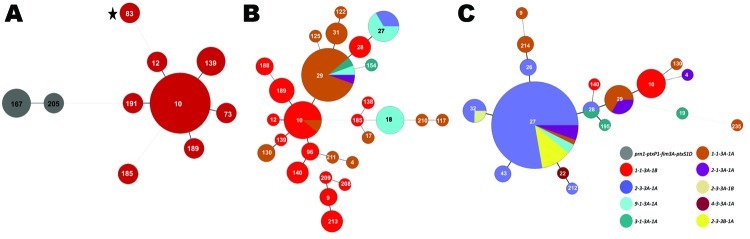
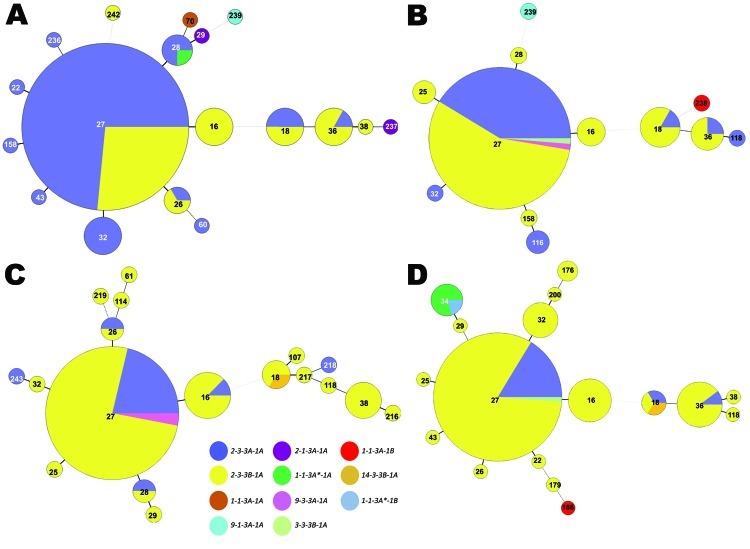
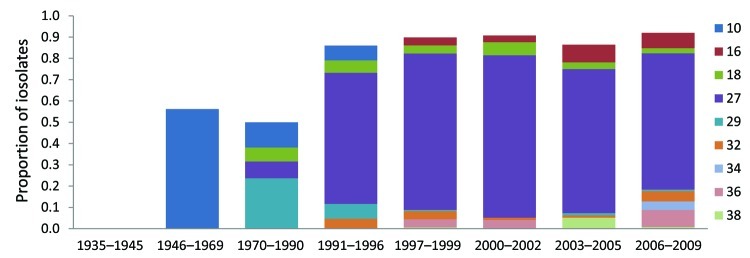
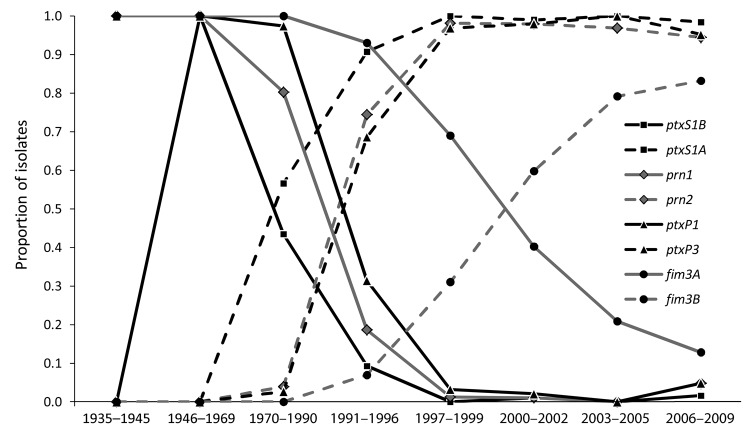
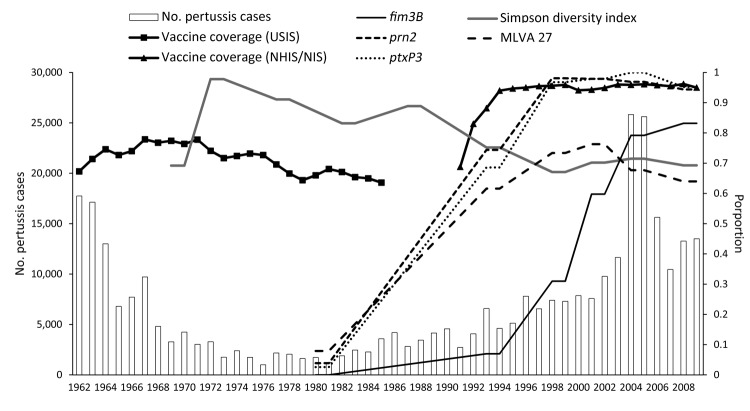
Description:Since the 1980s, pertussis notifications in the United States have been increasing. To determine the types of Bordetella pertussis responsible for these increases, we divided 661 B. pertussis isolates collected in the United States during 1935-2009 into 8 periods related to the introduction of novel vaccines or changes in vaccination schedule. B. pertussis diversity was highest from 1970-1990 (94%) but declined to ≈ 70% after 1991 and has remained constant. During 2006-2009, 81.6% of the strains encoded multilocus sequence type prn2-ptxP3-ptxS1A-fim3B, and 64% were multilocus variable number tandem repeat analysis type 27. US trends were consistent with those seen internationally; emergence and predominance of the fim3B allele was the only molecular characteristic associated with the increase in pertussis notifications. Changes in the vaccine composition and schedule were not the direct selection pressures that resulted in the allele changes present in the current B. pertussis population.
-
Subjects:
-
Source:Emerg Infect Dis. 18(8):1248-1255.
-
Document Type:
-
Place as Subject:
-
Location:
-
Volume:18
-
Issue:8
-
Download URL:
-
File Type:
 [PDF - 364.93 KB]
 -
Collection(s):
-
Main Document Checksum:urn:sha256:5b01bbb9a11ecf2ef6d4722988c6fe5ed58604d5ce19faee25c9ddb12072550d
Supporting Files


File Language:
English
 Was this page helpful?
 Found an issue?




CDC STACKS serves as an archival repository of CDC-published products including
scientific findings, journal articles, guidelines, recommendations, or other public health information authored or
co-authored by CDC or funded partners.
As a repository, CDC STACKS retains documents in their original published format to ensure public access to scientific information.
As a repository, CDC STACKS retains documents in their original published format to ensure public access to scientific information.
You May Also Like
COLLECTION
Emerging Infectious Diseases