



Guideline-concordant breast cancer care by patient race and ethnicity accounting for individual-, facility- and area-level characteristics: a SEER-Medicare study
Supporting Files

-
7 2024 ; 7-2024
-
Available in CDC Stacks on 2025-01-07T00:00:00Z

File Language:
English
Details
-
Alternative Title:Cancer Causes Control
-
Personal Author:
-
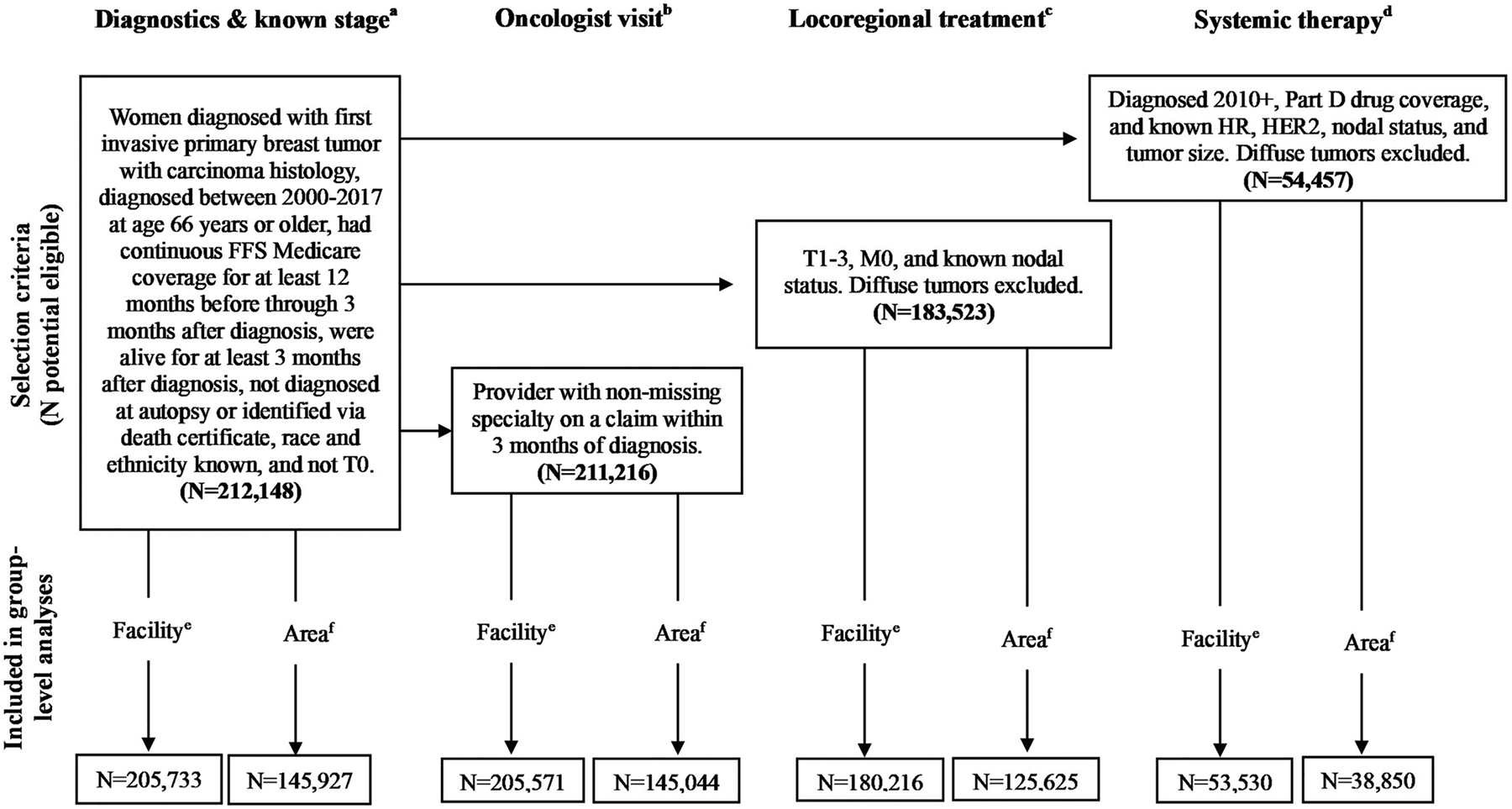
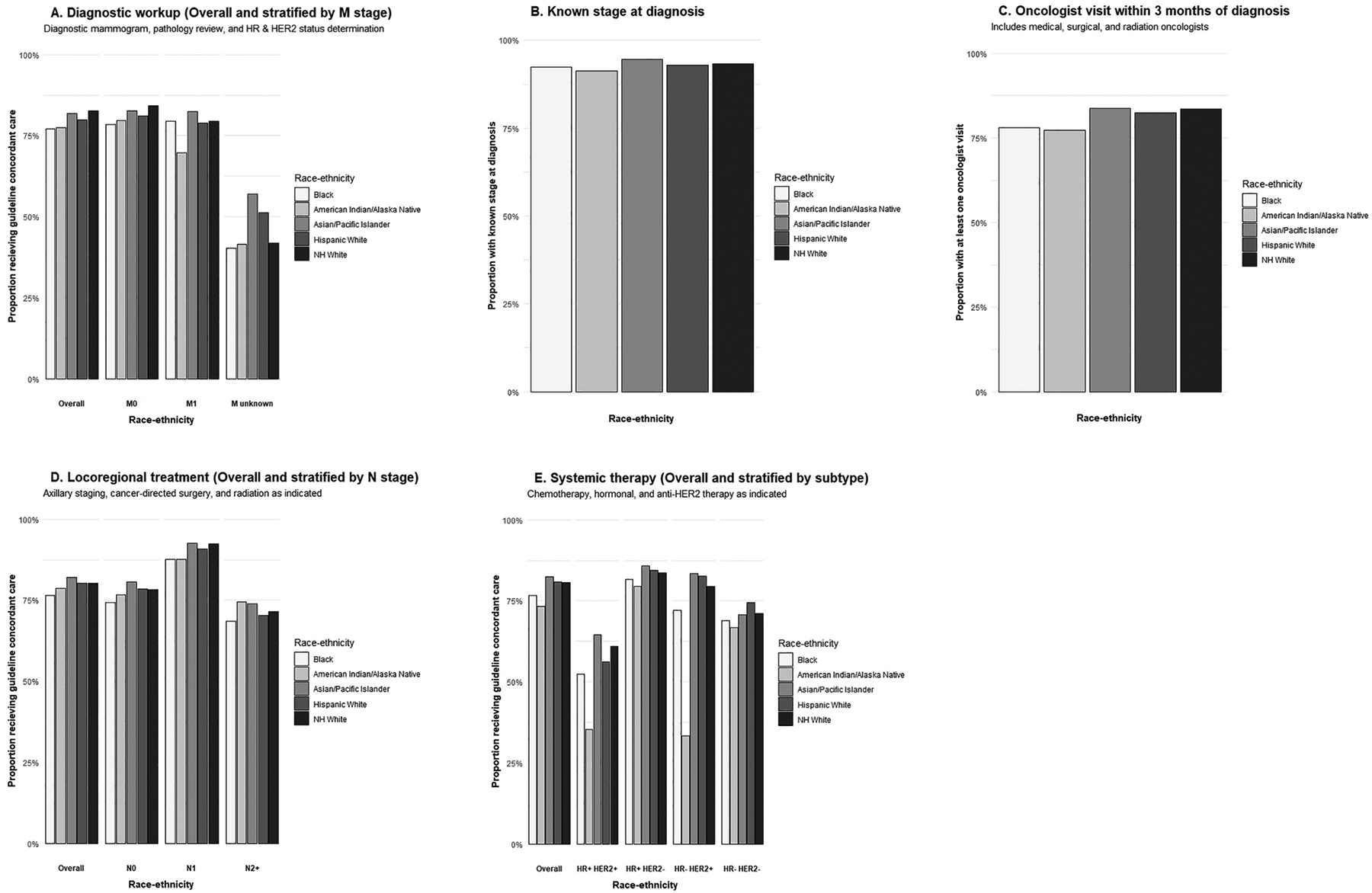
Description:Purpose ; To examine racial–ethnic variation in adherence to established quality metrics (NCCN guidelines and ASCO quality metrics) for breast cancer, accounting for individual-, facility-, and area-level factors. ; Methods ; Data from women diagnosed with invasive breast cancer at 66+ years of age from 2000 to 2017 were examined using SEER-Medicare. Associations between race and ethnicity and guideline-concordant diagnostics, locoregional treatment, systemic therapy, documented stage, and oncologist encounters were estimated using multilevel logistic regression models to account for clustering within facilities or counties. ; Results ; Black and American Indian/Alaska Native (AIAN) women had consistently lower odds of guideline-recommended care than non-Hispanic White (NHW) women (Diagnostic workup: ORBlack 0.83 (0.79–0.88), ORAIAN 0.66 (0.54–0.81); known stage: ORBlack 0.87 (0.80–0.94), ORAIAN 0.63 (0.47–0.85); seeing an oncologist: ORBlack 0.75 (0.71–0.79), ORAIAN 0.60 (0.47–0.72); locoregional treatment: ORBlack 0.80 (0.76–0.84), ORAIAN 0.84 (0.68–1.02); systemic therapies: ORBlack 0.90 (0.83–0.98), ORAIAN 0.66 (0.48–0.91)). Commission on Cancer accreditation and facility volume were significantly associated with higher odds of guideline-concordant diagnostics, stage, oncologist visits, and systemic therapy. Black residential segregation was associated with significantly lower odds of guideline-concordant locoregional treatment and systemic therapy. Rurality and area SES were associated with significantly lower odds of guideline-concordant diagnostics and oncologist visits. ; Conclusions ; This is the first study to examine guideline-concordance across the continuum of breast cancer care from diagnosis to treatment initiation. Disparities were present from the diagnostic phase and persisted throughout the clinical course. Facility and area characteristics may facilitate or pose barriers to guideline-adherent treatment and warrant future investigation as mediators of racial–ethnic disparities in breast cancer care.
-
Subjects:
-
Keywords:
-
Source:Cancer Causes Control. 35(7):1017-1031
-
Pubmed ID:38546924
-
Pubmed Central ID:PMC11706205
-
Document Type:
-
Funding:UM1 CA221939/CA/NCI NIH HHSUnited States/ ; UM1 CA221940/CA/NCI NIH HHSUnited States/ ; HHSN261201000140C/CA/NCI NIH HHSUnited States/ ; HHSN261201000035C/CA/NCI NIH HHSUnited States/ ; Research Stimulus Award/Geographic Management of Cancer Health Disparities/ ; P30 CA086862/CA/NCI NIH HHSUnited States/ ; HHSN261201000035I/CA/NCI NIH HHSUnited States/ ; HHSN261201000034C/CA/NCI NIH HHSUnited States/ ; R50 CA243692/CA/NCI NIH HHSUnited States/ ; U58 DP003862/DP/NCCDPHP CDC HHSUnited States/ ; UM1 CA222035/CA/NCI NIH HHSUnited States/ ; U24 CA221936/CA/NCI NIH HHSUnited States/
-
Volume:35
-
Issue:7
-
Download URL:
-
File Type:
 [PDF - 781.76 KB]
 -
Collection(s):
-
Main Document Checksum:urn:sha-512:a2ca1a091694020a39829291ab53e887c0ea6b510a413e996f145f86a170db8532da736c2588d7b57314fcbb5400d3016c001a31ccf86aaa32e2ebbd5162032f
Supporting Files


File Language:
English
 Was this page helpful?
 Found an issue?

CDC STACKS serves as an archival repository of CDC-published products including
scientific findings, journal articles, guidelines, recommendations, or other public health information authored or
co-authored by CDC or funded partners.
As a repository, CDC STACKS retains documents in their original published format to ensure public access to scientific information.
As a repository, CDC STACKS retains documents in their original published format to ensure public access to scientific information.
You May Also Like
COLLECTION
CDC Public Access