



Performance of Conditional Random Forest and Regression Models at Predicting Human Fecal Contamination of Produce Irrigation Ponds in the Southeastern United States
Supporting Files

-
11 27 2024 ; 11-27-
-
Available in CDC Stacks on 2024-12-27T00:00:00Z

File Language:
English
Details
-
Alternative Title:ACS ES T Water
-
Personal Author:
-
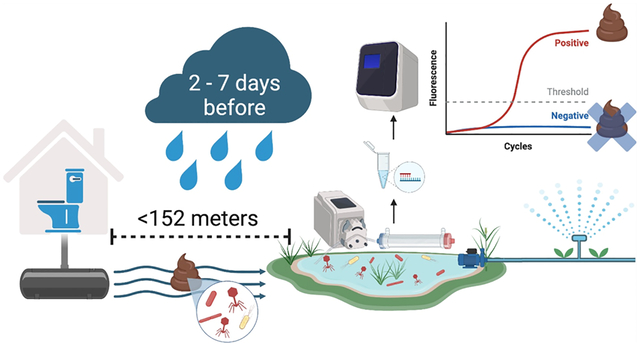
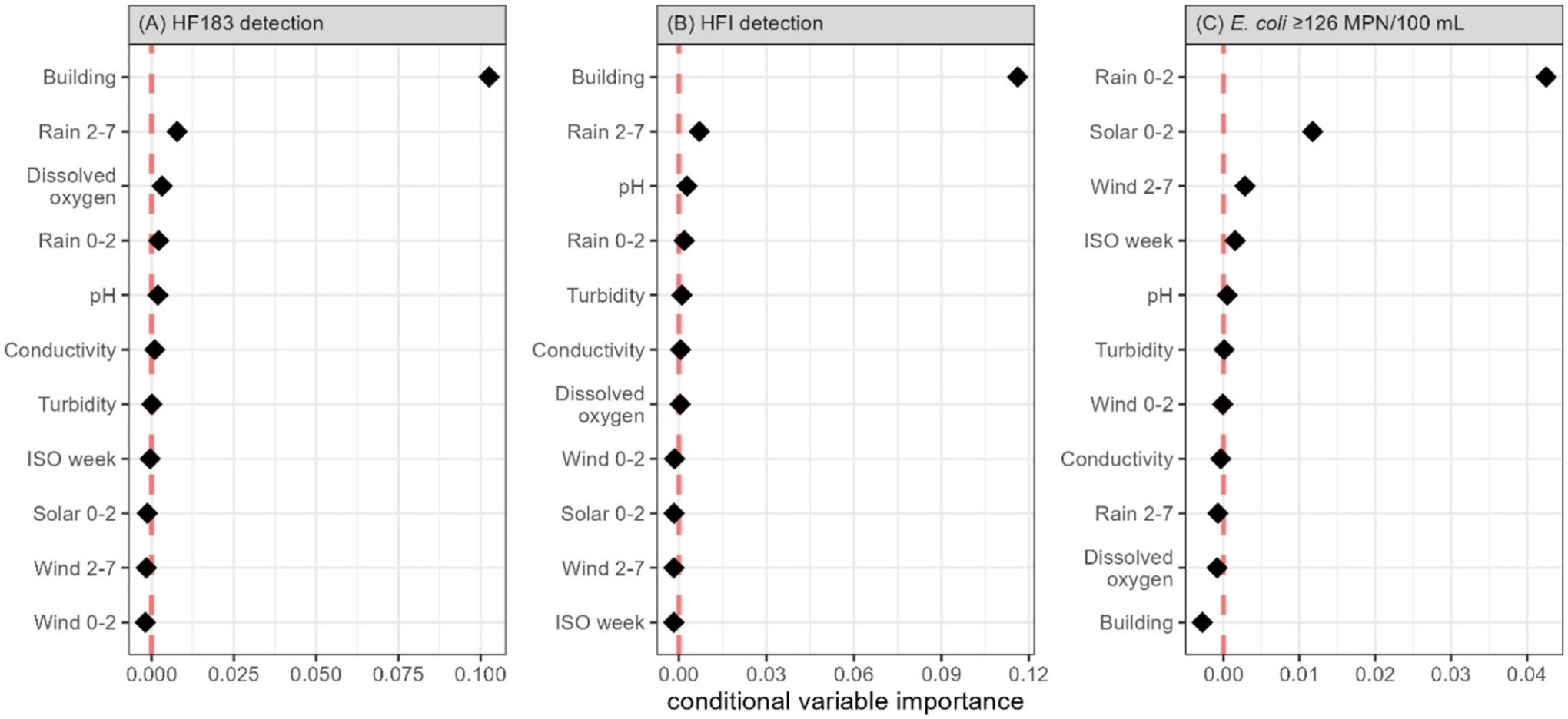
Description:Irrigating fresh produce with contaminated water contributes to the burden of foodborne illness. Identifying fecal contamination of irrigation waters and characterizing fecal sources and associated environmental factors can help inform fresh produce safety and health hazard management. Using two previously collected data sets, we developed and evaluated the performance of logistic regression and conditional random forest models for predicting general and human-specific fecal contamination of ponds in southwest Georgia used for fresh produce irrigation. Generic | served as a general fecal indicator, and human-associated | (HF183), crAssphage, and F+ coliphage genogroup II were used as indicators of human fecal contamination. Increased rainfall in the previous 7 days and the presence of a building within 152 m (a proxy for proximity to septic systems) were associated with increased odds of human fecal contamination in the training data set. However, the models did not accurately predict the presence of human-associated fecal indicators in a second data set collected from nearby irrigation ponds in different years. Predictive statistical models should be used with caution to assess produce irrigation water quality as models may not reliably predict fecal contamination at other locations and times, even within the same growing region.
-
Keywords:
-
Source:ACS ES T Water. 4(12):5844-5855
-
Pubmed ID:39734778
-
Pubmed Central ID:PMC11672865
-
Document Type:
-
Funding:
-
Volume:4
-
Issue:12
-
Download URL:
-
File Type:
 [PDF - 996.69 KB]
 -
Collection(s):
-
Main Document Checksum:urn:sha-512:635bcb92cc96c6f10b330b851f84634107c53aaaf2c3f7dfaf216d921daa5c69a0a5e2ecc7920601235728f07bab39d626bdb799bff54184184ea4160bc9672b
Supporting Files


File Language:
English
 Was this page helpful?
 Found an issue?




CDC STACKS serves as an archival repository of CDC-published products including
scientific findings, journal articles, guidelines, recommendations, or other public health information authored or
co-authored by CDC or funded partners.
As a repository, CDC STACKS retains documents in their original published format to ensure public access to scientific information.
As a repository, CDC STACKS retains documents in their original published format to ensure public access to scientific information.
You May Also Like
COLLECTION
CDC Public Access