



Norwalk Virus Shedding after Experimental Human Infection
Supporting Files

-
Oct 2008
File Language:
English
Details
-
Alternative Title:Emerg Infect Dis
-
Personal Author:
-
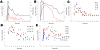
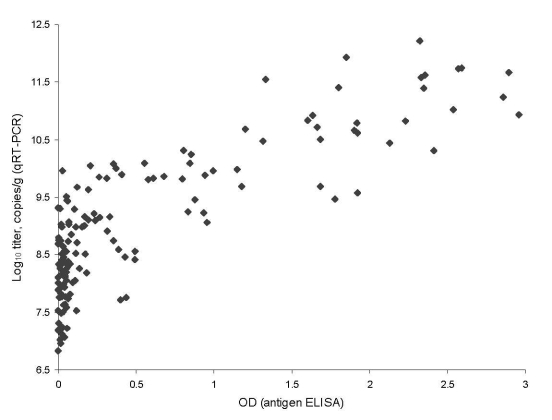
Description:Noroviruses are the most common cause of viral gastroenteritis in the United States. To determine the magnitude and duration of virus shedding in feces, we evaluated persons who had been experimentally infected with Norwalk virus. Of 16 persons, clinical gastroenteritis (watery diarrhea and/or vomiting) developed in 11; symptomatic illness lasted 1-2 days. Virus shedding was first detected by reverse transcription-PCR (RT-PCR) 18 hours after participant inoculation and lasted a median of 28 days after inoculation (range 13-56 days). The median peak amount of virus shedding was 95 x 10(9) (range 0.5-1,640 x 10(9)) genomic copies/g feces as measured by quantitative RT-PCR. Virus shedding was first detected by antigen ELISA approximately 33 hours (median 42 hours) after inoculation and lasted 10 days (median 7 days) after inoculation. Understanding of the relevance of prolonged fecal norovirus excretion must await the development of sensitive methods to measure virus infectivity.
-
Subjects:
-
Source:Emerg Infect Dis. 14(10):1553-1557
-
Pubmed ID:18826818
-
Pubmed Central ID:PMC2609865
-
Document Type:
-
Funding:P01-057788/PHS HHS/United States ; N01AI25465/AI/NIAID NIH HHS/United States ; P01 AI057788-040001/AI/NIAID NIH HHS/United States ; M01 RR000188/RR/NCRR NIH HHS/United States ; N01-AI-25465/AI/NIAID NIH HHS/United States ; M01-RR-00188/RR/NCRR NIH HHS/United States ; P01 AI057788/AI/NIAID NIH HHS/United States
-
Volume:14
-
Issue:10
-
Download URL:
-
File Type:
 [PDF - 160.39 KB]
 -
Collection(s):
-
Main Document Checksum:urn:sha256:e25ebbcd12a8b0e56148fbbe513056326f5e9df1eff31fa4e485b46d5bc2e92c
Supporting Files


File Language:
English
 Was this page helpful?
 Found an issue?

CDC STACKS serves as an archival repository of CDC-published products including
scientific findings, journal articles, guidelines, recommendations, or other public health information authored or
co-authored by CDC or funded partners.
As a repository, CDC STACKS retains documents in their original published format to ensure public access to scientific information.
As a repository, CDC STACKS retains documents in their original published format to ensure public access to scientific information.
You May Also Like
COLLECTION
Emerging Infectious Diseases