



Questions on Mediterranean Spotted Fever a Century after Its Discovery
Supporting Files
Public Domain

-
Sep 2008
File Language:
English
Details
-
Alternative Title:Emerg Infect Dis
-
Personal Author:
-
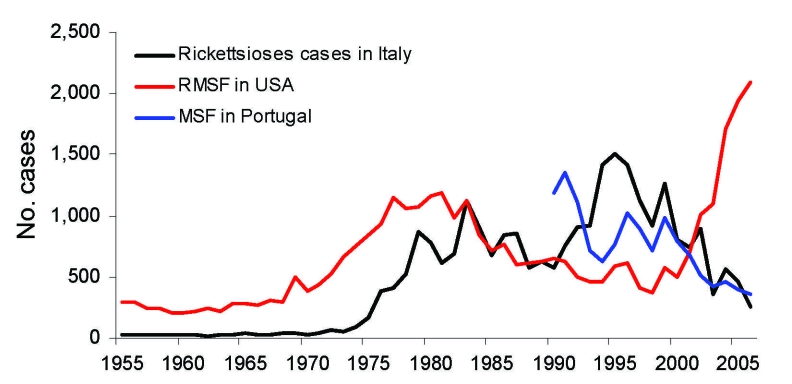
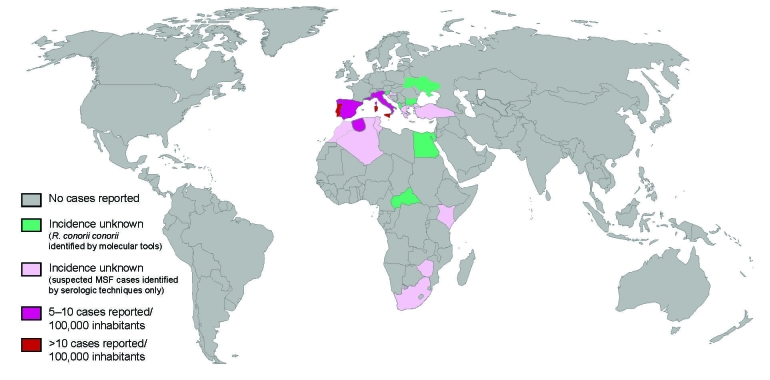
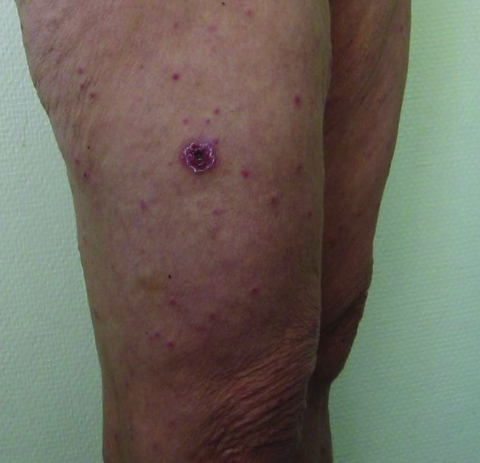
Description:Mediterranean spotted fever (MSF) was first described in 1910. Twenty years later, it was recognized as a rickettsial disease transmitted by the brown dog tick. In contrast to Rocky Mountain spotted fever (RMSF), MSF was thought to be a benign disease; however, the first severe case that resulted in death was reported in France in the 1980s. We have noted important changes in the epidemiology of MSF in the last 10 years, with emergence and reemergence of MSF in several countries. Advanced molecular tools have allowed Rickettsia conorii conorii to be classified as a subspecies of R. conorii. New clinical features, such as multiple eschars, have been recently reported. Moreover, MSF has become more severe than RMSF; the mortality rate was as high as 32% in Portugal in 1997. Whether Rhipicephalus sanguineus is the only vector and reservoir for R. conorii conorii is a question not yet answered.
-
Subjects:
-
Source:Emerg Infect Dis. 14(9):1360-1367
-
Pubmed ID:18760001
-
Pubmed Central ID:PMC2603122
-
Document Type:
-
Place as Subject:
-
Location:
-
Volume:14
-
Issue:9
-
Download URL:
-
File Type:
 [PDF - 294.90 KB]
 -
Collection(s):
-
Main Document Checksum:urn:sha256:d776ccb62102a84e6e5fc607d1ca4a7dc895c3cd7cf0d697ebc0abeae64fe41f
Supporting Files


File Language:
English
 Was this page helpful?
 Found an issue?






CDC STACKS serves as an archival repository of CDC-published products including
scientific findings, journal articles, guidelines, recommendations, or other public health information authored or
co-authored by CDC or funded partners.
As a repository, CDC STACKS retains documents in their original published format to ensure public access to scientific information.
As a repository, CDC STACKS retains documents in their original published format to ensure public access to scientific information.
You May Also Like
COLLECTION
Emerging Infectious Diseases