



Rescinding Community Mitigation Strategies in an Influenza Pandemic
Supporting Files
Public Domain

-
Mar 2008
File Language:
English
Details
-
Alternative Title:Emerg Infect Dis
-
Personal Author:
-
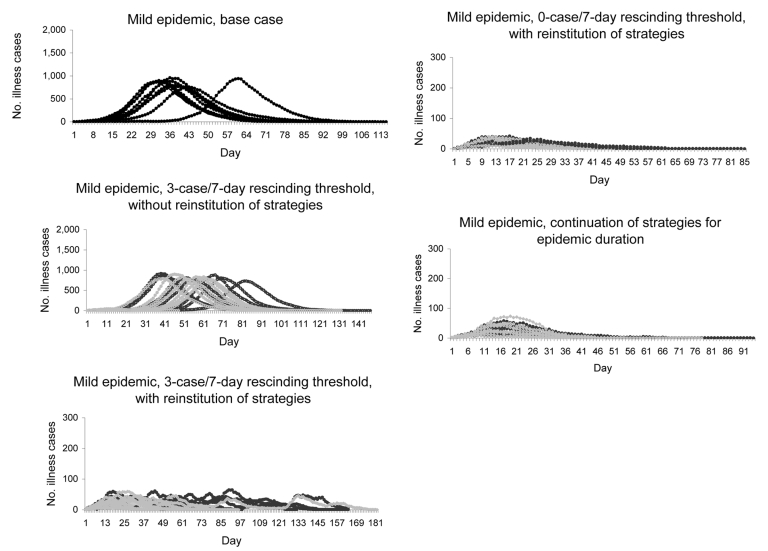
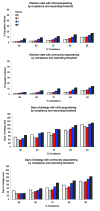
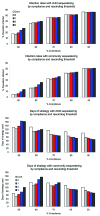
Description:Using a networked, agent-based computational model of a stylized community, we evaluated thresholds for rescinding 2 community mitigation strategies after an influenza pandemic. We ended child sequestering or all-community sequestering when illness incidence waned to thresholds of 0, 1, 2, or 3 cases in 7 days in 2 levels of pandemic severity. An unmitigated epidemic or strategy continuation for the epidemic duration served as control scenarios. The 0-case per 7-day rescinding threshold was comparable to the continuation strategy on infection and illness rates but reduced the number of days strategies would be needed by 6% to 32% in mild or severe pandemics. If cases recurred, strategies were resumed at a predefined 10-case trigger, and epidemic recurrence was thwarted. Strategies were most effective when used with high compliance and when combined with stringent rescinding thresholds. The need for strategies implemented for control of an influenza pandemic was reduced, without increasing illness rates.
-
Subjects:
-
Source:Emerg Infect Dis. 14(3):365-372.
-
Document Type:
-
Volume:14
-
Issue:3
-
Download URL:
-
File Type:
 [PDF - 582.15 KB]
 -
Collection(s):
-
Main Document Checksum:urn:sha256:66f282ae73309b4444d908178731df71afbacd2ebcf72eb19aee4b9157c2c574
Supporting Files


File Language:
English
 Was this page helpful?
 Found an issue?





CDC STACKS serves as an archival repository of CDC-published products including
scientific findings, journal articles, guidelines, recommendations, or other public health information authored or
co-authored by CDC or funded partners.
As a repository, CDC STACKS retains documents in their original published format to ensure public access to scientific information.
As a repository, CDC STACKS retains documents in their original published format to ensure public access to scientific information.
You May Also Like
COLLECTION
Emerging Infectious Diseases