



Polio Outbreak Investigation and Response in Somalia, 2013
Supporting Files

-
11 01 2014 ; 11-01-
-
Available in CDC Stacks on 2023-10-04T00:00:00Z
File Language:
English
Details
-
Alternative Title:J Infect Dis
-
Personal Author:
-
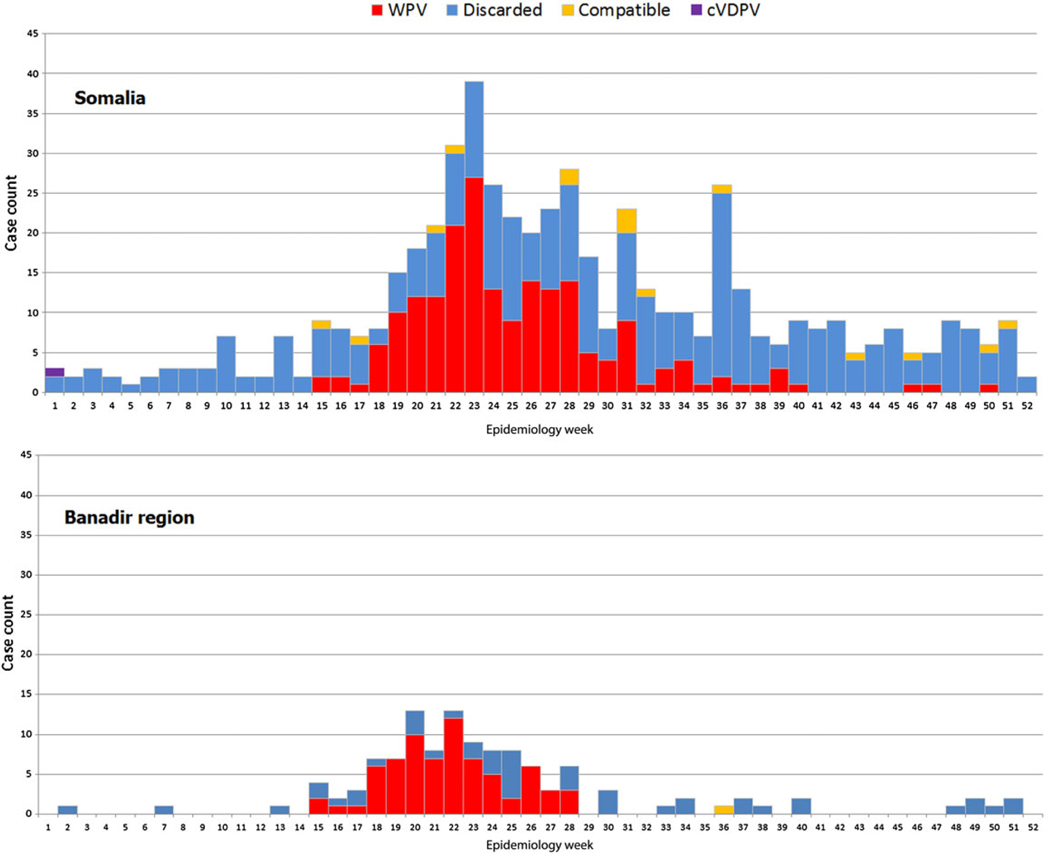
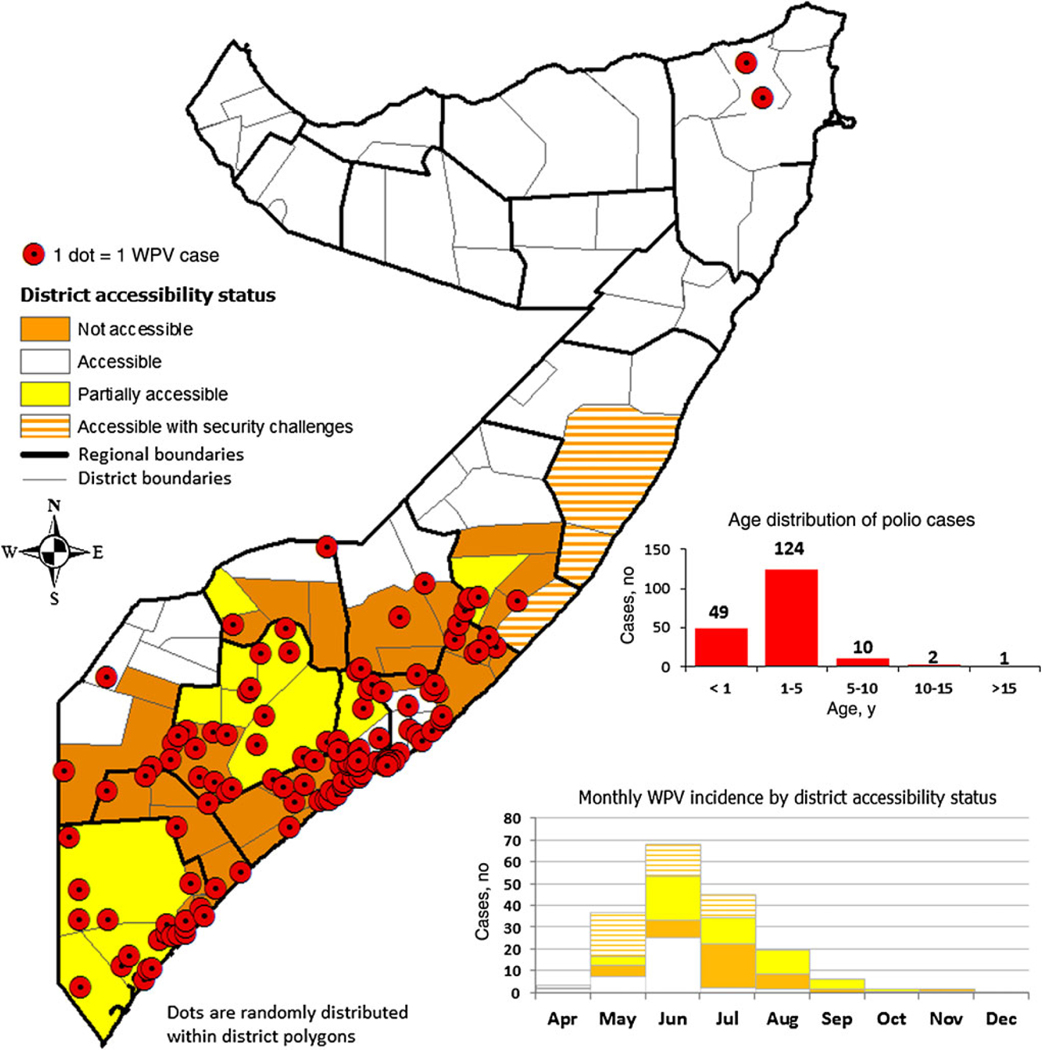
Description:Background. ; For >2 decades, conflicts and recurrent natural disasters have maintained Somalia in a chronic humanitarian crisis. For nearly 5 years, 1 million children <10 years have not had access to lifesaving health services, including vaccination, resulting in the accumulation by 2012 of the largest geographically concentrated cohort of unvaccinated children in the world. This article reviews the epidemiology, risk, and program response to what is now known as the 2013 wild poliovirus (WPV) outbreak in Somalia and highlights the challenges that the program will face in making Somalia free of polio once again. ; Methods. ; A case of acute flaccid paralysis (AFP) was defined as a child <15 years of age with sudden onset of fever and paralysis. Polio cases were defined as AFP cases with stool specimens positive for WPV. ; Results. ; From 9 May to 31 December 2013, 189 cases of WPV type 1 (WPV1) were reported from 46 districts of Somalia; 42% were from Banadir region (Mogadishu), 60% were males, and 93% were <5 years of age. All Somalian polio cases belonged to cluster N5A, which is known to have been circulating in northern Nigeria since 2011. In response to the outbreak, 8 supplementary immunization activities were conducted with oral polio vaccine (OPV; trivalent OPV was used initially, followed subsequently by bivalent OPV) targeting various age groups, including children aged <5 years, children aged <10 years, and individuals of any age. ; Conclusions. ; The current polio outbreak erupted after a polio-free period of >6 years (the last case was reported in March 2007). Somalia interrupted indigenous WPV transmission in 2002, was removed from the list of polioendemic countries a year later, and has since demonstrated its ability to control polio outbreaks resulting from importation. This outbreak reiterates that the threat of large polio outbreaks resulting from WPV importation will remain constant unless polio transmission is interrupted in the remaining polio-endemic countries.
-
Keywords:
-
Source:J Infect Dis. 210(Suppl 1):S181-S186
-
Pubmed ID:25316834
-
Pubmed Central ID:PMC10548859
-
Document Type:
-
Funding:
-
Volume:210
-
Download URL:
-
File Type:
 [PDF - 762.84 KB]
 -
Collection(s):
-
Main Document Checksum:urn:sha256:cec03f6fdb2dbeba98a2e26d5374c47cf1439b78b3ad6bbbf989a59669e9f74c
Supporting Files


File Language:
English
 Was this page helpful?
 Found an issue?

CDC STACKS serves as an archival repository of CDC-published products including
scientific findings, journal articles, guidelines, recommendations, or other public health information authored or
co-authored by CDC or funded partners.
As a repository, CDC STACKS retains documents in their original published format to ensure public access to scientific information.
As a repository, CDC STACKS retains documents in their original published format to ensure public access to scientific information.
You May Also Like
COLLECTION
CDC Public Access