



Frequent Travelers and Rate of Spread of Epidemics
Supporting Files
Public Domain

-
Sep 2007
Details
-
Alternative Title:Emerg Infect Dis
-
Personal Author:
-
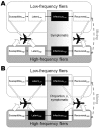
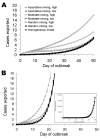
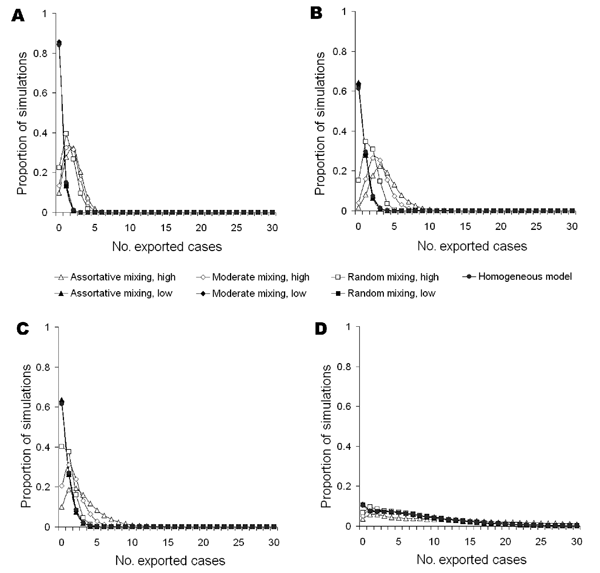
Description:A small proportion of air travelers make disproportionately more journeys than the rest of travelers. They also tend to interact predominantly with other frequent travelers in hotels and airport lounges. This group has the potential to accelerate global spread of infectious respiratory diseases. Using an epidemiologic model, we simulated exportation of cases from severe acute respiratory syndrome-like and influenza-like epidemics in a population for which a small proportion travel more frequently than the rest. Our simulations show that frequent travelers accelerate international spread of epidemics only if they are infected early in an outbreak and the outbreak does not expand rapidly. If the epidemic growth rate is high, as is likely for pandemic influenza, heterogeneities in travel are frequently overwhelmed by the large number of infected persons in the majority population and the resulting high probability that some of these persons will take an international flight.
-
Subjects:
-
Source:Emerg Infect Dis. 13(9):1288-1294.
-
Document Type:
-
Volume:13
-
Issue:9
-
Download URL:
-
File Type:
 [PDF - 243.55 KB]
 -
Collection(s):
-
Main Document Checksum:urn:sha256:e39a179985cea14c60277759c72c766cbb117144c734eabcae6b46f47fa38c01
Supporting Files


 Was this page helpful?
 Found an issue?




CDC STACKS serves as an archival repository of CDC-published products including
scientific findings, journal articles, guidelines, recommendations, or other public health information authored or
co-authored by CDC or funded partners.
As a repository, CDC STACKS retains documents in their original published format to ensure public access to scientific information.
As a repository, CDC STACKS retains documents in their original published format to ensure public access to scientific information.
You May Also Like
COLLECTION
Emerging Infectious Diseases