


Public health applications of historical smoke forecasts: An evaluation of archived BlueSky data for the coterminous United States, 2015–2018
Supporting Files

-
2023
File Language:
English
Details
-
Alternative Title:Comput Geosci
-
Personal Author:
-
Description:Background:
Wildfires are increasing in magnitude, frequency, and severity. Populations in the wildland-urban interface and in downwind communities are at increased risk of exposure to elevated concentrations of fine particulate matter (PM2.5) and other harmful components of wildfire smoke. We conducted this analysis to evaluate the use of modeled predictions of wildfire smoke to create county-level measures of smoke exposure for public health research and surveillance.
Methods:
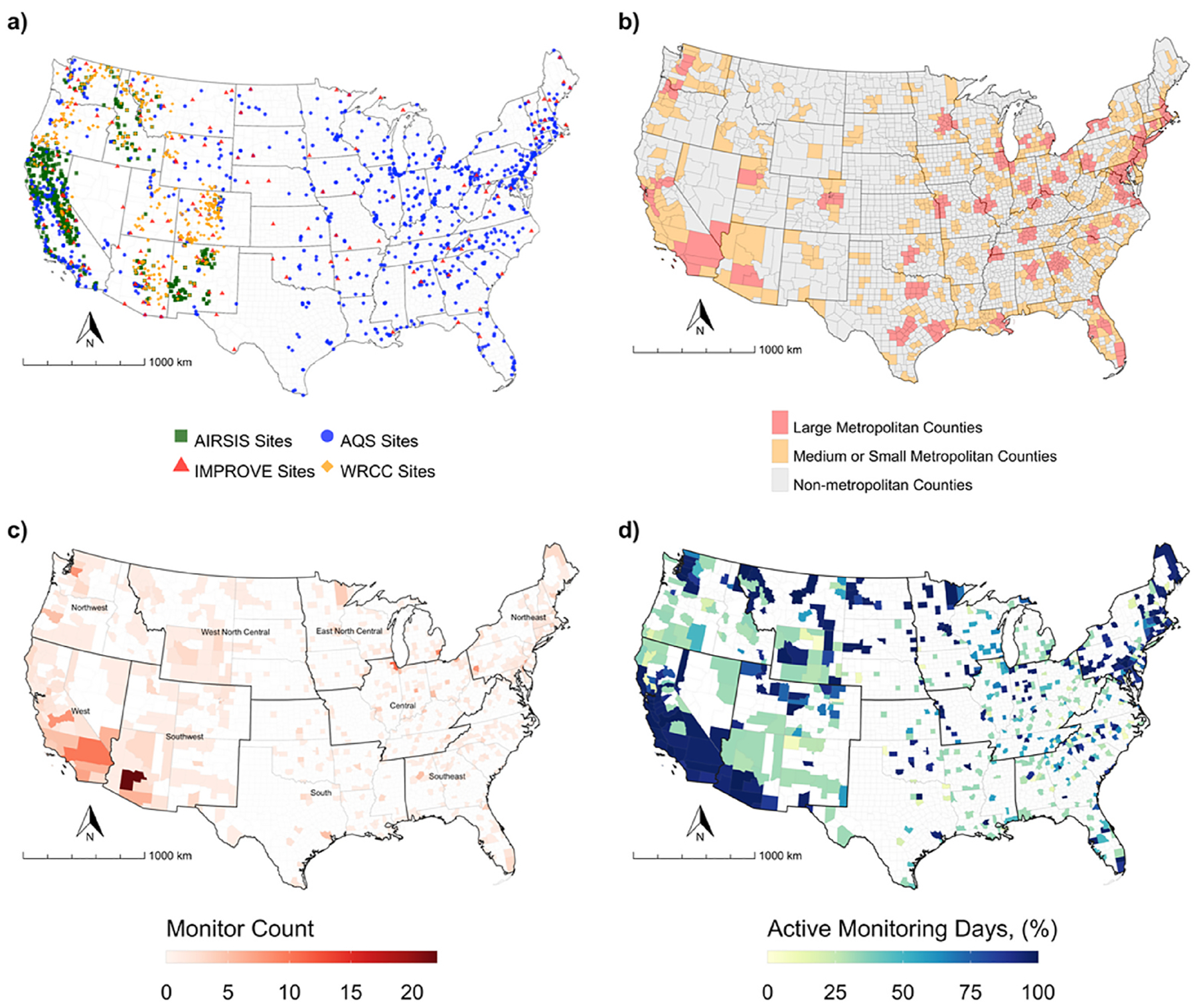
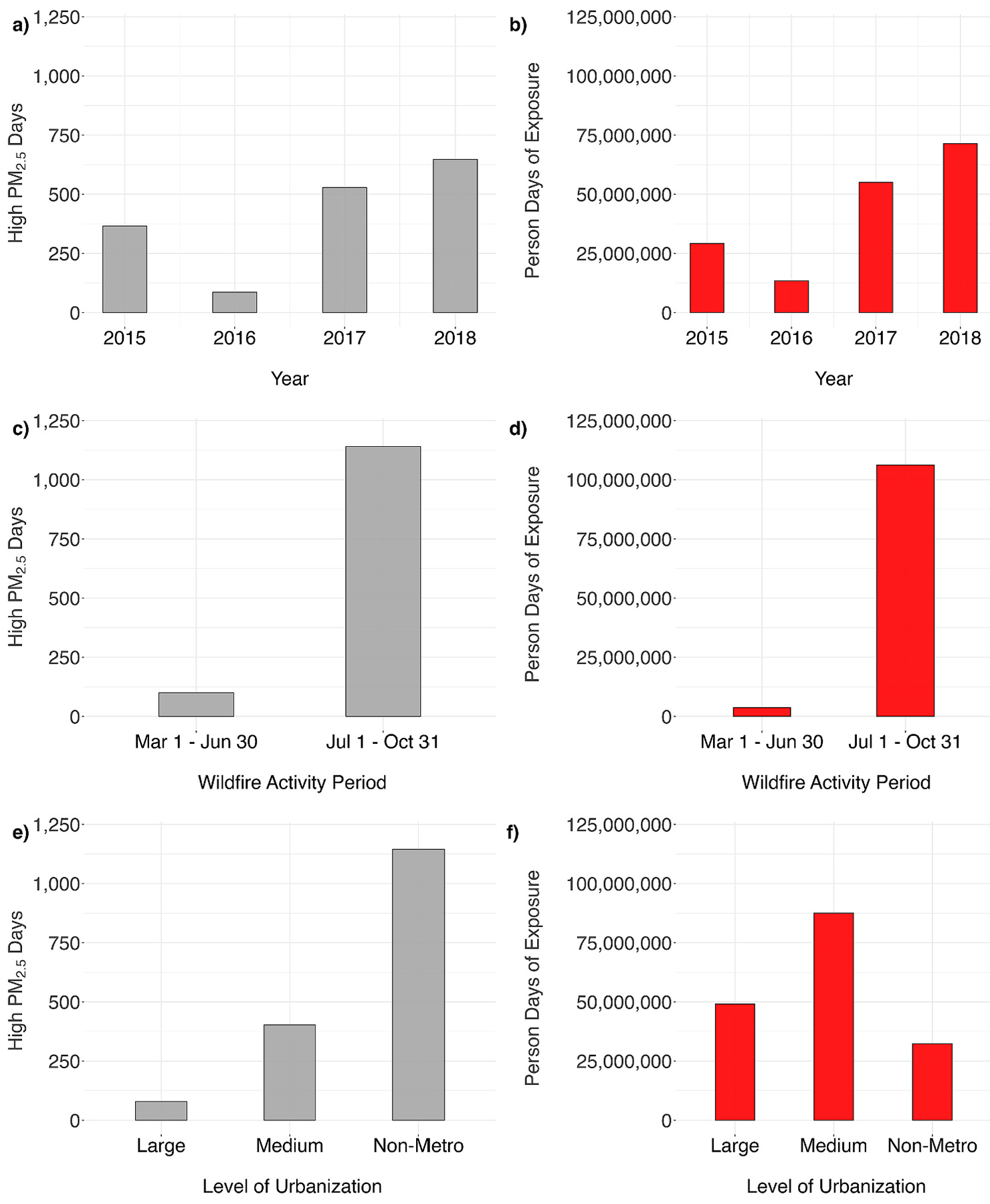
We evaluated four years (2015–2018) of grid-based North American Mesoscale (NAM)-derived PM2.5 forecasts from the U.S. Forest Service BlueSky modeling framework with monitoring data from the Environmental Protection Agency Air Quality System (AQS), the Interagency Monitoring of Protected Visual Environments (IMPROVE), the Western Regional Climate Center (WRCC), and the Interagency Real Time Smoke Monitoring (AIRSIS) programs. To assess relationships between model-derived estimates and monitor-based observations, we assessed Spearman’s correlations by spatial (i.e., county, level of urbanization, states in the western United States impacted by major wildfires, and climate regions) and temporal (i.e., month and wildfire activity periods) characteristics. We then generated county-level smoke estimates and examined spatial and temporal patterns in total and person-days of smoke exposure.
Results:
Across all counties in the coterminous United States and for all days, the correlation between county-level model- and monitor-derived PM2.5 estimates was 0.14 (p < 0.001). Correlations were stronger using data from temporary monitors and for areas and days impacted by high wildfire smoke, especially in the western United States. Correlations between county-level model- and monitor-derived estimates in non-metropolitan counties, and at higher concentrations ranged from 0.25 to 0.54 (p < 0.001).
Conclusions:
In general, public health practitioners and health researchers need to consider the pros and cons associated with modeled data products for conducting health analyses. Our results support the use of model-derived smoke estimates to identify communities impacted by heavy smoke events, especially during emergency response and for communities located near wildfire episodes.
-
Keywords:
-
Source:Comput Geosci. 171
-
Pubmed ID:39100411
-
Pubmed Central ID:PMC11296727
-
Document Type:
-
Funding:
-
Volume:171
-
Collection(s):
-
Main Document Checksum:urn:sha-512:1fc85798bfe2238f0c207332c7035d421c99c3517c699d9d49c99f2c6417b941bbfcb32a909a89711bb7c2845302461406d31205a026882b30380e6d2e896d99
-
Download URL:
-
File Type:
 [PDF
- 1.52 MB
]
[PDF
- 1.52 MB
]
Supporting Files


File Language:
English
ON THIS PAGE

CDC STACKS serves as an archival repository of CDC-published products including
scientific findings,
journal articles, guidelines, recommendations, or other public health information authored or
co-authored by CDC or funded partners.
As a repository, CDC STACKS retains documents in their original published format to ensure public access to scientific information.
As a repository, CDC STACKS retains documents in their original published format to ensure public access to scientific information.
You May Also Like
COLLECTION
CDC Public Access