



GABA-edited MEGA-PRESS at 3T: Does a measured MM background improve linear combination modeling?
Supporting Files

-
10 2024 ; 10-2024
-
Available in CDC Stacks on 2025-10-01T00:00:00Z
File Language:
English
Details
-
Alternative Title:Magn Reson Med
-
Personal Author:
-
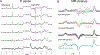
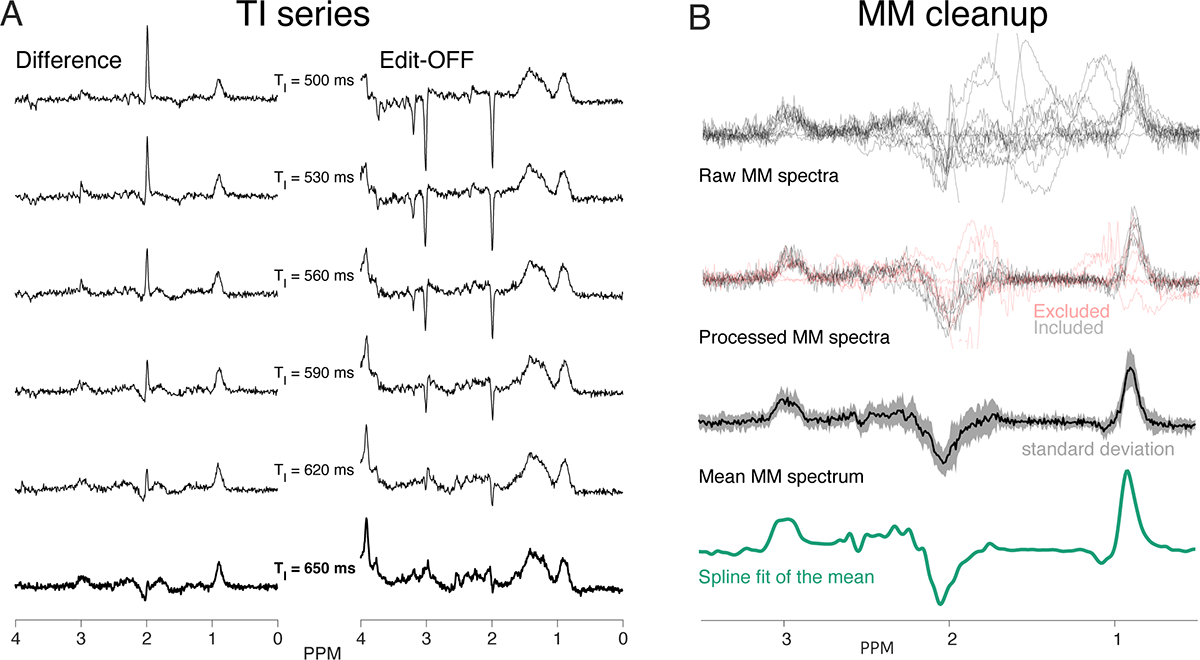
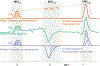
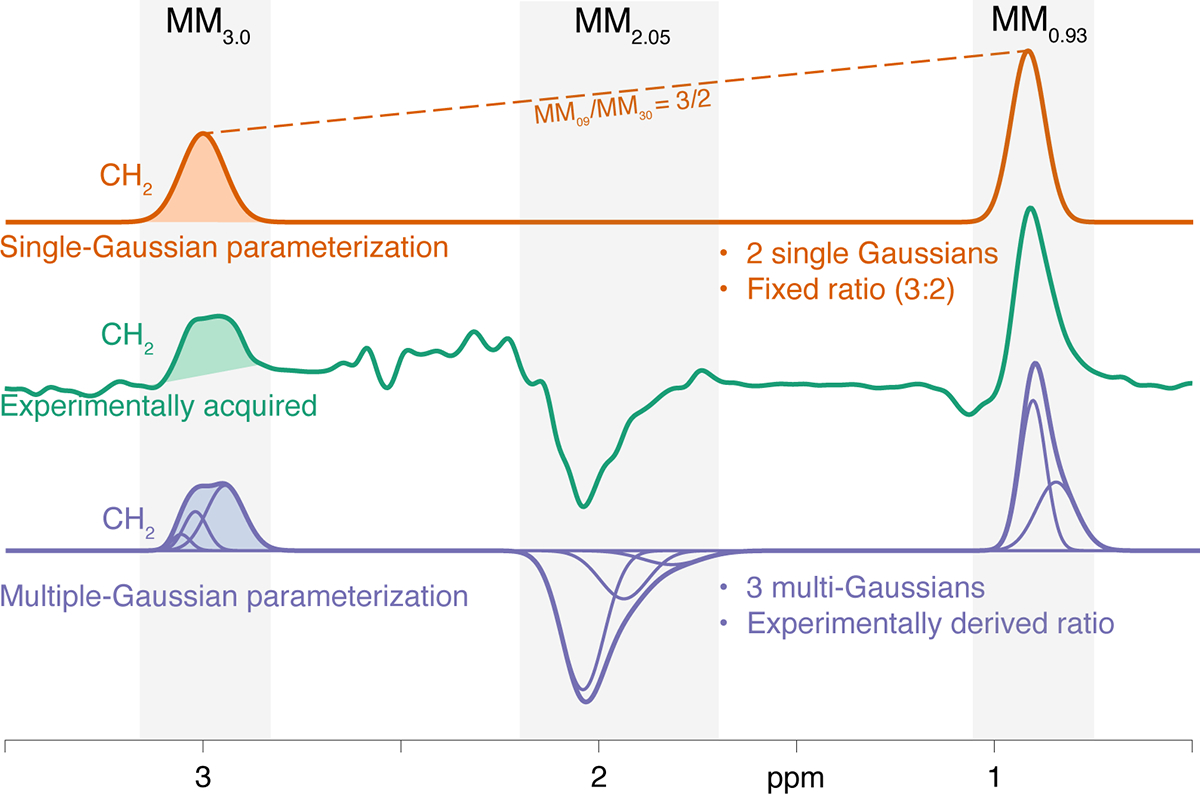
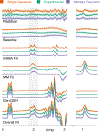
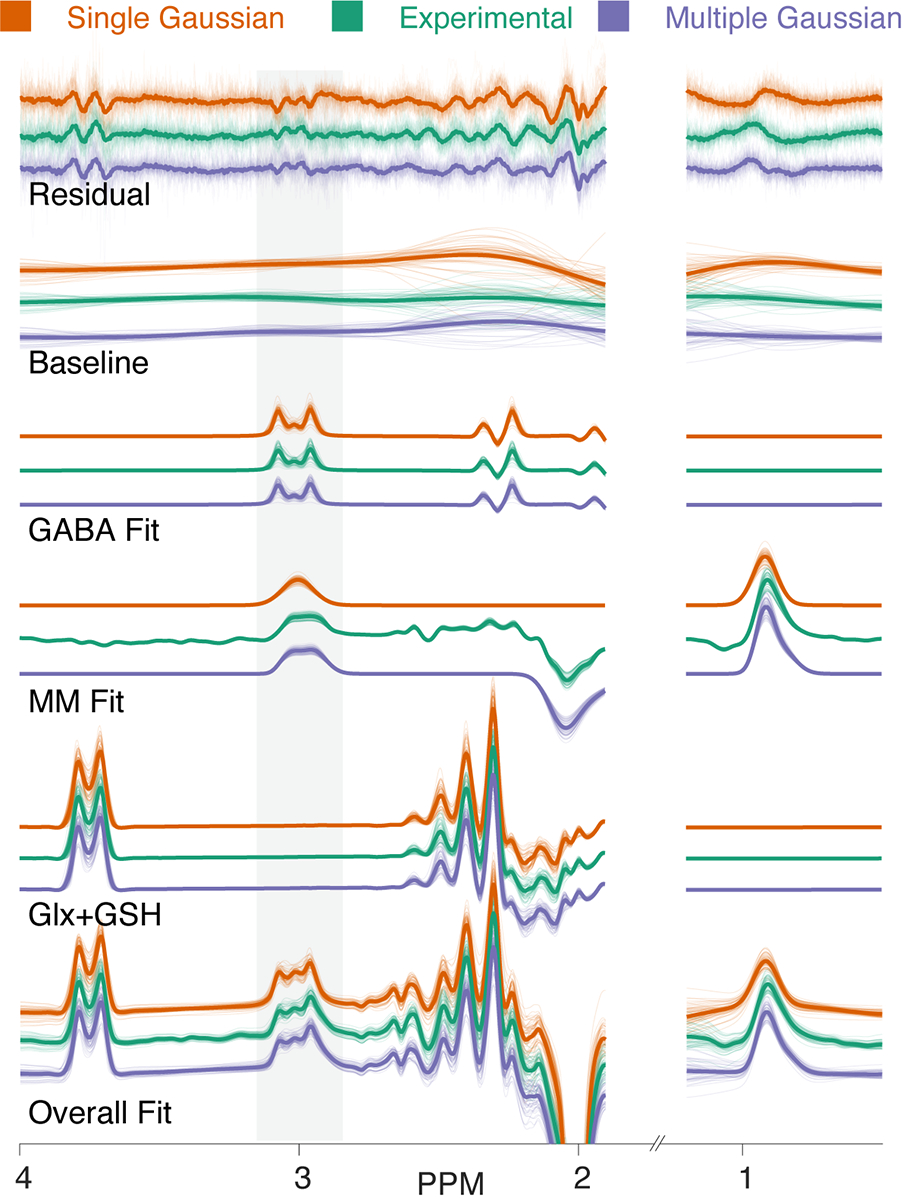
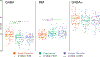
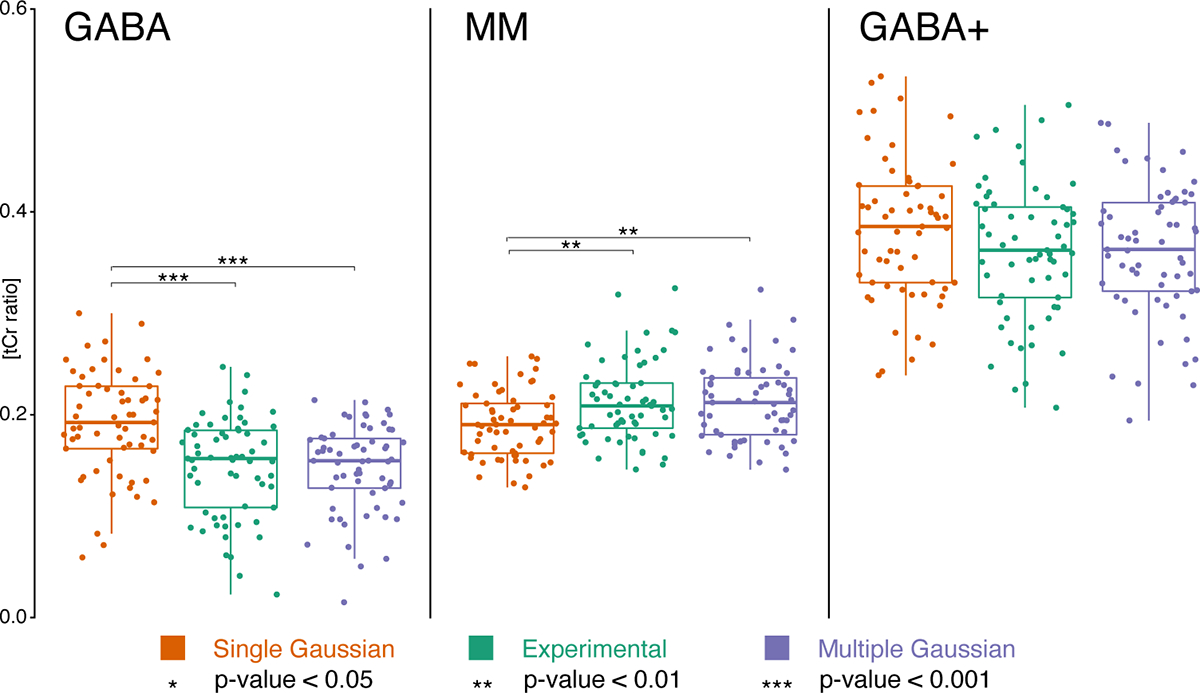
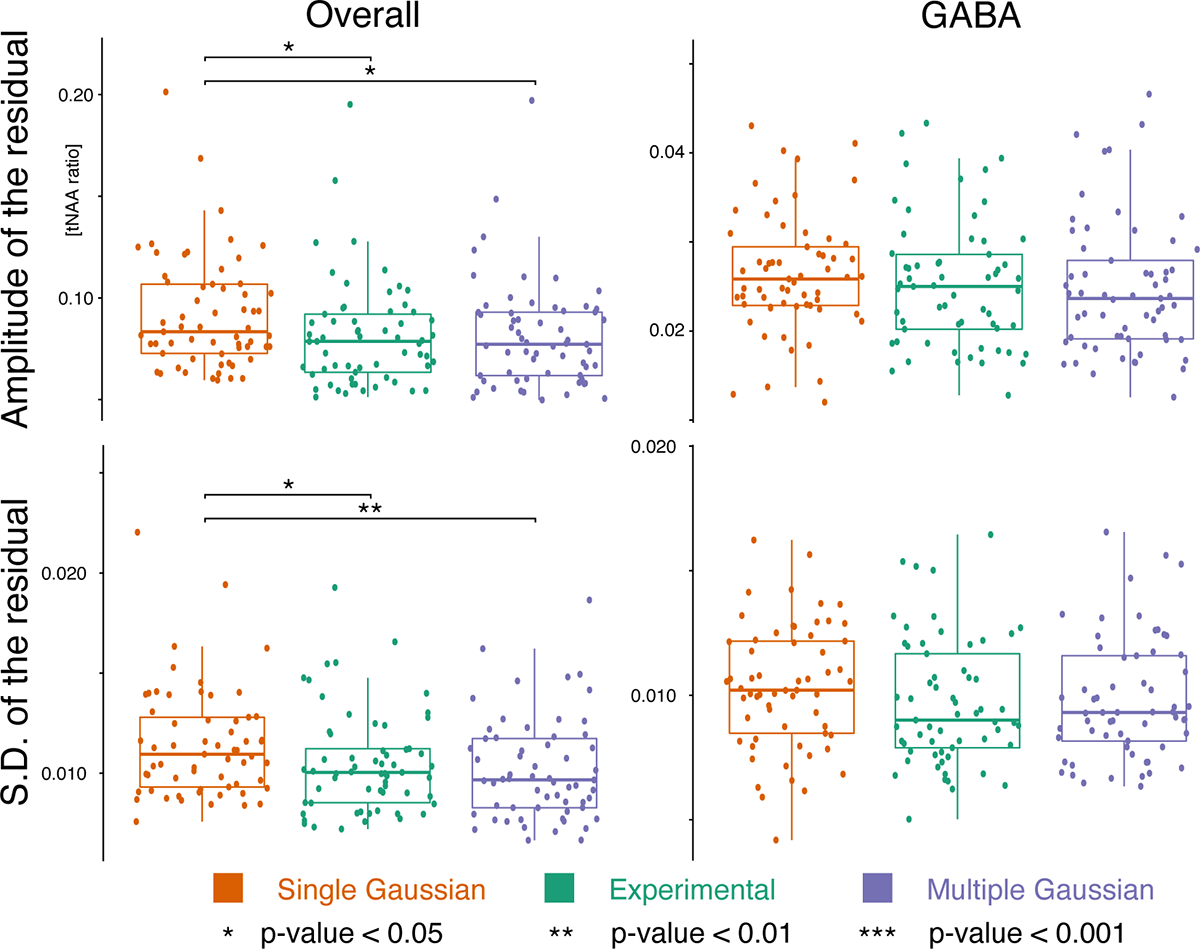
Description:Purpose ; The J-difference edited GABA signal is contaminated by other co-edited signals—the largest of which originates from co-edited macromolecules (MMs)—and is consequently often reported as “GABA+”. MM signals are broader and less well-characterized than the metabolites, and so are commonly approximated using a Gaussian model parameterization. Experimentally measured MM signals are a consensus-recommended alternative to parameterized modeling; however, they are relatively under-studied in the context of edited MRS. ; Methods ; To address this limitation in the literature, we have acquired GABA-edited MEGA-PRESS data with pre-inversion to null metabolite signals in 13 healthy controls. An experimental MM basis function was derived from the mean across subjects. We further derived a new parameterization of the MM signals from the experimental data, using multiple Gaussians to accurately represent their observed asymmetry. The previous single-Gaussian parameterization, mean experimental MM spectrum and new multi-Gaussian parameterization were compared in a three-way analysis of a public MEGA-PRESS dataset of 61 healthy participants. ; Results ; Both the experimental MMs and the multi-Gaussian parameterization exhibited reduced fit residuals compared to the single-Gaussian approach (p = 0.034 & p = 0.031, respectively), suggesting they better represent the underlying data than the single-Gaussian parameterization. Furthermore, both experimentally derived models estimated larger MM fractional contribution to the GABA+ signal for the experimental MMs (58%) and multi-Gaussian parameterization (58%), compared to the single-Gaussian approach (50%). ; Conclusions ; Our results indicate that single-Gaussian parameterization of edited MM signals is insufficient and that both experimentally derived GABA+ spectra and their parameterized replicas improve the modeling of GABA+ spectra.
-
Subjects:
-
Keywords:
-
Source:Magn Reson Med. 92(4):1348-1362
-
Pubmed ID:38818623
-
Pubmed Central ID:PMC11262975
-
Document Type:
-
Funding:P41 EB031771/EB/NIBIB NIH HHSUnited States/ ; R00 AG062230/AG/NIA NIH HHSUnited States/ ; R01 EB023963/EB/NIBIB NIH HHSUnited States/ ; R21 EB033516/EB/NIBIB NIH HHSUnited States/ ; S10 OD021648/OD/NIH HHSUnited States/ ; R01 EB016089/EB/NIBIB NIH HHSUnited States/ ; K99 AG080084/AG/NIA NIH HHSUnited States/ ; S10 OD021648/CD/ODCDC CDC HHSUnited States/
-
Volume:92
-
Issue:4
-
Download URL:
-
File Type:
 [PDF - 1020.85 KB]
 -
Collection(s):
-
Main Document Checksum:urn:sha-512:086167d4858f71f2155659edb72cd75f5b0e405173dc6e065897329284c3a1a62b5db403ec04b40da8e83df47b93b9e1c2acf5613259bf97617dd09a748d32fb
Supporting Files


File Language:
English
 Was this page helpful?
 Found an issue?

CDC STACKS serves as an archival repository of CDC-published products including
scientific findings, journal articles, guidelines, recommendations, or other public health information authored or
co-authored by CDC or funded partners.
As a repository, CDC STACKS retains documents in their original published format to ensure public access to scientific information.
As a repository, CDC STACKS retains documents in their original published format to ensure public access to scientific information.
You May Also Like
COLLECTION
CDC Public Access