



Nipah Virus in Lyle's Flying Foxes, Cambodia
Supporting Files
Public Domain

-
Jul 2005
File Language:
English
Details
-
Alternative Title:Emerg Infect Dis
-
Personal Author:
-
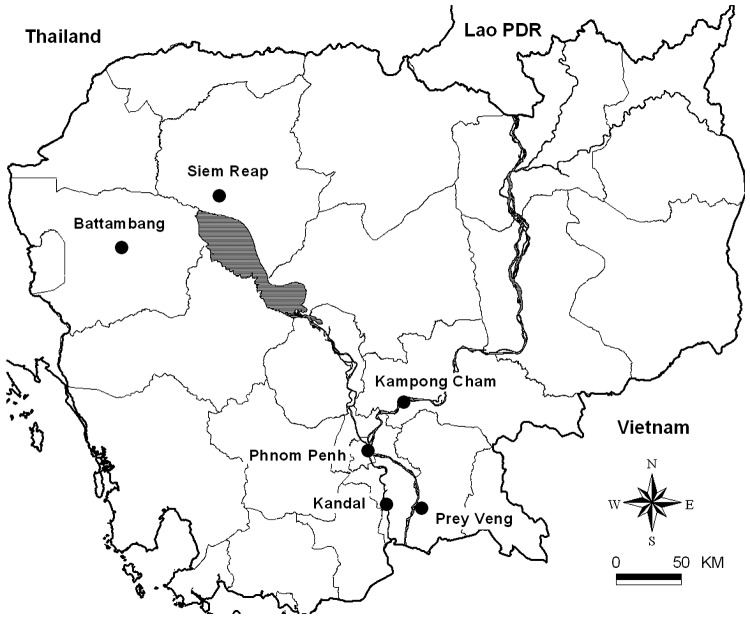
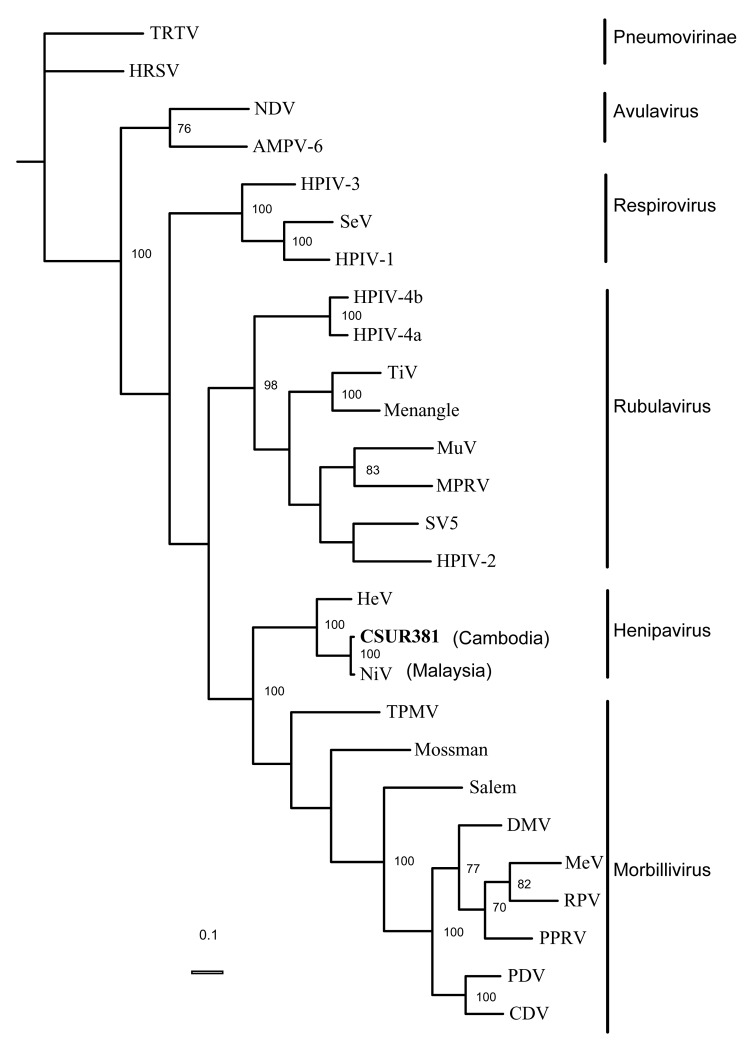
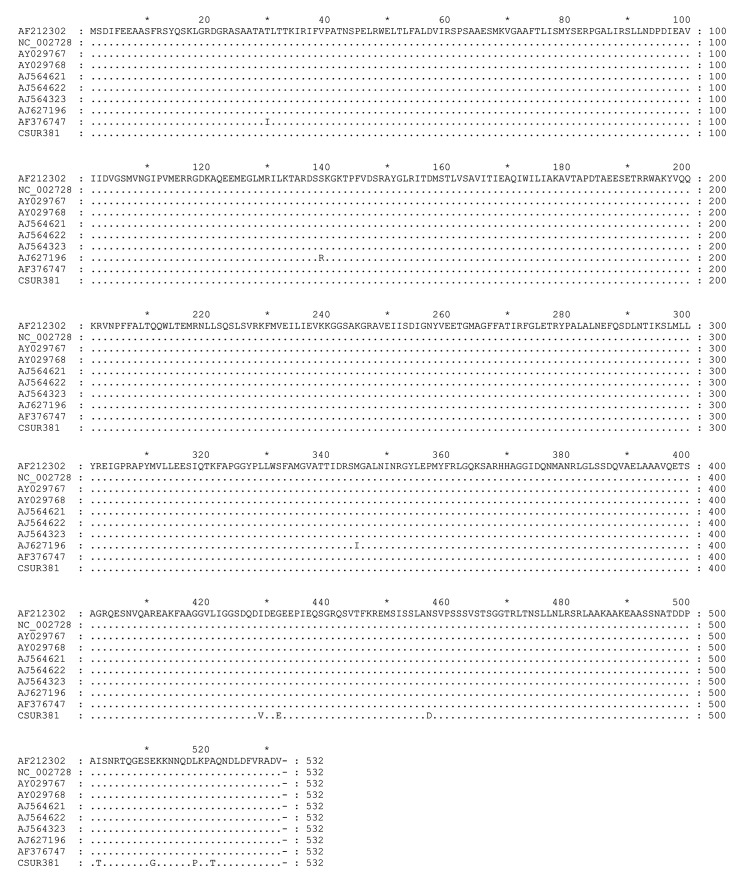
Description:We conducted a survey in Cambodia in 2000 on henipavirus infection among several bat species, including flying foxes, and persons exposed to these animals. Among 1,072 bat serum samples tested by enzyme-linked immunosorbent assay, antibodies reactive to Nipah virus (NiV) antigen were detected only in Pteropus lylei species; Cynopterus sphinx, Hipposideros larvatus, Scotophilus kuhlii, Chaerephon plicata, Taphozous melanopogon, and T. theobaldi species were negative. Seroneutralization applied on a subset of 156 serum samples confirmed these results. None of the 8 human serum samples was NiV seropositive with the seroneutralization test. One virus isolate exhibiting cytopathic effect with syncytia was obtained from 769 urine samples collected at roosts of P. lylei specimens. Partial molecular characterization of this isolate demonstrated that it was closely related to NiV. These results strengthen the hypothesis that flying foxes could be the natural host of NiV. Surveillance of human cases should be implemented.
-
Subjects:
-
Source:Emerg Infect Dis. 11(7):1042-1047.
-
Document Type:
-
Place as Subject:
-
Volume:11
-
Issue:7
-
Download URL:
-
File Type:
 [PDF - 218.24 KB]
 -
Collection(s):
-
Main Document Checksum:urn:sha256:ed5205220719af4e1282a477652d7b1d6cb6521ca1a011064b80085af2c56ffd
Supporting Files


File Language:
English
 Was this page helpful?
 Found an issue?



CDC STACKS serves as an archival repository of CDC-published products including
scientific findings, journal articles, guidelines, recommendations, or other public health information authored or
co-authored by CDC or funded partners.
As a repository, CDC STACKS retains documents in their original published format to ensure public access to scientific information.
As a repository, CDC STACKS retains documents in their original published format to ensure public access to scientific information.
You May Also Like
COLLECTION
Emerging Infectious Diseases