



Susceptibility to Hepatitis A Virus Infection in the United States, 2007–2016
Supporting Files

-
12 17 2020 ; 12-17-
-
Available in CDC Stacks on April 12, 2024, 12:00 AM
File Language:
English
Details
-
Alternative Title:Clin Infect Dis
-
Personal Author:
-
Description:Background.
Despite national immunization efforts, including universal childhood hepatitis A (HepA) vaccination recommendations in 2006, hepatitis A virus (HAV)–associated outbreaks have increased in the United States. Unvaccinated or previously uninfected persons are susceptible to HAV infection, yet the susceptibility in the US population is not well known.
Methods.
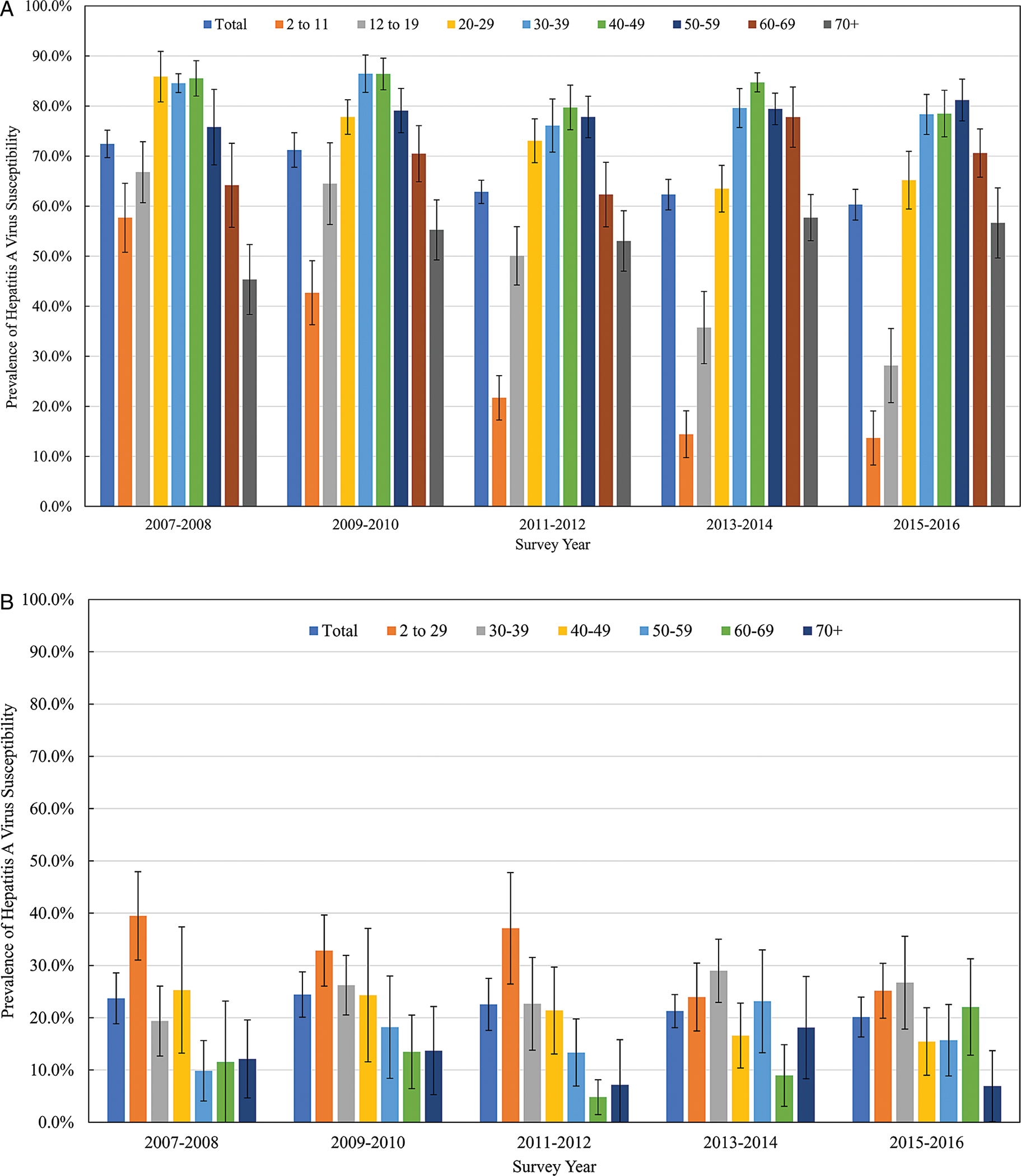
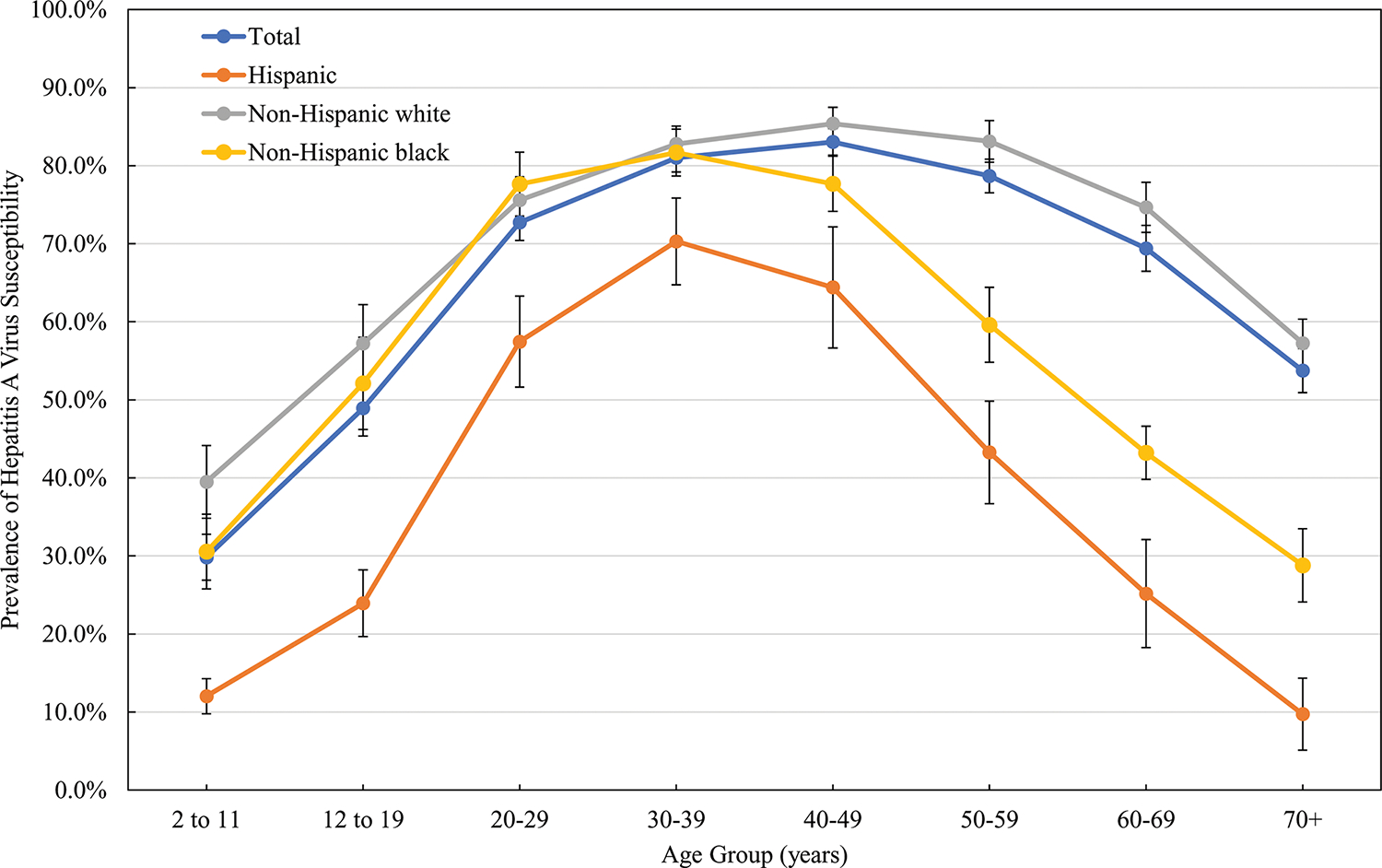
Using National Health and Nutrition Examination Survey 2007–2016 data, we estimated HAV susceptibility prevalence (total HAV antibody negative) among persons aged ≥2 years. Among US-born adults aged ≥20 years, we examined prevalence, predictors, and age-adjusted trends of HAV susceptibility by sociodemographic characteristics. We assessed HAV susceptibility and self-reported nonvaccination to HepA among risk groups and the “immunization cohort” (those born in or after 2004).
Results.
Among US-born adults aged ≥20 years, HAV susceptibility prevalence was 74.1% (95% confidence interval, 72.9–75.3%) during 2007–2016. Predictors of HAV susceptibility were age group 30–49 years, non-Hispanic white/black, 130% above the poverty level, and no health insurance. Prevalences of HAV susceptibility and nonvaccination to HepA, respectively, were 72.9% and 73.1% among persons who reported injection drug use, 67.5% and 65.2% among men who had sex with men, 55.2% and 75.1% among persons with hepatitis B or hepatitis C, and 22.6% and 25.9% among the immunization cohort. Susceptibility and nonvaccination decreased over time among the immunization cohort but remained stable among risk groups.
Conclusions.
During 2007–2016, approximately three-fourths of US-born adults remained HAV susceptible. Enhanced vaccination efforts are critically needed, particularly targeting adults at highest risk for HAV infection, to mitigate the current outbreaks. -
Subjects:
-
Keywords:
-
Source:Clin Infect Dis. 71(10):e571-e579
-
Pubmed ID:32193542
-
Pubmed Central ID:PMC11009793
-
Document Type:
-
Funding:
-
Volume:71
-
Issue:10
-
Download URL:
-
File Type:
 [PDF - 975.60 KB]
 -
Collection(s):
-
Main Document Checksum:urn:sha256:3621fdab18be0fe81edce0729298101dc584209149187132312b5186b5972094
Supporting Files


File Language:
English
 Was this page helpful?
 Found an issue?

CDC STACKS serves as an archival repository of CDC-published products including
scientific findings, journal articles, guidelines, recommendations, or other public health information authored or
co-authored by CDC or funded partners.
As a repository, CDC STACKS retains documents in their original published format to ensure public access to scientific information.
As a repository, CDC STACKS retains documents in their original published format to ensure public access to scientific information.
You May Also Like
COLLECTION
CDC Public Access