



Late Venous Thromboembolism in Survivors of Adolescent and Young Adult Cancer: A Population-Based Study in California
Supporting Files

-
3 2024 ; 3-2024
-
Available in CDC Stacks on March 01, 2025, 12:00 AM

File Language:
English
Details
-
Alternative Title:Thromb Res
-
Personal Author:
-
Description:Introduction
Venous thromboembolism (VTE), a common complication in cancer patients, occurs more often during the initial phase of treatment. However, information on VTE beyond the first two years after diagnosis (‘late VTE’) is scarce, particularly in young survivors.
Methods
We examined the risk of, and factors associated with, late VTE among adolescents and young adults (AYA, 15–39 years) diagnosed with cancer (2006–2018) who survived ≥2 years. Data were obtained from the California Cancer Registry linked to hospitalization, emergency department and ambulatory surgery data. We used non-parametric models and Cox proportional hazard regression for analyses.
Results
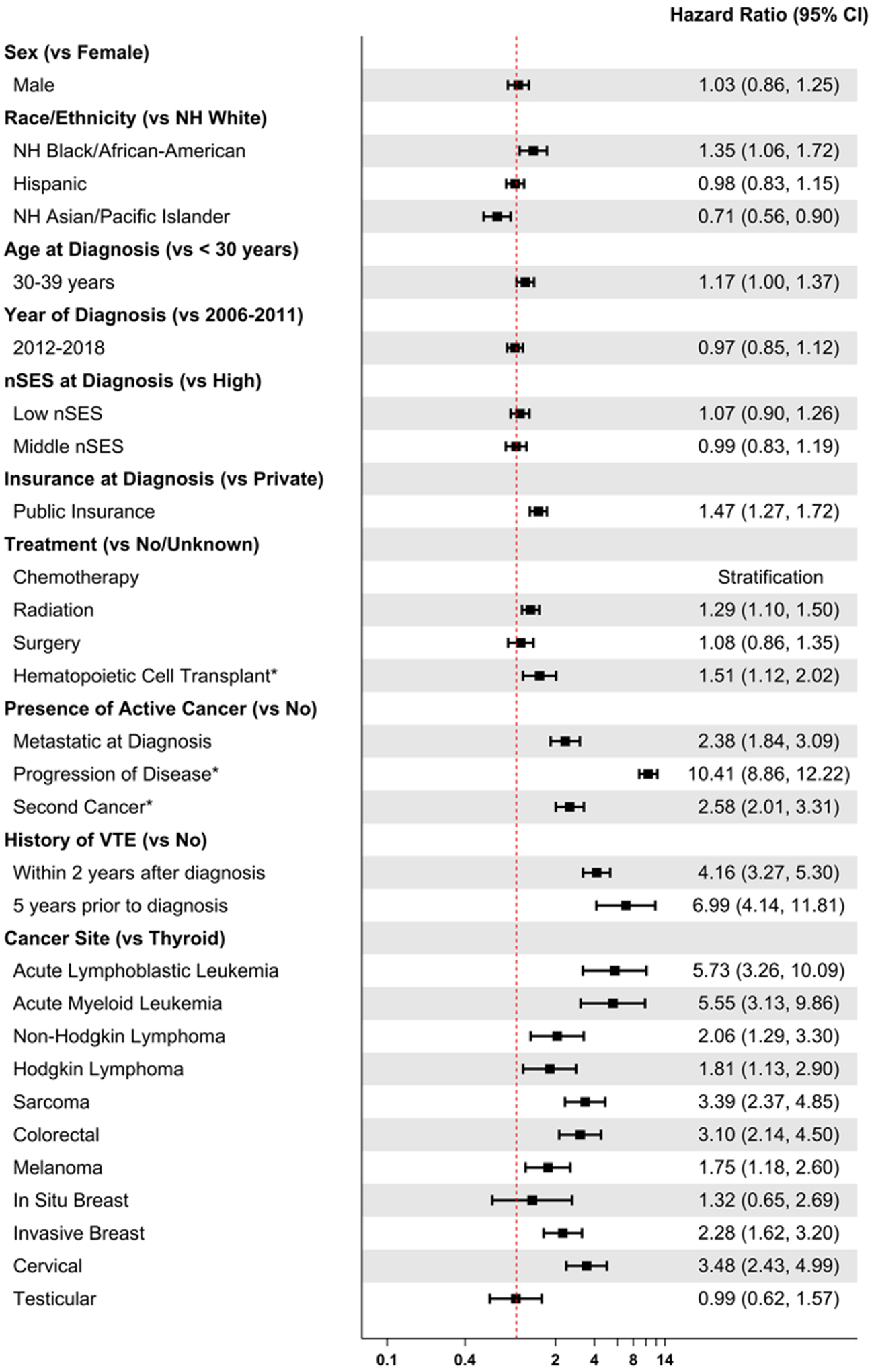
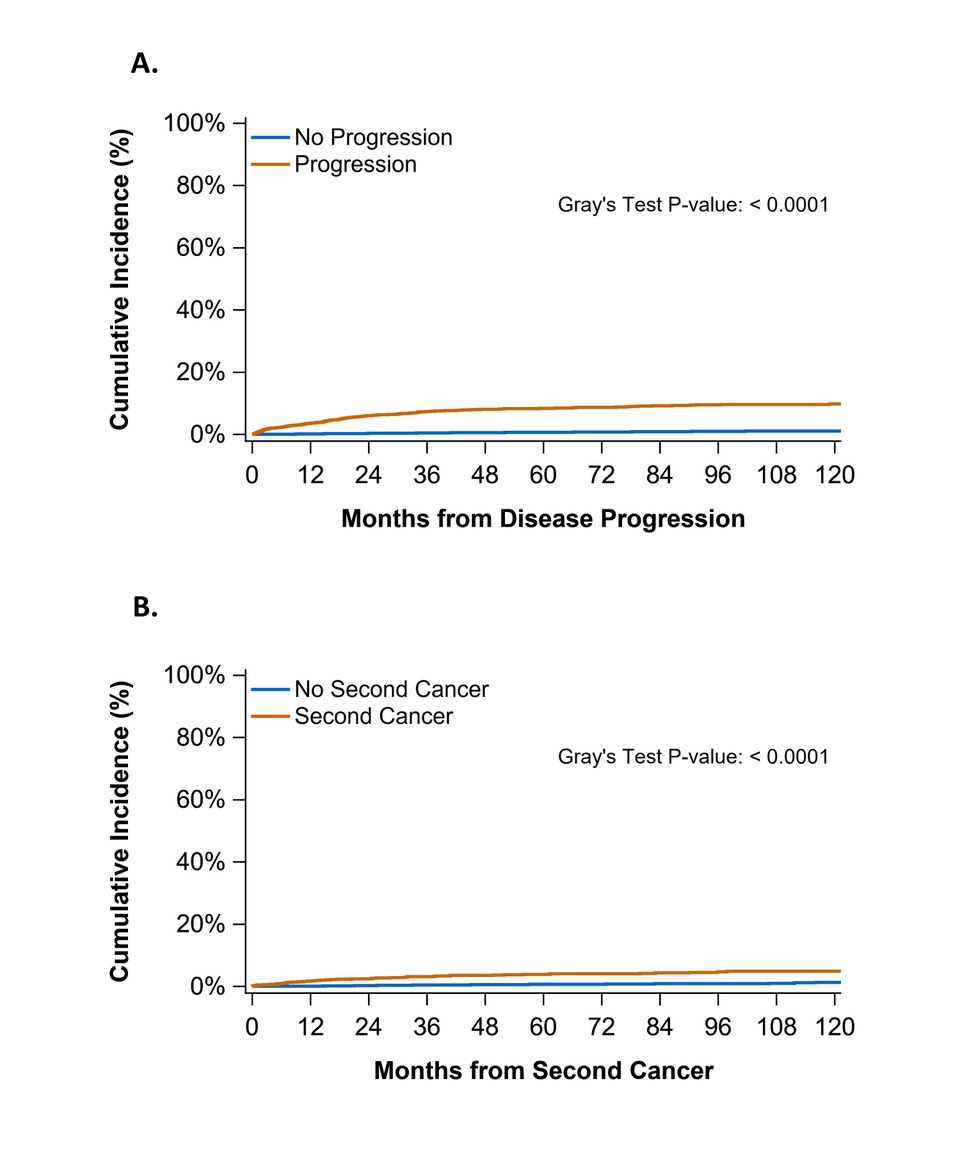
Among 59,343 survivors, the 10-year cumulative incidence of VTE was 1.93% (CI 1.80–2.07). The hazard of VTE was higher among those who had active cancer, including progression from lower stages to metastatic disease (Hazard Ratio (HR)=10.41, 95% confidence interval (CI): 8.86–12.22), second primary cancer (HR=2.58, CI:2.01–3.31), or metastatic disease at diagnosis (HR=2.38, CI:1.84–3.09). The hazard of late VTE was increased among survivors who underwent hematopoietic cell transplantation, those who received radiotherapy, had a VTE history, public insurance (vs private) or non-Hispanic Black/African American race/ethnicity (vs non-Hispanic White). Patients with leukemias, lymphomas, sarcoma, melanoma, colorectal, breast, and cervical cancers had a higher VTE risk than those with thyroid cancer.
Conclusions
VTE risk remained elevated ≥2 years following cancer diagnosis in AYA survivors. Active cancer is a significant risk factor for VTE. Future studies might determine if late VTE should prompt evaluation for recurrence or second malignancy, if not already known. -
Subjects:
-
Keywords:
-
Source:Thromb Res. 235:1-7
-
Pubmed ID:38244373
-
Pubmed Central ID:PMC10989999
-
Document Type:
-
Funding:HHSN261201800032C/CA/NCI NIH HHSUnited States/ ; HHSN261201800009C/CA/NCI NIH HHSUnited States/ ; NU58DP006344/DP/NCCDPHP CDC HHSUnited States/ ; HHSN261201800015I/CA/NCI NIH HHSUnited States/ ; P01 CA233432/CA/NCI NIH HHSUnited States/ ; HHSN261201800032I/CA/NCI NIH HHSUnited States/ ; HHSN261201800015C/CA/NCI NIH HHSUnited States/ ; HHSN261201800009I/CA/NCI NIH HHSUnited States/
-
Volume:235
-
Download URL:
-
File Type:
 [PDF - 477.51 KB]
 -
Collection(s):
-
Main Document Checksum:urn:sha-512:52f7782f78842334de4979ece99095841cfcde2630f6b4e59a6644f23b3e28e2229c341d922abe0ed3803785b51a74789b8f3aaf215233266bbfb68fa5110828
Supporting Files


File Language:
English
 Was this page helpful?
 Found an issue?


CDC STACKS serves as an archival repository of CDC-published products including
scientific findings, journal articles, guidelines, recommendations, or other public health information authored or
co-authored by CDC or funded partners.
As a repository, CDC STACKS retains documents in their original published format to ensure public access to scientific information.
As a repository, CDC STACKS retains documents in their original published format to ensure public access to scientific information.
You May Also Like
COLLECTION
CDC Public Access