



Common genetic variation and risk of osteosarcoma in a multi-ethnic pediatric and adolescent population
Supporting Files

-
1 2020 ; 1-2020
-
Available in CDC Stacks on January 01, 2021, 12:00 AM
File Language:
English
Details
-
Alternative Title:Bone
-
Personal Author:
-
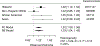
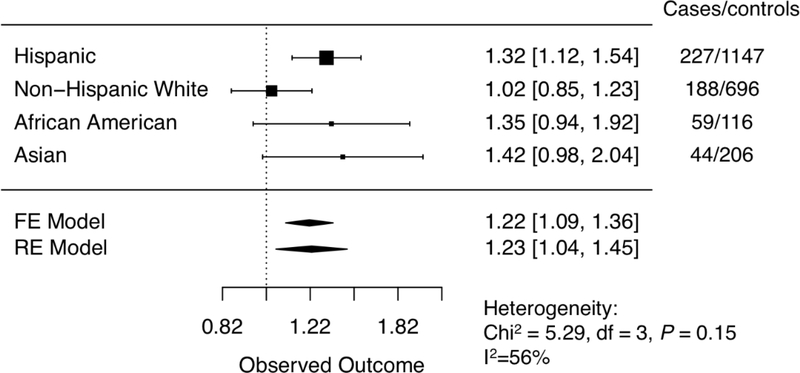
Description:Osteosarcoma, a malignant primary bone tumor most commonly diagnosed in children and adolescents, has a poorly understood genetic etiology. Genome-wide association studies (GWAS) and candidate-gene analyses have identified putative risk variants in subjects of European ancestry. However, despite higher incidence among African-American and Hispanic children, little is known regarding common heritable variation that contributes to osteosarcoma incidence and clinical presentation across racial/ethnic groups. In a multi-ethnic sample of non-Hispanic white, Hispanic, African-American and Asian/Pacific Islander children (537 cases, 2165 controls), we performed association analyses assessing previously-reported loci for osteosarcoma risk and metastasis, including meta-analysis across racial/ethnic groups. We also assessed a previously described association between genetic predisposition to longer leukocyte telomere length (LTL) and osteosarcoma risk in this independent multi-ethnic dataset. In our sample, we were unable to replicate previously-reported loci for osteosarcoma risk or metastasis detected in GWAS of European-ancestry individuals in either ethnicity-stratified analyses or meta-analysis across ethnic groups. Our analyses did confirm that genetic predisposition to longer LTL is a risk factor for osteosarcoma (OR|: 1.22; 95% CI: 1.09-1.36; P = 3.8 × 10|), and the strongest effect was seen in Hispanic subjects (OR: 1.32; 95% CI: 1.12-1.54, P = 6.2 × 10|). Our findings shed light on the replicability of osteosarcoma risk loci across ethnicities and motivate further characterization of these genetic factors in diverse clinical cohorts.
-
Subjects:
-
Keywords:
-
Source:Bone. 130:115070
-
Pubmed ID:31525475
-
Pubmed Central ID:PMC6885126
-
Document Type:
-
Funding:HHSN261201800032C/CA/NCI NIH HHSUnited States/ ; HHSN261201800009C/CA/NCI NIH HHSUnited States/ ; NU58DP006344/DP/NCCDPHP CDC HHSUnited States/ ; T32 CA151022/CA/NCI NIH HHSUnited States/ ; HHSN261201800015I/CA/NCI NIH HHSUnited States/ ; R01 CA155461/CA/NCI NIH HHSUnited States/ ; R01 CA194189/CA/NCI NIH HHSUnited States/ ; HHSN261201800032I/CA/NCI NIH HHSUnited States/ ; HHSN261201800009I/CA/NCI NIH HHSUnited States/ ; T32 GM007171/GM/NIGMS NIH HHSUnited States/ ; HHSN261201800015C/CA/NCI NIH HHSUnited States/
-
Volume:130
-
Download URL:
-
File Type:
 [PDF - 1.20 MB]
 -
Collection(s):
-
Main Document Checksum:urn:sha-512:af1c4fd6aca8dcd61e9c4e6718d22a025b7f137cb3d997ed12b230c7fc8b8f4b93c65d68435b645c2ce43992e39efddb67faf172e2b77ed87cc645c5db490caf
Supporting Files


File Language:
English
 Was this page helpful?
 Found an issue?


CDC STACKS serves as an archival repository of CDC-published products including
scientific findings, journal articles, guidelines, recommendations, or other public health information authored or
co-authored by CDC or funded partners.
As a repository, CDC STACKS retains documents in their original published format to ensure public access to scientific information.
As a repository, CDC STACKS retains documents in their original published format to ensure public access to scientific information.
You May Also Like
COLLECTION
CDC Public Access