



The rapid emergence of antifungal resistant human-pathogenic fungi
Supporting Files

-
2023/12/01
-
Available in CDC Stacks on 2024-12-01T00:00:00Z
File Language:
English
Details
-
Alternative Title:Nat Rev Microbiol
-
Personal Author:
-
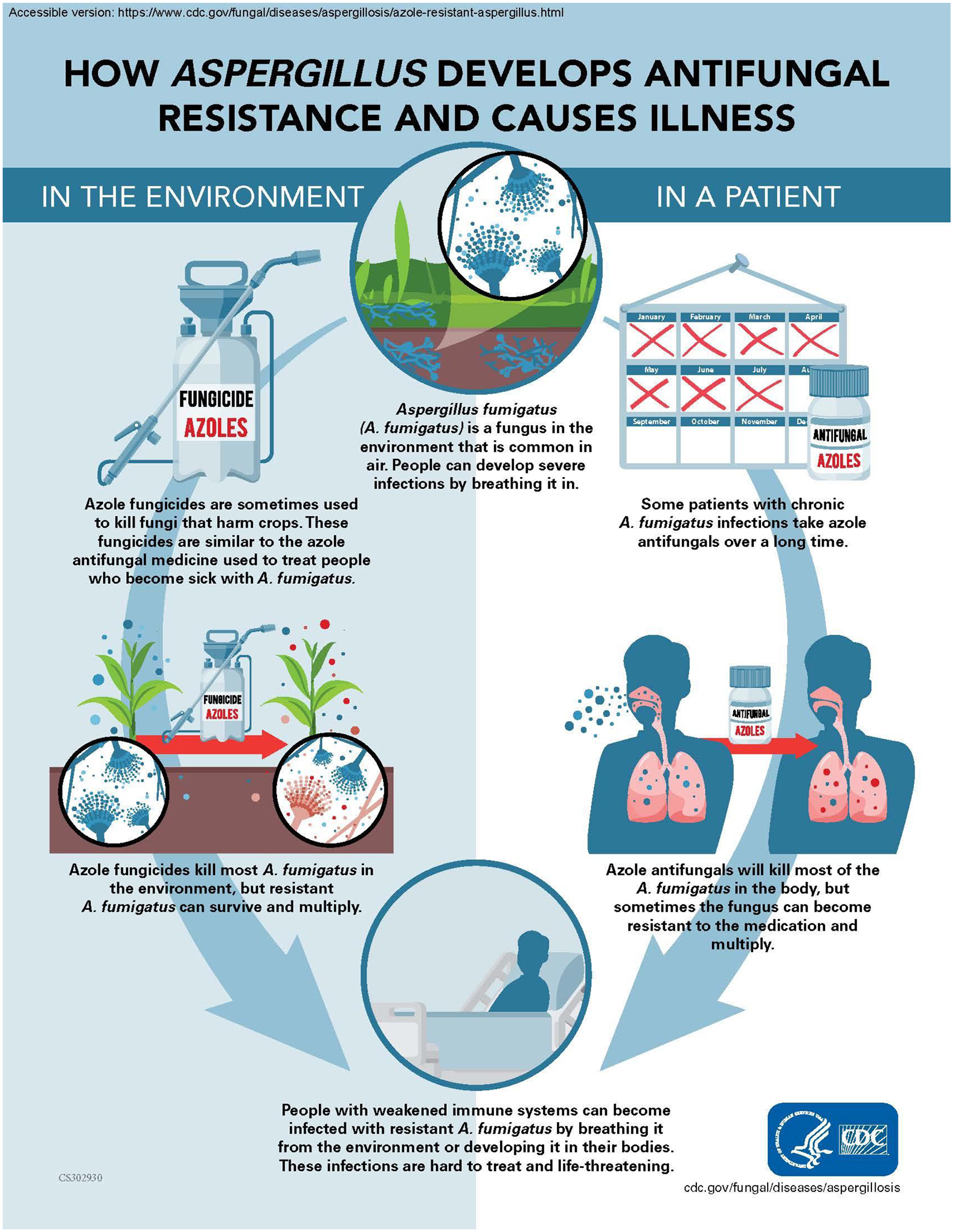
Description:During recent decades, the emergence of pathogenic fungi has posed an increasing public health threat, particularly given the limited number of antifungal drugs available to treat invasive infections. In this Review, we discuss the global emergence and spread of three emerging antifungal-resistant fungi: Candida auris, driven by global health-care transmission and possibly facilitated by climate change; azole-resistant Aspergillus fumigatus, driven by the selection facilitated by azole fungicide use in agricultural and other settings; and Trichophyton indotineae, driven by the under-regulated use of over-the-counter high-potency corticosteroid-containing antifungal creams. The diversity of the fungi themselves and the drivers of their emergence make it clear that we cannot predict what might emerge next. Therefore, vigilance is critical to monitoring fungal emergence, as well as the rise in overall antifungal resistance.
-
Subjects:
-
Source:Nat Rev Microbiol. 21(12):818-832
-
Pubmed ID:37648790
-
Pubmed Central ID:PMC10859884
-
Document Type:
-
Funding:
-
Genre:
-
Volume:21
-
Issue:12
-
Download URL:
-
File Type:
 [PDF - 1.79 MB]
 -
Collection(s):
-
Main Document Checksum:urn:sha-512:718dccab03ca634d8ef6978bbe75d3fb00951fad60b5693c5159017449640b4ca8e468ce73252c50767e3323c3bdfee9f5cecec7f4d724f1608aa3a60f74b58f
Supporting Files


File Language:
English
 Was this page helpful?
 Found an issue?



CDC STACKS serves as an archival repository of CDC-published products including
scientific findings, journal articles, guidelines, recommendations, or other public health information authored or
co-authored by CDC or funded partners.
As a repository, CDC STACKS retains documents in their original published format to ensure public access to scientific information.
As a repository, CDC STACKS retains documents in their original published format to ensure public access to scientific information.
You May Also Like
COLLECTION
CDC Public Access