



A new C. elegans model to study copper toxicity in Wilson disease
Supporting Files

-
1 2024
-
File Language:
English
Details
-
Alternative Title:Traffic
-
Personal Author:Catalano, Federico ; O’Brien, Thomas J ; Mekhova, Aleksandra A ; Sepe, Lucia Vittoria ; Elia, Mariantonietta ; De Cegli, Rossella ; Gallotta, Ivan ; Santonicola, Pamela ; Zampi, Giuseppina ; Ilyechova, Ekaterina Y ; Romanov, Aleksei A ; Samuseva, Polina D ; Salzano, Josephine ; Petruzzelli, Raffaella ; Polishchuk, Elena V. ; Indrieri, Alessia ; Kim, Byung-Eun ; Brown, André EX ; Puchkova, Ludmila V ; Di Schiavi, Elia ; Polishchuk, Roman S.
-
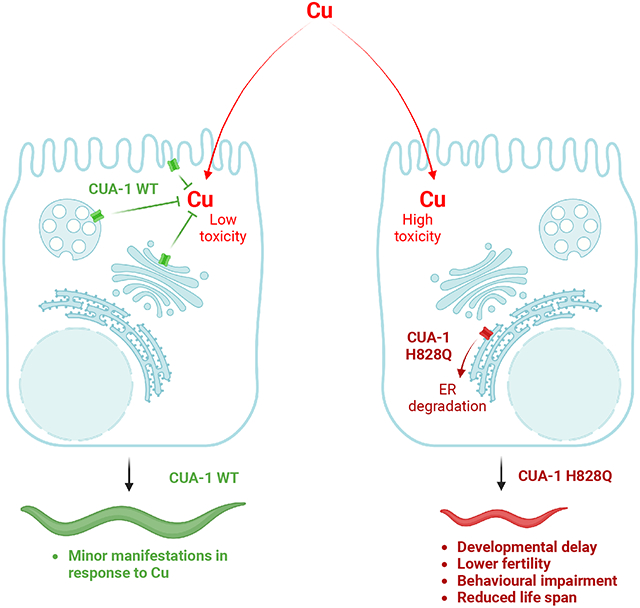
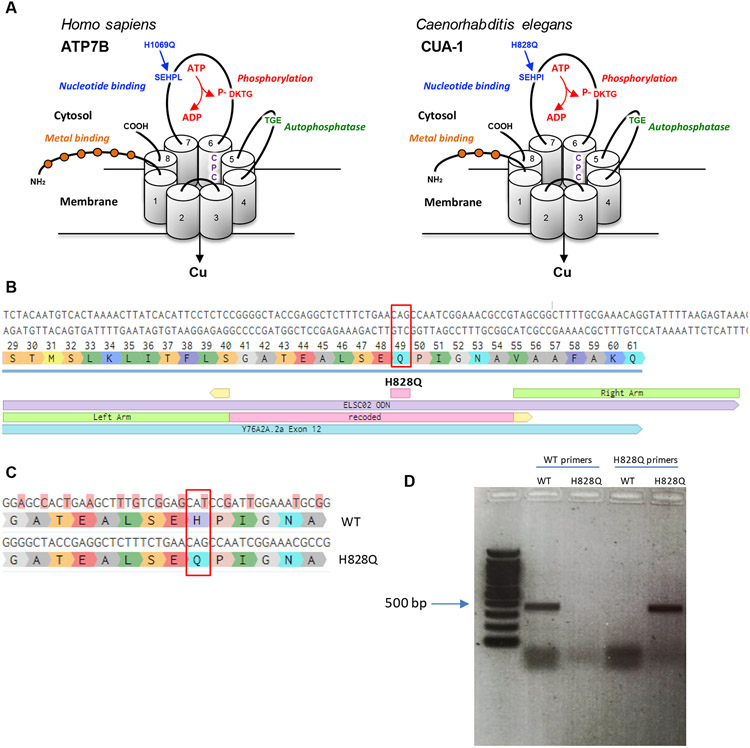
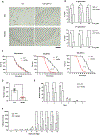
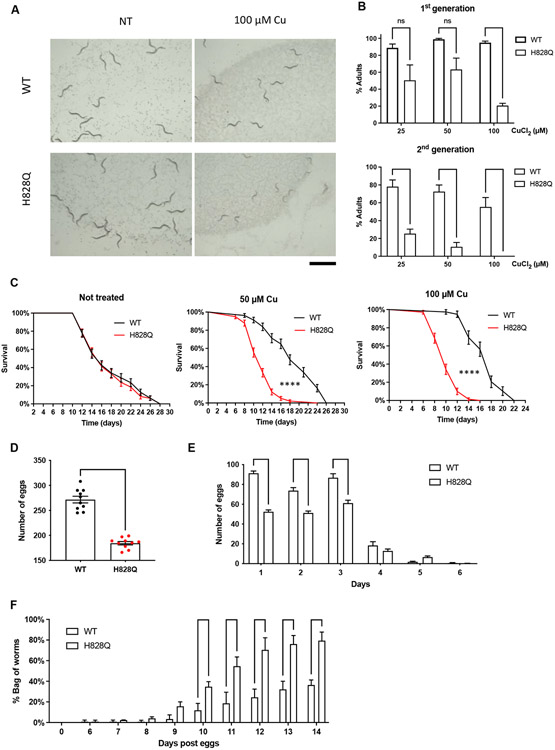
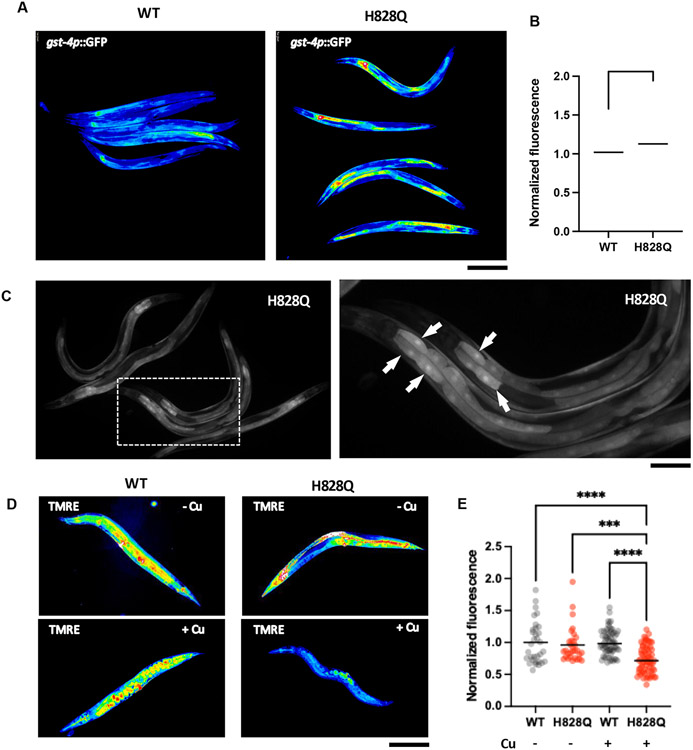
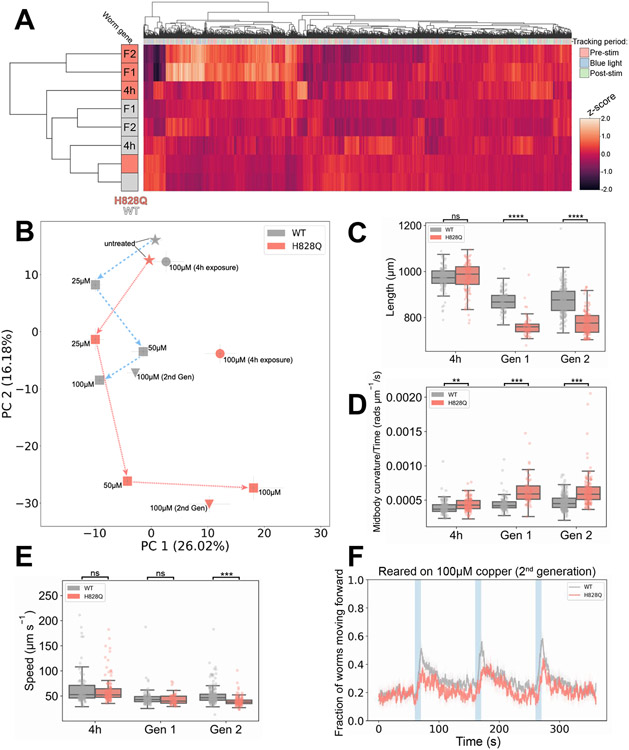
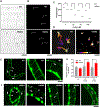
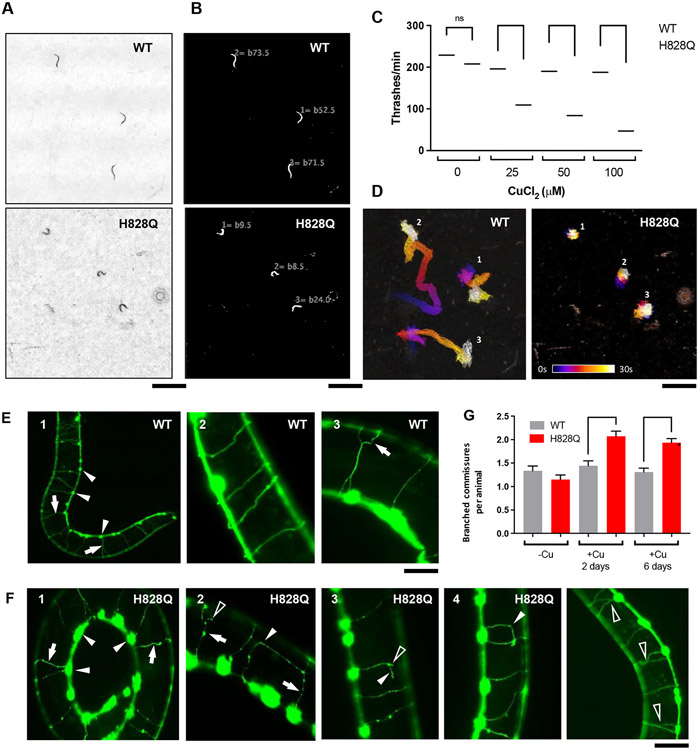
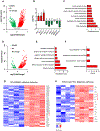
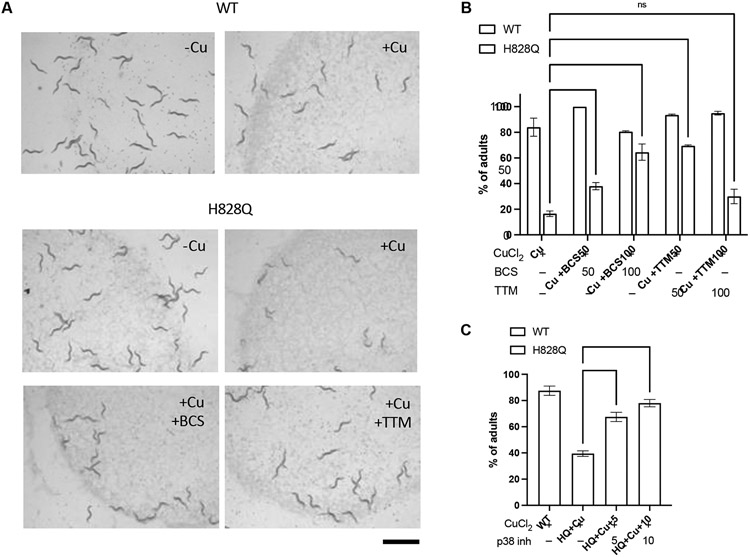
Description:Wilson disease (WD) is caused by mutations in the ATP7B gene that encodes a copper (Cu) transporting ATPase whose trafficking from the Golgi to endo-lysosomal compartments drives sequestration of excess Cu and its further excretion from hepatocytes into the bile. Loss of ATP7B function leads to toxic Cu overload in the liver and subsequently in the brain, causing fatal hepatic and neurological abnormalities. The limitations of existing WD therapies call for the development of new therapeutic approaches, which require an amenable animal model system for screening and validation of drugs and molecular targets. To achieve this objective, we generated a mutant Caenorhabditis elegans strain with a substitution of a conserved histidine (H828Q) in the ATP7B ortholog cua-1 corresponding to the most common ATP7B variant (H1069Q) that causes WD. cua-1 mutant animals exhibited very poor resistance to Cu compared to the wild-type strain. This manifested in a strong delay in larval development, a shorter lifespan, impaired motility, oxidative stress pathway activation, and mitochondrial damage. In addition, morphological analysis revealed several neuronal abnormalities in cua-1 mutant animals exposed to Cu. Further investigation suggested that mutant CUA-1 is retained and degraded in the endoplasmic reticulum, similarly to human ATP7B-H1069Q. As a consequence, the mutant protein does not allow animals to counteract Cu toxicity. Notably, pharmacological correctors of ATP7B-H1069Q reduced Cu toxicity in cua-1 mutants indicating that similar pathogenic molecular pathways might be activated by the H/Q substitution and, therefore, targeted for rescue of ATP7B/CUA-1 function. Taken together, our findings suggest that the newly generated cua-1 mutant strain represents an excellent model for Cu toxicity studies in WD.
-
Subjects:
-
Keywords:
-
Source:Traffic. 25(1):e12920
-
Pubmed ID:37886910
-
Pubmed Central ID:PMC10841361
-
Document Type:
-
Funding:
-
Volume:25
-
Issue:1
-
Collection(s):
-
Main Document Checksum:urn:sha-512:9f2f821db22e695171277bce283f45fc5289028c3753178594ecb91e33fbbcf6c53bf569ff1f409f2a96c9b30e1a3729fa47af337591c56b8b9ec01425bca2b2
-
Download URL:
-
File Type:
 [PDF
- 2.34 MB
]
[PDF
- 2.34 MB
]
Supporting Files


File Language:
English
 Was this page helpful?
 Found an issue?
CDC STACKS serves as an archival repository of CDC-published products including
scientific findings,
journal articles, guidelines, recommendations, or other public health information authored or
co-authored by CDC or funded partners.
As a repository, CDC STACKS retains documents in their original published format to ensure public access to scientific information.
As a repository, CDC STACKS retains documents in their original published format to ensure public access to scientific information.
You May Also Like
COLLECTION
CDC Public Access