



Rifampin- and Multidrug-Resistant Tuberculosis in Russian Civilians and Prison Inmates: Dominance of the Beijing Strain Family
Supporting Files
Public Domain

-
Nov 2002
File Language:
English
Details
-
Alternative Title:Emerg Infect Dis
-
Personal Author:Drobniewski, Francis ; Balabanova, Yanina ; Ruddy, Michael ; Weldon, Laura ; Jeltkova, Katya ; Brown, Timothy ; Malomanova, Nadezdna ; Elizarova, Elvira ; Melentyey, Alexander ; Mutovkin, Ebgeny ; Zhakharova, Svetlana ; Fedorin, Ivan
-
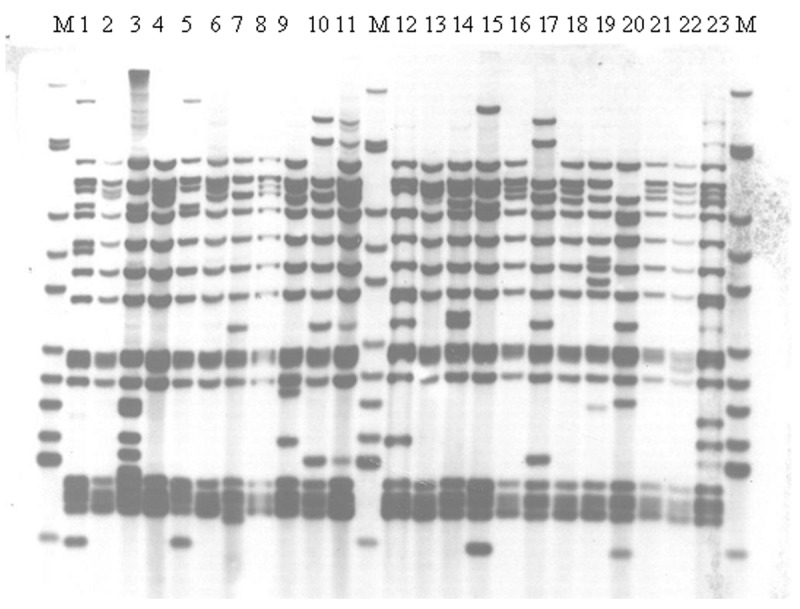
Description:Consecutive patient cultures (140) of Mycobacteriium tuberculosis were collected from five Russian civilian and prison tuberculosis laboratories and analyzed for rifampin (rpoB) and isoniazid resistance (inhA, katG, ahpC); transmission of Beijing family isolates; and the importance of prison and previous therapy in drug resistance. Rifampin, isoniazid, and multidrug resistance occurred in 58.2%, 51.6%, and 44.7% of cultures, respectively; 80% of prison cultures were rifampin resistant. Spoligotyping and variable number tandem repeat (VNTR) fingerprinting divided the isolates into 43 groups. Spoligotyping demonstrated that a high proportion (68.1%) of patients were infected with Beijing family strains and that most (69.1%) were rifampin resistant; the highest proportion (81.6%) occurred in prison. One VNTR subgroup (42435) comprised 68 (72.3%) of the Beijing isolates with a small number of IS6110 types; 50 (73.5%) were rifampin resistant. Rifampin-resistant Beijing isolates are dominant within the patient population, especially among prisoners, and threaten treatment programs.
-
Subjects:
-
Source:Emerg Infect Dis. 8(11):1320-1326.
-
Document Type:
-
Place as Subject:
-
Location:
-
Volume:8
-
Issue:11
-
Download URL:
-
File Type:
 [PDF - 691.16 KB]
 -
Collection(s):
-
Main Document Checksum:urn:sha256:d8ee4439d6737209fc8176335dc723b795cade12e7c04259781b208133bcf1fd
Supporting Files


File Language:
English
 Was this page helpful?
 Found an issue?

CDC STACKS serves as an archival repository of CDC-published products including
scientific findings, journal articles, guidelines, recommendations, or other public health information authored or
co-authored by CDC or funded partners.
As a repository, CDC STACKS retains documents in their original published format to ensure public access to scientific information.
As a repository, CDC STACKS retains documents in their original published format to ensure public access to scientific information.
You May Also Like
COLLECTION
Emerging Infectious Diseases