



Drought-Induced Amplification of Saint Louis encephalitis virus, Florida
Supporting Files
Public Domain

-
Jun 2002
File Language:
English
Details
-
Alternative Title:Emerg Infect Dis
-
Personal Author:
-
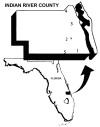
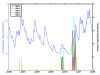
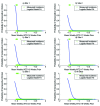
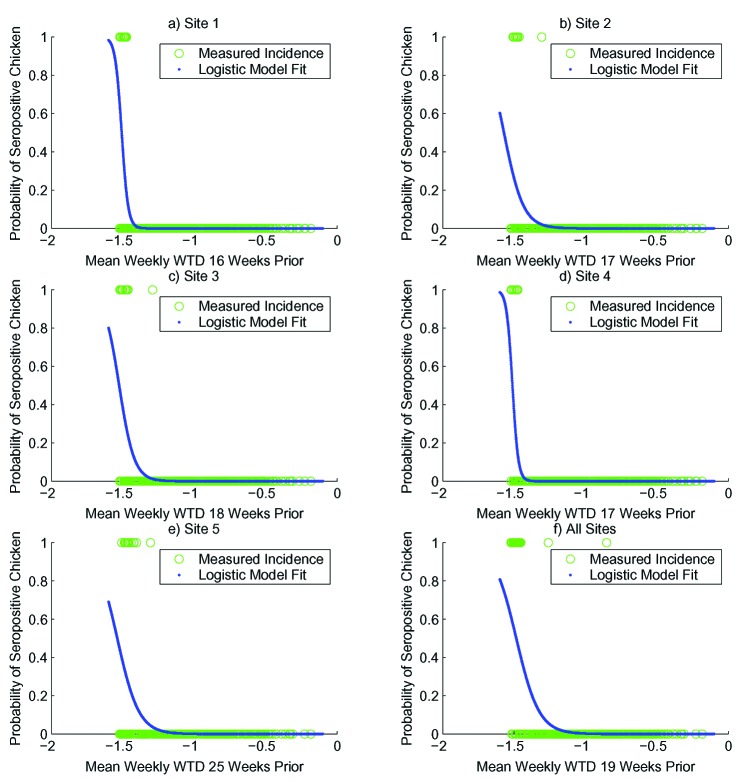
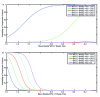
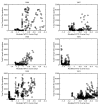
Description:We used a dynamic hydrology model to simulate water table depth (WTD) and quantify the relationship between Saint Louis encephalitis virus (SLEV) transmission and hydrologic conditions in Indian River County, Florida, from 1986 through 1991, a period with an SLEV epidemic. Virus transmission followed periods of modeled drought (specifically low WTDs 12 to 17 weeks before virus transmission, followed by a rising of the water table 1 to 2 weeks before virus transmission). Further evidence from collections of Culex nigripalpus (the major mosquito vector of SLEV in Florida) suggests that during extended spring droughts vector mosquitoes and nestling, juvenile, and adult wild birds congregate in selected refuges, facilitating epizootic amplification of SLEV. When the drought ends and habitat availability increases, the SLEV-infected Cx. nigripalpus and wild birds disperse, initiating an SLEV transmission cycle. These findings demonstrate a mechanism by which drought facilitates the amplification of SLEV and its subsequent transmission to humans.
-
Subjects:
-
Source:Emerg Infect Dis. 8(6):575-580.
-
Document Type:
-
Place as Subject:
-
Volume:8
-
Issue:6
-
Download URL:
-
File Type:
 [PDF - 391.29 KB]
 -
Collection(s):
-
Main Document Checksum:urn:sha256:18063192ed4f46cc345d2c651121342eaa61f0de019fe41f30bf9f330b980323
Supporting Files


File Language:
English
 Was this page helpful?
 Found an issue?





CDC STACKS serves as an archival repository of CDC-published products including
scientific findings, journal articles, guidelines, recommendations, or other public health information authored or
co-authored by CDC or funded partners.
As a repository, CDC STACKS retains documents in their original published format to ensure public access to scientific information.
As a repository, CDC STACKS retains documents in their original published format to ensure public access to scientific information.
You May Also Like
COLLECTION
Emerging Infectious Diseases