



Cryptosporidium Oocysts in a Water Supply Associated with a Cryptosporidiosis Outbreak
Supporting Files
Public Domain

-
Jun 2002
Details
-
Alternative Title:Emerg Infect Dis
-
Personal Author:
-
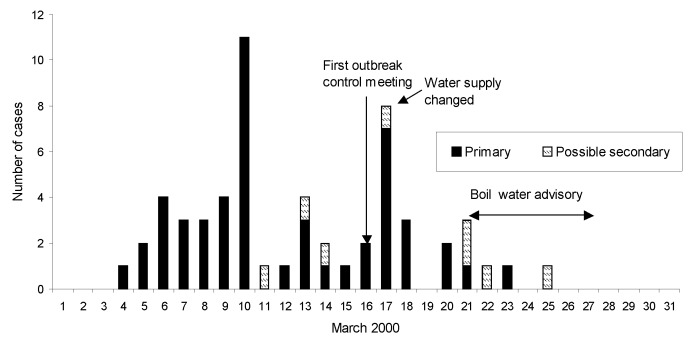
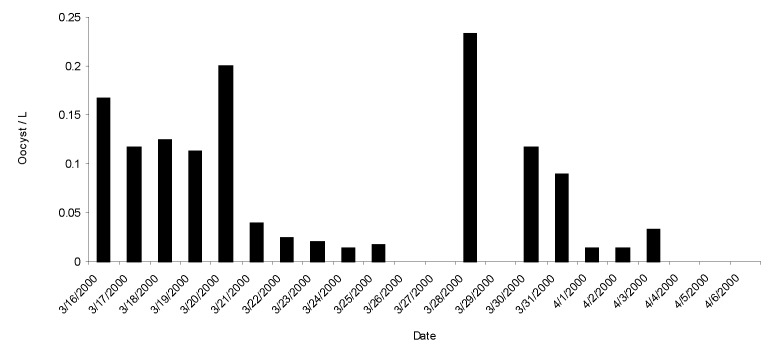
Description:An outbreak of cryptosporidiosis occurred in and around Clitheroe, Lancashire, in northwest England, during March 2000. Fifty-eight cases of diarrhea with Cryptosporidium identified in stool specimens were reported. Cryptosporidium oocysts were identified in samples from the water treatment works as well as domestic taps. Descriptive epidemiology suggested that drinking unboiled tap water in a single water zone was the common factor linking cases. Environmental investigation suggested that contamination with animal feces was the likely source of the outbreak. This outbreak was unusual in that hydrodynamic modeling was used to give a good estimate of the peak oocyst count at the time of the contamination incident. The oocysts' persistence in the water distribution system after switching to another water source was also unusual. This persistence may have been due to oocysts being entrapped within biofilm. Despite the continued presence of oocysts, epidemiologic evidence suggested that no one became ill after the water source was changed.
-
Subjects:
- Research
- Cryptosporidium Oocysts in a Water Supply Associated with a Cryptosporidiosis Outbreak
- Cryptosporidium
- outbreak
- oocysts
- water
- zoonosis
- biofilm
- Adolescent
- Adult
- Aged
- Aged, 80 and over
- Animals
- Child
- Child, Preschool
- Cryptosporidiosis
- Cryptosporidium parvum
- Diarrhea
- Disease Outbreaks
- England
- Feces
- Female
- Humans
- Infant
- Male
- Middle Aged
- Parasite Egg Count
- Water
- Water Supply
-
Source:Emerg Infect Dis. 8(6):619-624.
-
Document Type:
-
Volume:8
-
Issue:6
-
Download URL:
-
File Type:
 [PDF - 262.69 KB]
 -
Collection(s):
-
Main Document Checksum:urn:sha256:34058e91e7df93e53c1778bb68280ee5e88337e394bdb130f9ef728e1e084fc9
Supporting Files


 Was this page helpful?
 Found an issue?


CDC STACKS serves as an archival repository of CDC-published products including
scientific findings, journal articles, guidelines, recommendations, or other public health information authored or
co-authored by CDC or funded partners.
As a repository, CDC STACKS retains documents in their original published format to ensure public access to scientific information.
As a repository, CDC STACKS retains documents in their original published format to ensure public access to scientific information.
You May Also Like
COLLECTION
Emerging Infectious Diseases