



Feasibility of lead exposure assessment in blood spots using energy dispersive x-ray fluorescence
Supporting Files

-
4 20 2021 ; 4-20-
-
Available in CDC Stacks on 2023-10-30T00:00:00Z
File Language:
English
Details
-
Alternative Title:Environ Sci Technol
-
Personal Author:
-
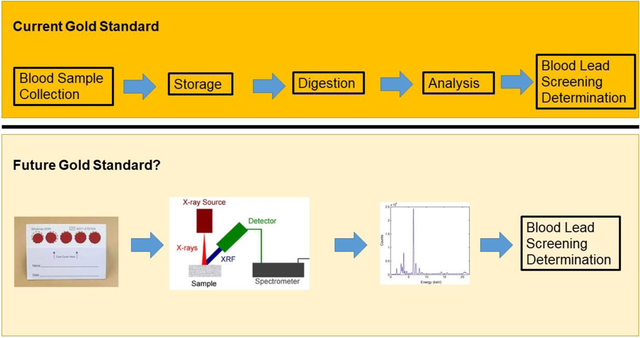
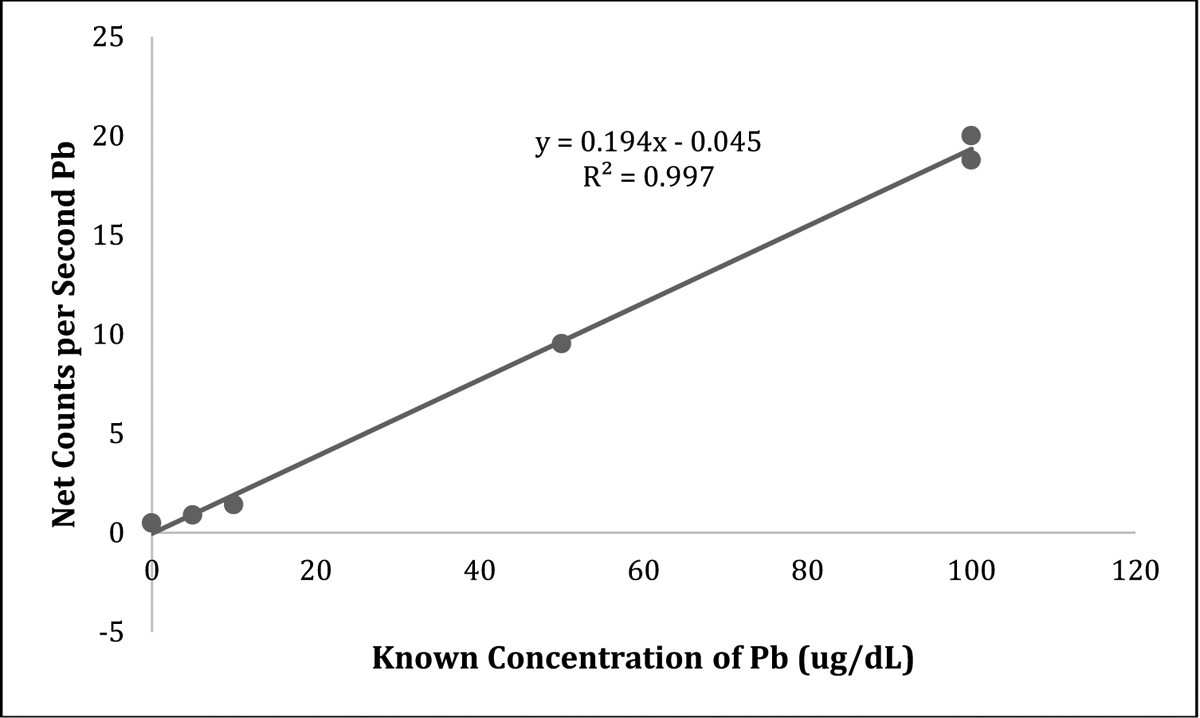
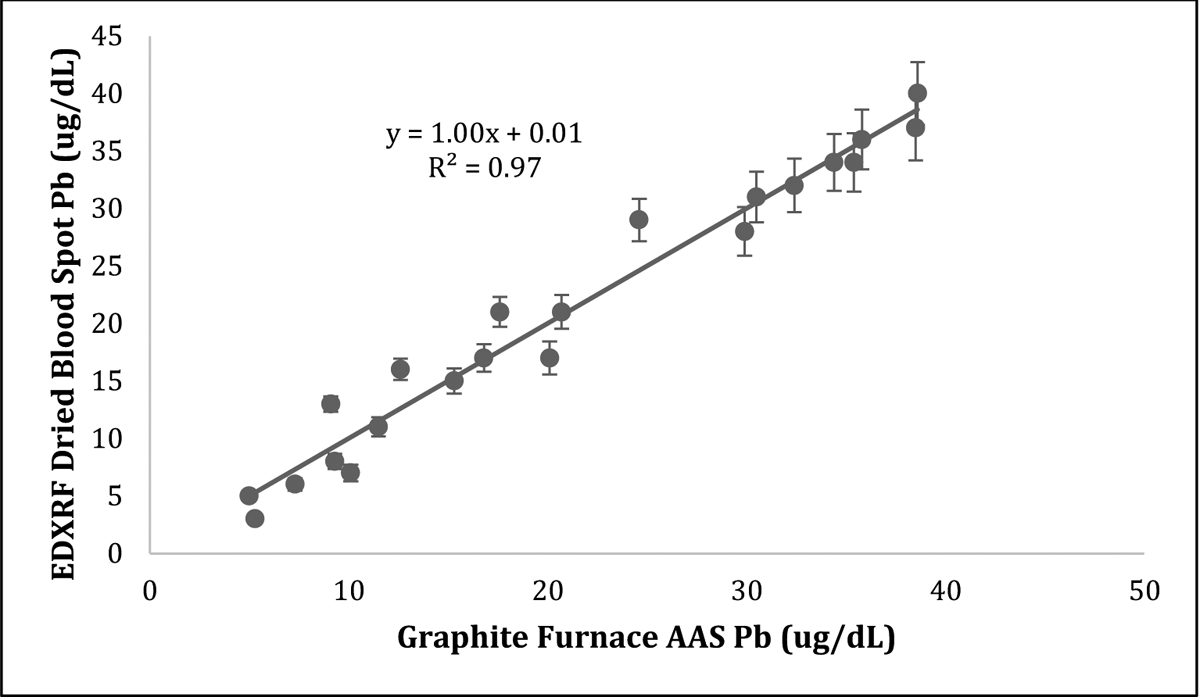
Description:Collecting blood spots from newborns is a common procedure used to diagnose multiple health conditions. Fingerstick blood samples are routinely collected from children to diagnose elevated blood lead levels. In our study, we wanted to test the feasibility of using a high-power energy-dispersive X-ray fluorescence (EDXRF) device to accurately measure the concentration of lead in blood spots. We created spotted standards of a known concentration of lead on a filter paper at different volumes and concentrations. We determined the detection limit for lead through repeated measurements of our standards and calibration line slopes. We also tested the variability of the measured lead concentration across procedures and spotted blood volumes and found no significant additions to uncertainty in measurements. Finally, we compared blood lead concentrations measured by EDXRF and atomic absorption spectroscopy (AAS) and found EDXRF to be a significant predictor of blood lead (| = 22, R = 0.98, | value <0.001) with an average detection limit of 1.7 μg/dL of blood lead. This detection limit is similar to that of the AAS technique, which is commonly used in clinical testing laboratories for blood lead surveillance. These findings provide a proof of concept that blood spots measured by EDXRF may be used as a surveillance tool for lead exposure, even at elevated blood lead levels of 2-3 μg/dL.
-
Keywords:
-
Source:Environ Sci Technol. 55(8):5050-5055
-
Pubmed ID:33759507
-
Pubmed Central ID:PMC10615324
-
Document Type:
-
Funding:
-
Volume:55
-
Issue:8
-
Download URL:
-
File Type:
 [PDF - 202.02 KB]
 -
Collection(s):
-
Main Document Checksum:urn:sha256:75c5d7ba60ccb483d1c4d4671405cace14d461492e94ba776ea7dfe1c7ec9e39
Supporting Files


File Language:
English
 Was this page helpful?
 Found an issue?

CDC STACKS serves as an archival repository of CDC-published products including
scientific findings, journal articles, guidelines, recommendations, or other public health information authored or
co-authored by CDC or funded partners.
As a repository, CDC STACKS retains documents in their original published format to ensure public access to scientific information.
As a repository, CDC STACKS retains documents in their original published format to ensure public access to scientific information.
You May Also Like
COLLECTION
CDC Public Access