



Rare variants found in multiplex families with orofacial clefts: Does expanding the phenotype make a difference?
Supporting Files

-
10 2023 ; 10-2023
-
Available in CDC Stacks on October 01, 2024, 12:00 AM
File Language:
English
Details
-
Alternative Title:Am J Med Genet A
-
Personal Author:
-
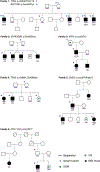
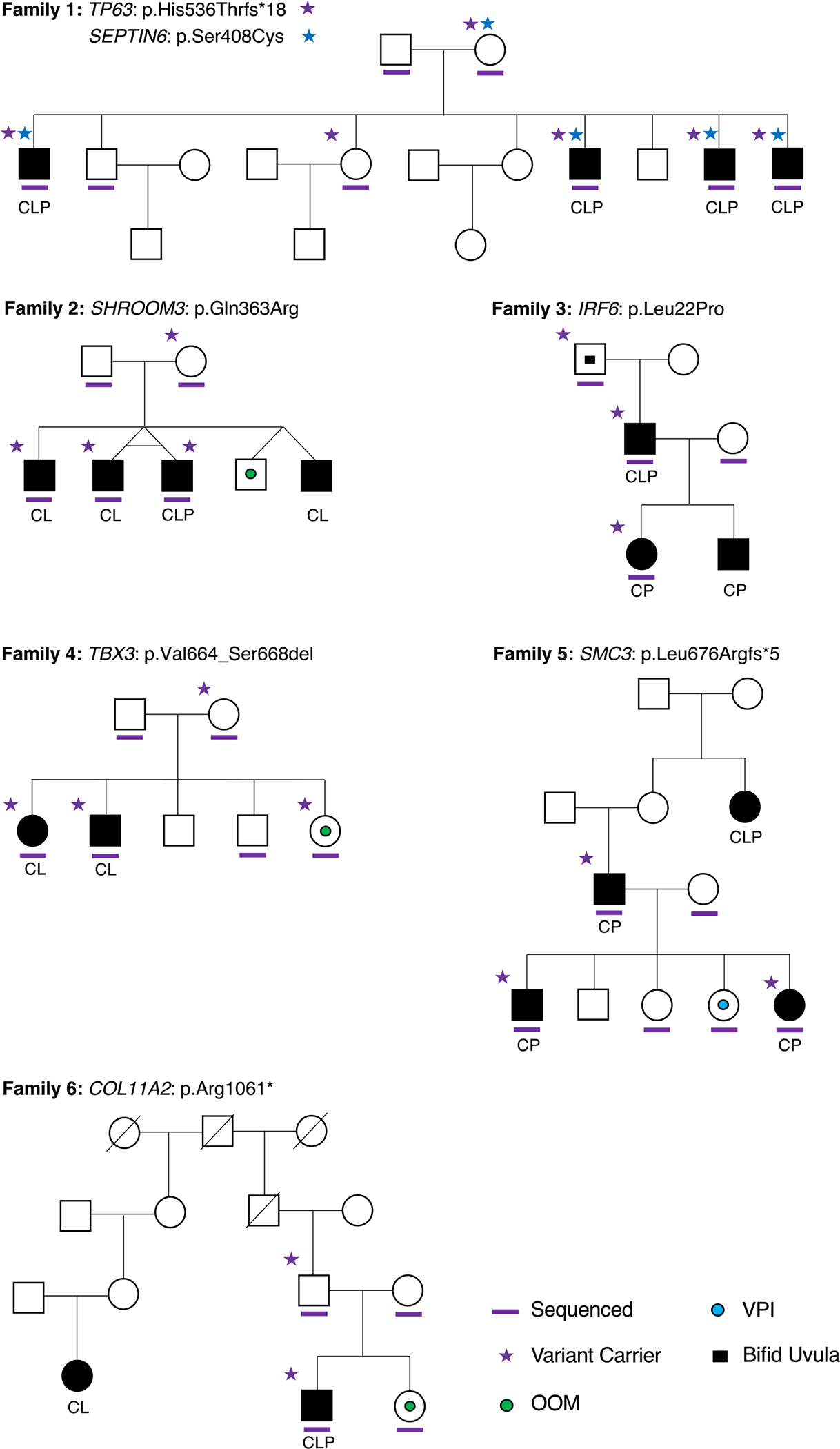
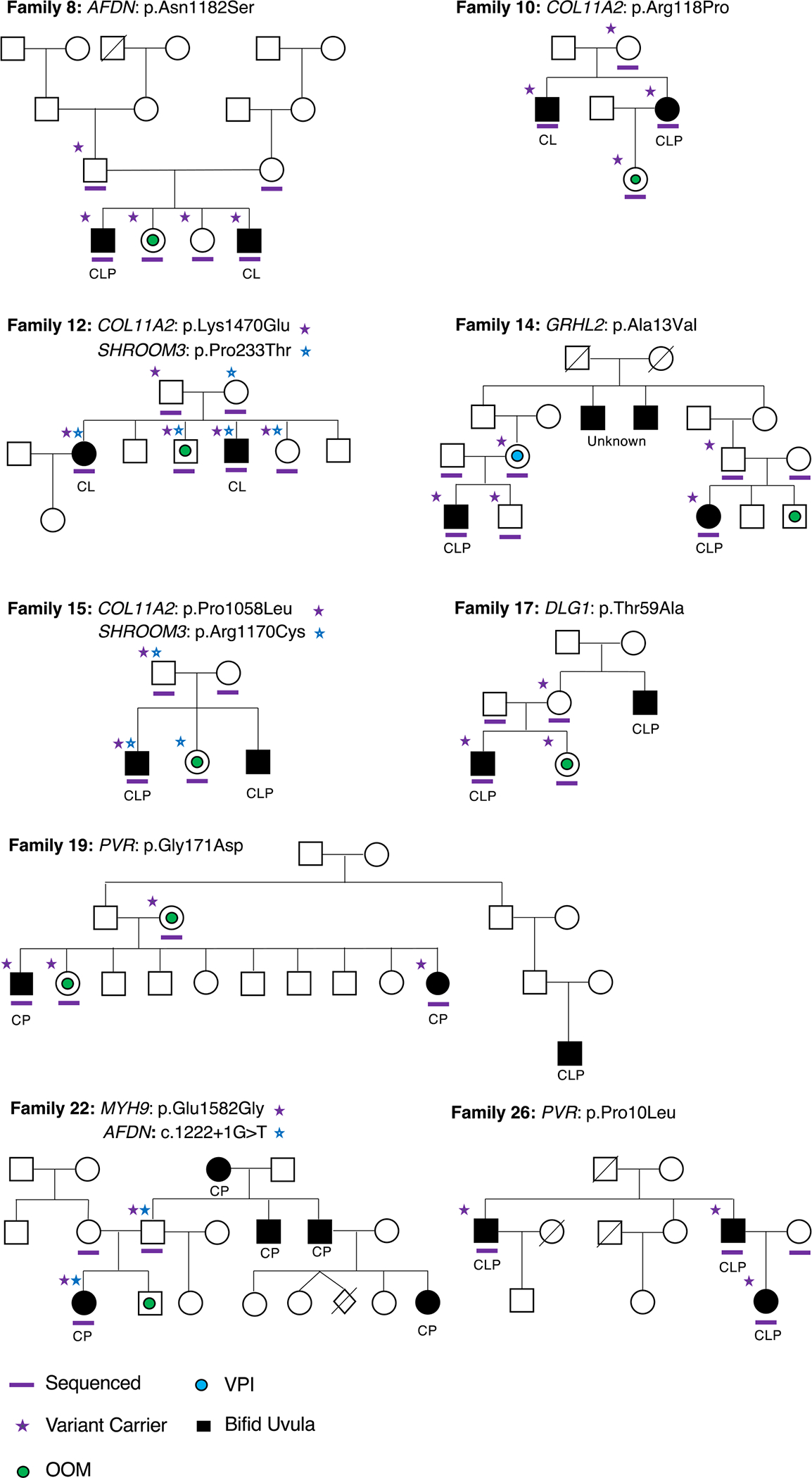
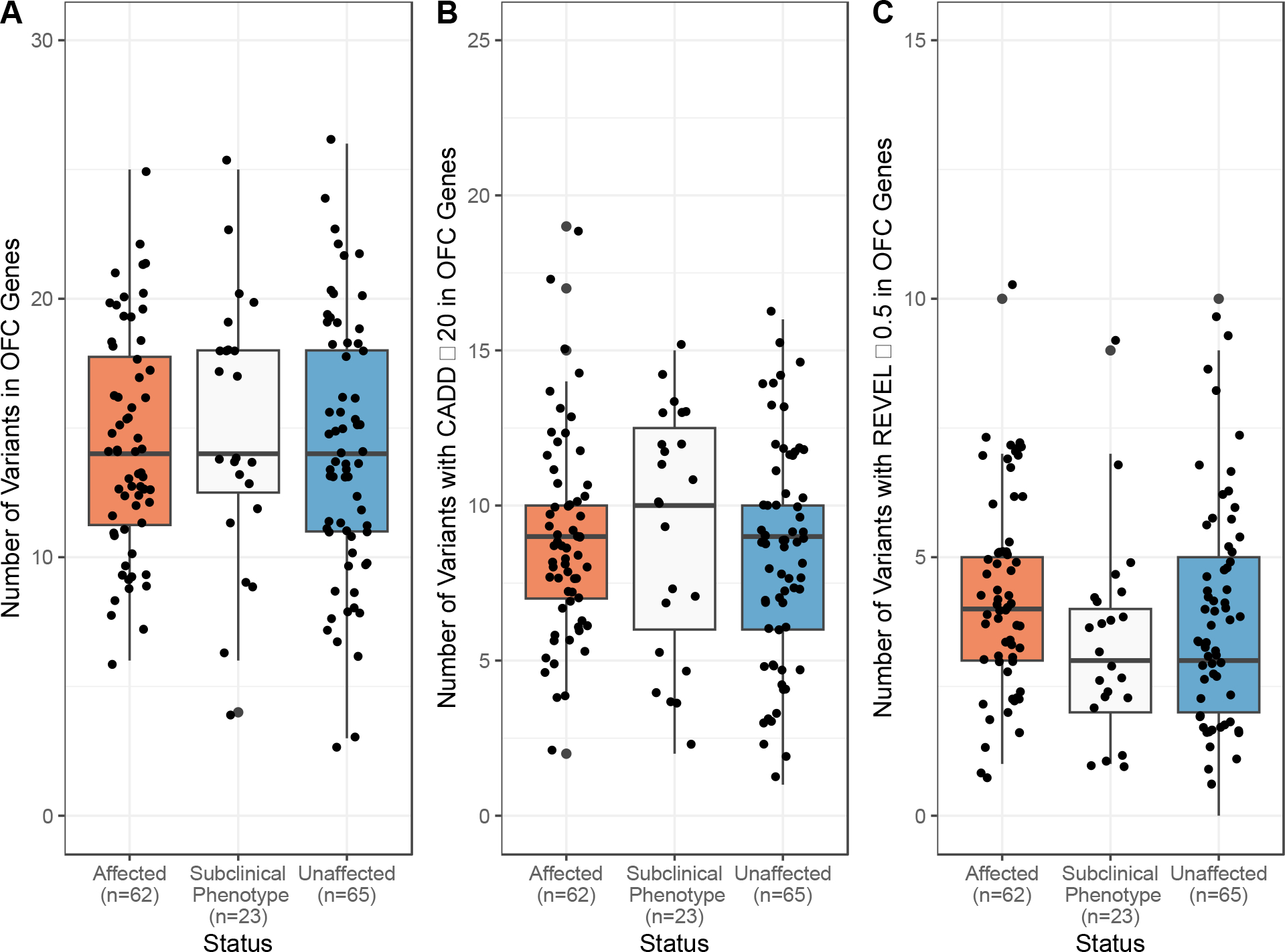
Description:Exome sequencing (ES) is now a relatively straightforward process to identify causal variants in Mendelian disorders. However, the same is not true for ES in families where the inheritance patterns are less clear, and a complex etiology is suspected. Orofacial clefts (OFCs) are highly heritable birth defects with both Mendelian and complex etiologies. The phenotypic spectrum of OFCs may include overt clefts and several subclinical phenotypes, such as discontinuities in the orbicularis oris muscle (OOM) in the upper lip, velopharyngeal insufficiency (VPI), microform clefts or bifid uvulas. We hypothesize that expanding the OFC phenotype to include these phenotypes can clarify inheritance patterns in multiplex families, making them appear more Mendelian. We performed exome sequencing to find rare, likely causal genetic variants in 31 multiplex OFC families, which included families with multiple individuals with OFCs and individuals with subclinical phenotypes. We identified likely causal variants in COL11A2, IRF6, SHROOM3, SMC3, TBX3, and TP63 in six families. Although we did not find clear evidence supporting the subclinical phenotype hypothesis, our findings support a role for rare variants in the etiology of OFCs.
-
Subjects:
-
Keywords:
-
Source:Am J Med Genet A. 191(10):2558-2570
-
Pubmed ID:37350193
-
Pubmed Central ID:PMC10528230
-
Document Type:
-
Funding:R03 DE027103/DE/NIDCR NIH HHSUnited States/ ; R01 DE014667/DE/NIDCR NIH HHSUnited States/ ; R01 DE030342/DE/NIDCR NIH HHSUnited States/ ; P50 DE016215/DE/NIDCR NIH HHSUnited States/ ; HHSN268201700006C/HL/NHLBI NIH HHSUnited States/ ; R01 DD000295/DD/NCBDD CDC HHSUnited States/ ; R37 DE008559/DE/NIDCR NIH HHSUnited States/ ; R01 DE011931/DE/NIDCR NIH HHSUnited States/ ; HHMI/Howard Hughes Medical InstituteUnited States/ ; R01 DE016148/DE/NIDCR NIH HHSUnited States/ ; R00 DE025060/DE/NIDCR NIH HHSUnited States/ ; T32 GM008490/GM/NIGMS NIH HHSUnited States/ ; R01 DE009886/DE/NIDCR NIH HHSUnited States/ ; R01 DE028342/DE/NIDCR NIH HHSUnited States/
-
Volume:191
-
Issue:10
-
Download URL:
-
File Type:
 [PDF - 668.86 KB]
 -
Collection(s):
-
Main Document Checksum:urn:sha-512:4b128dee92ef6f81b14af08912f5a45a68212973c81981f85936da8a96acee8c642532293299406a6b8faca22b11ff8b32c3bf7121605253204eb2c39fb4578e
Supporting Files


File Language:
English
 Was this page helpful?
 Found an issue?


CDC STACKS serves as an archival repository of CDC-published products including
scientific findings, journal articles, guidelines, recommendations, or other public health information authored or
co-authored by CDC or funded partners.
As a repository, CDC STACKS retains documents in their original published format to ensure public access to scientific information.
As a repository, CDC STACKS retains documents in their original published format to ensure public access to scientific information.
You May Also Like
COLLECTION
CDC Public Access