



Comparative proteomics of the larval and adult stages of the model cestode parasite Mesocestoides corti☆
Supporting Files

-
3 20 2018
-
Available in CDC Stacks on September 08, 2023, 12:00 AM
File Language:
English
Details
-
Alternative Title:J Proteomics
-
Personal Author:
-
Description:Biological significance:
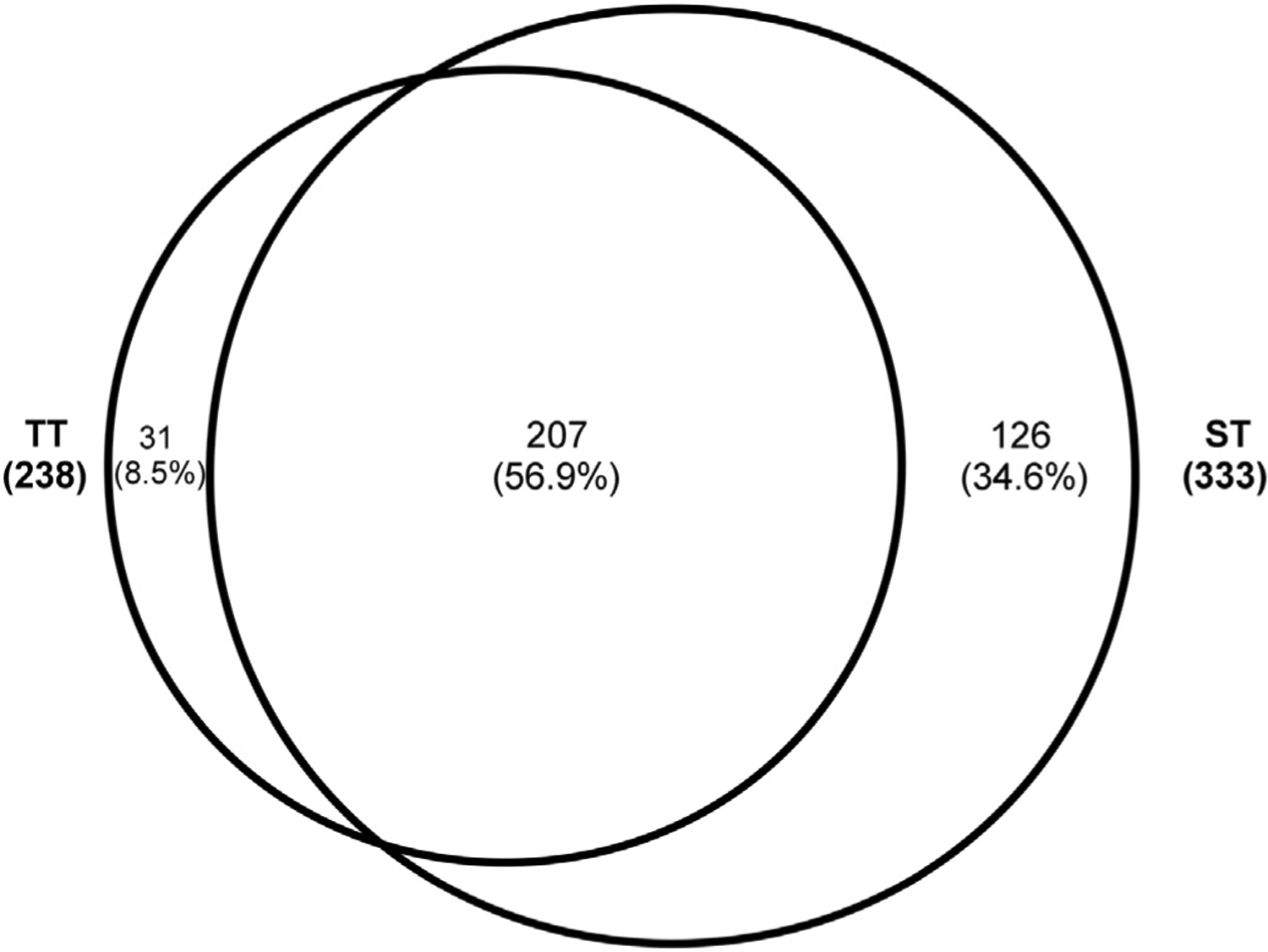
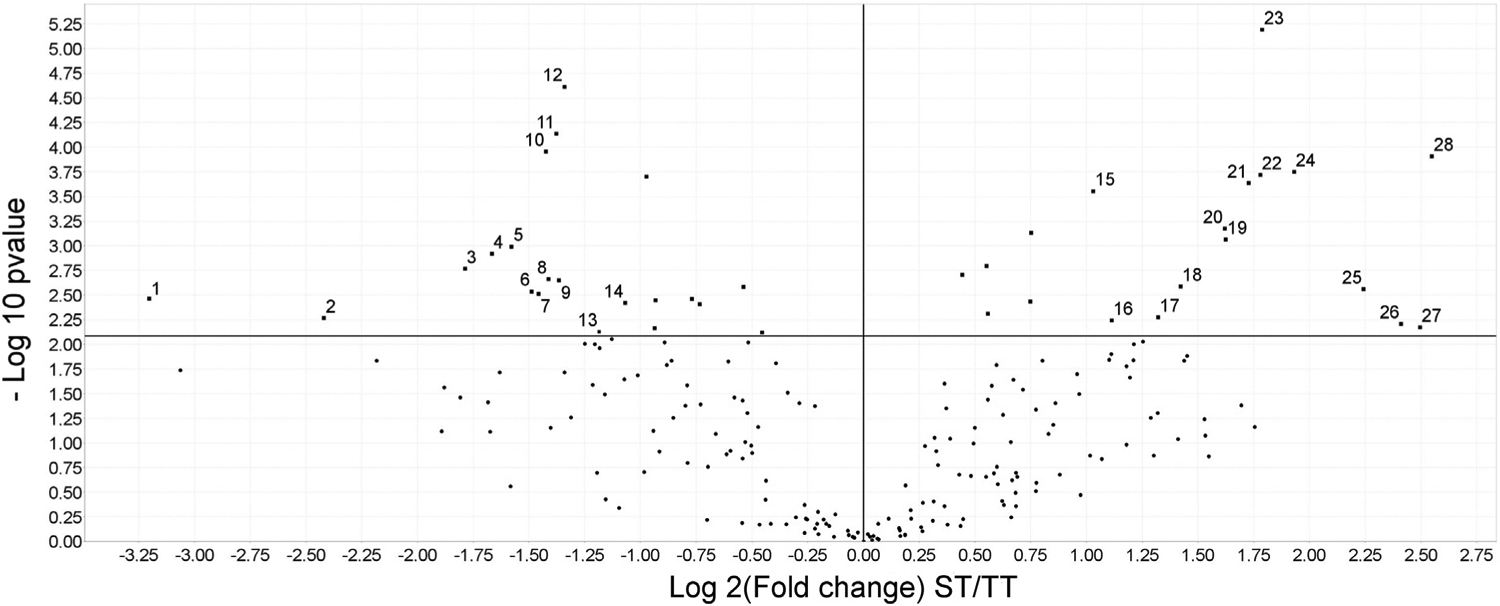
Cestodiases are parasitic diseases with serious impact on human and animal health. Efforts to develop more effective strategies for diagnosis, treatment or control of cestodiases are impaired by the still limited knowledge on many aspects of cestode biology, including the complex developmental processes that occur in the life cycles of these parasites. Mesocestoides corti is a good experimental model to study the transition from the larval to the adult stage, called strobilation, which occur in typical cestode life-cycles. The performed proteomics approach provided large-scale identification and quantification of M. corti proteins. Many stage-specific or differentially expressed proteins were detected in the larval tetrathyridium (TT) stage and in the strobilated, adult worm (ST) stage. Functional comparative analyses of the described protein repertoires shed light on function and processes associated to specific features of both stages, such as less differentiation and asexual reproduction in TTs, and proglottization/segmentation and sexual differentiation in ST. Moreover, many of the identified stage-specific proteins are useful as cestode developmental markers, and are potential targets for development of novel diagnostic methods and therapeutic drugs for cestodiases. -
Subjects:
-
Source:J Proteomics. 175:127-135
-
Pubmed ID:29317356
-
Pubmed Central ID:PMC10486185
-
Document Type:
-
Funding:
-
Volume:175
-
Download URL:
-
File Type:
 [PDF - 606.19 KB]
 -
Collection(s):
-
Main Document Checksum:urn:sha256:8bc03d6a04c68e56fd5f2131bdd0c5e60f53f946506130f2578ccdc09473dc3b
Supporting Files


File Language:
English
 Was this page helpful?
 Found an issue?

CDC STACKS serves as an archival repository of CDC-published products including
scientific findings, journal articles, guidelines, recommendations, or other public health information authored or
co-authored by CDC or funded partners.
As a repository, CDC STACKS retains documents in their original published format to ensure public access to scientific information.
As a repository, CDC STACKS retains documents in their original published format to ensure public access to scientific information.
You May Also Like
COLLECTION
CDC Public Access