



Development of Onchocerca volvulus in humanized NSG mice and detection of parasite biomarkers in urine and serum
Supporting Files
Public Domain

-
Dec 12 2018
File Language:
English
Details
-
Alternative Title:PLoS Negl Trop Dis
-
Personal Author:
-
Description:Background
The study of Onchocerca volvulus has been limited by its host range, with only humans and non-human primates shown to be susceptible to the full life cycle infection. Small animal models that support the development of adult parasites have not been identified.
Methodology/Principal findings
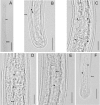
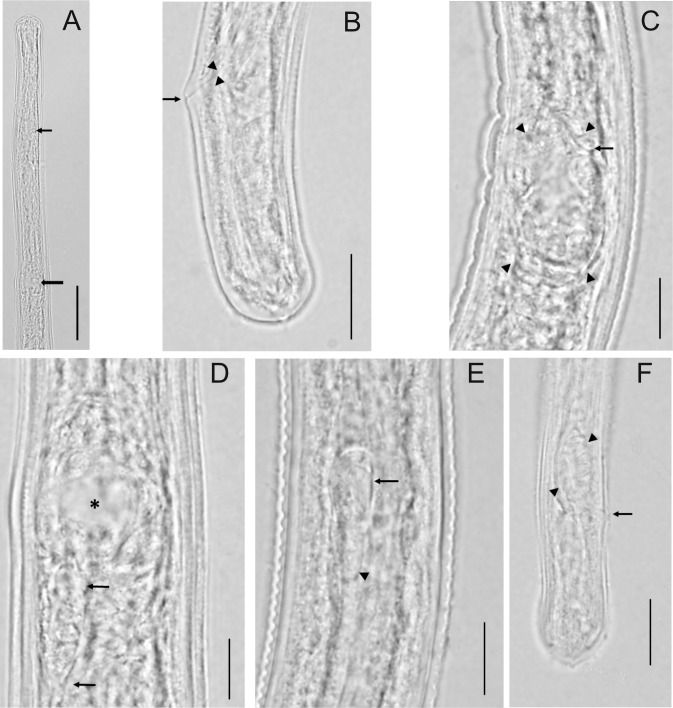
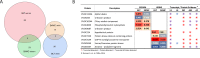
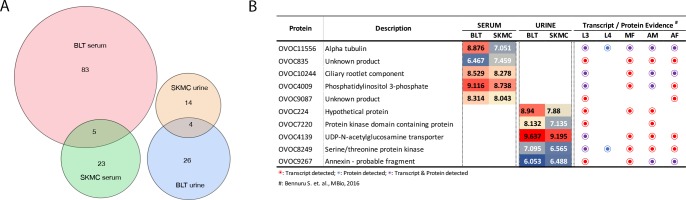
We hypothesized that highly immunodeficient NSG mice would support the survival and maturation of O. volvulus and alteration of the host microenvironment through the addition of various human cells and tissues would further enhance the level of parasite maturation. NSG mice were humanized with: (1) umbilical cord derived CD34+ stem cells, (2) fetal derived liver, thymus and CD34+ stem cells or (3) primary human skeletal muscle cells. NSG and humanized NSG mice were infected with 100 O. volvulus infective larvae (L3) for 4 to 12 weeks. When necropsies of infected animals were performed, it was observed that parasites survived and developed throughout the infection time course. In each of the different humanized mouse models, worms matured from L3 to advanced fourth stage larvae, with both male and female organ development. In addition, worms increased in length by up to 4-fold. Serum and urine, collected from humanized mice for identification of potential biomarkers of infection, allowed for the identification of 10 O. volvulus-derived proteins found specifically in either the urine or the serum of the humanized O. volvulus-infected NSG mice.
Conclusions/Significance
The newly identified mouse models for onchocerciasis will enable the development of O. volvulus specific biomarkers, screening for new therapeutic approaches and potentially studying the human immune response to infection with O. volvulus. -
Subjects:
-
Source:PLoS Negl Trop Dis. 12(12)
-
Pubmed ID:30540742
-
Pubmed Central ID:PMC6306240
-
Document Type:
-
Volume:12
-
Issue:12
-
Download URL:
-
File Type:
 [PDF - 2.04 MB]
 -
Collection(s):
-
Main Document Checksum:urn:sha256:9e0268a24b70bc0ac388a1c51d7124e9f4314f21036068914cae21503e600fb8
Supporting Files


File Language:
English
 Was this page helpful?
 Found an issue?


CDC STACKS serves as an archival repository of CDC-published products including
scientific findings, journal articles, guidelines, recommendations, or other public health information authored or
co-authored by CDC or funded partners.
As a repository, CDC STACKS retains documents in their original published format to ensure public access to scientific information.
As a repository, CDC STACKS retains documents in their original published format to ensure public access to scientific information.
You May Also Like
COLLECTION
CDC Public Access