



Association between Traumatic Brain Injury and Suicidality using a Mediation approach and MarketScan
Supporting Files

-
12 05 2022
-
Available in CDC Stacks on June 01, 2024, 12:00 AM
File Language:
English
Details
-
Alternative Title:Inj Prev
-
Personal Author:
-
Description:Introduction:
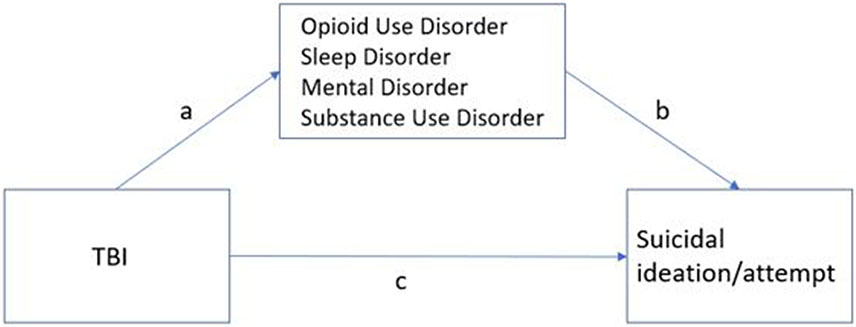
Negative outcomes, including suicidal ideation/attempts, are a major public health concern, particularly among individuals who sustain a traumatic brain injury (TBI). TBI is associated with high rates of post-injury substance use, psychiatric disorders, post-traumatic stress disorder, and sleep disturbances. This study examines the mediation effects of substance use, psychiatric disorder, and sleep disorder on the associations between TBI and suicidal ideation/attempts.
Methods:
A matched case control study using data from MarketScan databases for private health insurance and Medicaid from October 2015 to December 2018 estimated the association between TBI and suicidal ideation/attempts using a mediation approach. Individuals less than 65 years of age were included.
Results:
In the Medicaid sample, psychiatric disorders mediated 22.2% of the total effect between TBI and suicidal ideation/attempt, while substance use disorders other than opioid use disorder mediated 7.46%. In the private health insurance sample, psychiatric disorders mediated 4.18% of the total effect, opioid use disorders mediated 2.17% of the total effect, and sleep disorder mediated 1.25% of the total effect.
Conclusions:
Mediators explained less than 30% of the relationship between TBI and suicidal ideation/attempt. Findings reinforce the importance of primary prevention of TBI and monitoring patients with a TBI for risk of suicide in the first 6-12 months following injury. -
Subjects:
-
Keywords:
-
Source:Inj Prev.
-
Pubmed ID:36600521
-
Pubmed Central ID:PMC10198876
-
Document Type:
-
Funding:
-
Download URL:
-
File Type:
 [PDF - 234.62 KB]
 -
Collection(s):
-
Main Document Checksum:urn:sha256:6efb4d82b5fb68032adce239523750f10e083e6927632602e0f59ce592f7e900
Supporting Files


File Language:
English
 Was this page helpful?
 Found an issue?


CDC STACKS serves as an archival repository of CDC-published products including
scientific findings, journal articles, guidelines, recommendations, or other public health information authored or
co-authored by CDC or funded partners.
As a repository, CDC STACKS retains documents in their original published format to ensure public access to scientific information.
As a repository, CDC STACKS retains documents in their original published format to ensure public access to scientific information.
You May Also Like
COLLECTION
CDC Public Access