


Relationship Between Ultraprocessed Food Intake and Cardiovascular Health Among U.S. Adolescents: Results From the National Health and Nutrition Examination Survey 2007–2018
Supporting Files

-
2 2022
-
File Language:
English
Details
-
Alternative Title:J Adolesc Health
-
Personal Author:
-
Description:Purpose:
Studies of the association between ultraprocessed foods (UPF) and cardiovascular disease risk factors have been mainly focused on the adult population. This study examined the association between usual percentage of calories (%kcal) from UPF and the American Heart Association’s seven cardiovascular health (CVH) metrics among U.S. adolescents aged 12–19 years.
Methods:
We used data from the National Health and Nutrition Examination Survey 2007–2018 (n = 5,565). The NOVA food system was used to classify UPF according to the extent and purpose of food processing. Each CVH metric was given a score of 0, 1, or 2 (poor, intermediate, or ideal health, respectively). Scores of six metrics were summed (excluding diet) to categorize CVH as low (0–7), moderate (8–0), or high (11–12). The National Cancer Institute’s methods were used to estimate usual %kcal from UPF. Multivariable linear regression and multinomial logistic regression were used to evaluate the association between UPF and CVH.
Results:
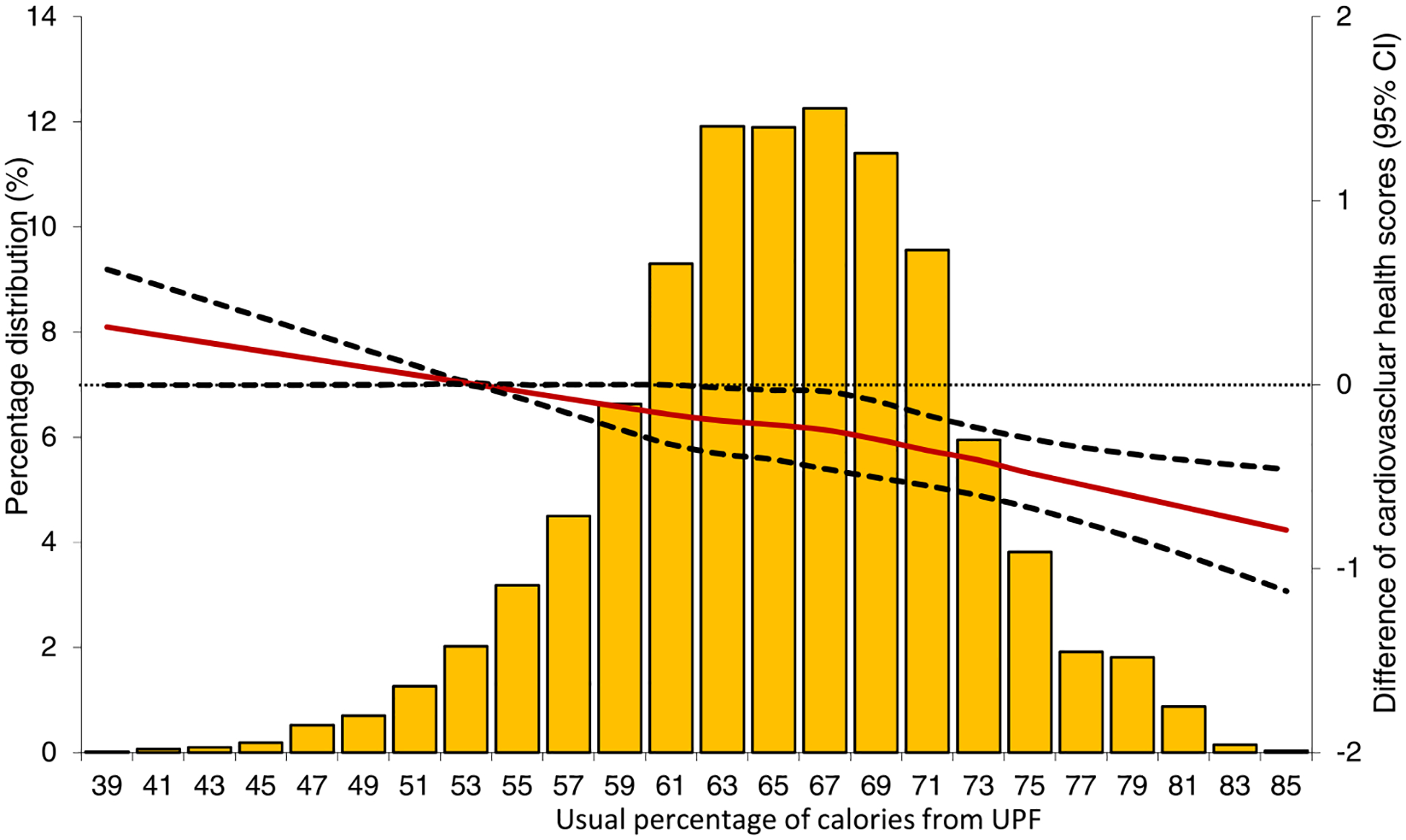
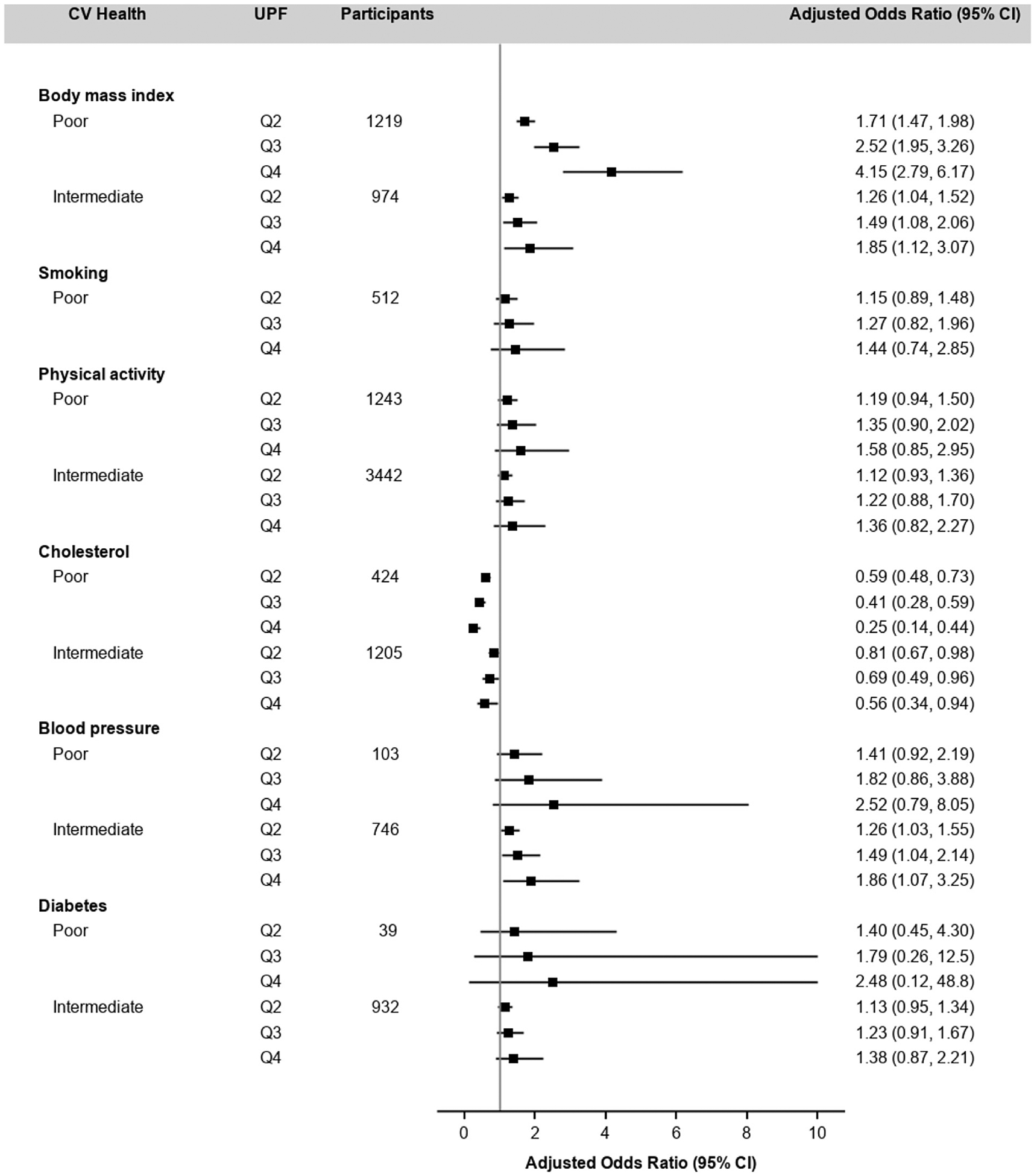
Among youth, 12.1% had low CVH, 56.3% moderate, and 31.6% high. The mean usual %kcal from UPF was 65.7%. Every 5% increase in calories from UPF was associated with .13 points lower CVH scores (p < .001). Comparing Q2, Q3, and Q4 to Q1 of UPF intake, the adjusted odds ratios for low versus high CVH were 1.43 (95% confidence interval 1.16–1.76), 1.86 (1.29–2.66), and 2.59 (1.49–4.55), respectively. The pattern of association was largely consistent across subgroups.
Conclusions:
U.S. adolescents consume about two thirds of daily calorie from UPF. There was a graded inverse association between %kcal from UPF and CVH score.
-
Subjects:
-
Source:J Adolesc Health. 70(2):249-257
-
Pubmed ID:34716093
-
Pubmed Central ID:PMC10063320
-
Document Type:
-
Funding:
-
Name as Subject:
-
Place as Subject:
-
Volume:70
-
Issue:2
-
Collection(s):
-
Main Document Checksum:urn:sha256:796fe293007bffdbdaeb8fc2c62f3278c1643c1ecfe4f7403dba7d6a3b792d1b
-
Download URL:
-
File Type:
 [PDF
- 531.11 KB
]
[PDF
- 531.11 KB
]
Supporting Files


File Language:
English
ON THIS PAGE

CDC STACKS serves as an archival repository of CDC-published products including
scientific findings,
journal articles, guidelines, recommendations, or other public health information authored or
co-authored by CDC or funded partners.
As a repository, CDC STACKS retains documents in their original published format to ensure public access to scientific information.
As a repository, CDC STACKS retains documents in their original published format to ensure public access to scientific information.
You May Also Like
COLLECTION
CDC Public Access