


Frequency of adolescent cannabis smoking and vaping in the United States: Trends, disparities and concurrent substance use, 2017–19
Supporting Files

-
8 2022
-

File Language:
English
Details
-
Alternative Title:Addiction
-
Personal Author:
-
Description:Aim:
To quantify the trends in frequent and occasional cannabis vaping, demographic differences and concurrent nicotine and alcohol use.
Design:
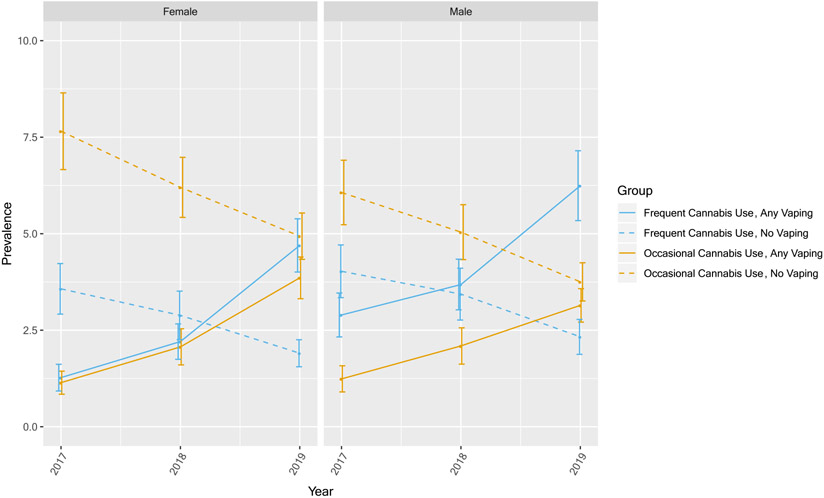
Observational study. Survey-weighted multinomial logistic regression models assessed trends and disparities in past 30-day cannabis use. Trends were assessed overall and by sex, race/ethnicity, parental education and urbanicity. Multinomial logistic regression models also estimated associations of cannabis use (none, use without vaping, use with vaping) with past 2-week binge drinking and past 30-day nicotine/tobacco use.
Setting:
United States, 2017–19.
Participants:
Participants in the national Monitoring the Future (n = 51 052) survey.
Measurements:
Past 30-day frequent cannabis use (six or more times/30 days) and past 30-day occasional use (one to five times/30 days), with and without vaping.
Findings:
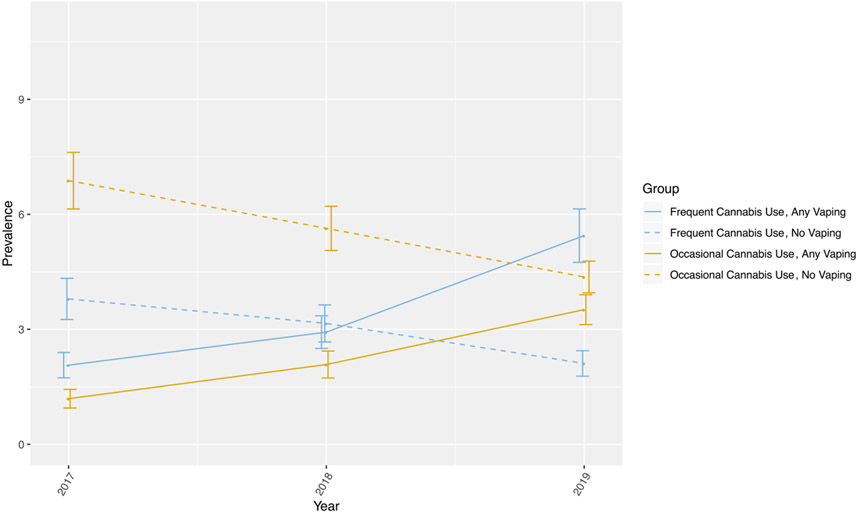
Past 30-day frequent cannabis use with vaping and occasional use with vaping rose from 2017 to 2019. Past 30-day frequent and occasional cannabis use without vaping declined. Certain groups, such as Hispanic/Latino or lower socio-economic status adolescents, experienced particularly notable increases in frequent cannabis use with vaping (e.g. prevalence among Hispanic/Latino adolescents). Adolescents who reported smoking and vaping nicotine, and 10+ occasions of binge drinking, were 42.28 [95% confidence interval (CI) = 33.14–53.93] and 10.09 (95% CI = 4.51–22.53) times more likely to report past 30-day cannabis use with vaping, respectively, compared with no use.
Discussion:
Cannabis use without vaping appears to be declining among adolescents in the United States, while cannabis use with vaping is accelerating; frequent cannabis vaping is especially increasing, with consistent increases across almost all adolescent demographic groups. Cannabis use among US adolescents remains highly associated with other substance use.
-
Subjects:
-
Source:Addiction. 117(8):2316-2324
-
Pubmed ID:35588004
-
Pubmed Central ID:PMC10037679
-
Document Type:
-
Funding:R49 CE003094/CE/NCIPC CDC HHSUnited States/ ; R01 DA001411/DA/NIDA NIH HHSUnited States/ ; R01 DA048860/DA/NIDA NIH HHSUnited States/ ; R01 DA048853/DA/NIDA NIH HHSUnited States/ ; R01 DA037866/DA/NIDA NIH HHSUnited States/ ; R01 DA016575/DA/NIDA NIH HHSUnited States/ ; R49CE003094/ACL/ACL HHSUnited States/
-
Volume:117
-
Issue:8
-
Collection(s):
-
Main Document Checksum:urn:sha256:e31c2594abccd404407188f299fa25bc2b9aa8ced002cdab2a46cbff3b5854b8
-
Download URL:
-
File Type:
 [PDF
- 294.99 KB
]
[PDF
- 294.99 KB
]

Supporting Files


File Language:
English
ON THIS PAGE

CDC STACKS serves as an archival repository of CDC-published products including
scientific findings,
journal articles, guidelines, recommendations, or other public health information authored or
co-authored by CDC or funded partners.
As a repository, CDC STACKS retains documents in their original published format to ensure public access to scientific information.
As a repository, CDC STACKS retains documents in their original published format to ensure public access to scientific information.
You May Also Like
COLLECTION
CDC Public Access