



Epidemiology of Invasive Haemophilus influenzae Serotype a Disease—United States, 2008–2017
Supporting Files

-
7 15 2021
-
File Language:
English
Details
-
Alternative Title:Clin Infect Dis
-
Personal Author:Soeters, Heidi M. ; Oliver, Sara E. ; Plumb, Ian D. ; Blain, Amy E. ; Zulz, Tammy ; Simons, Brenna C. ; Barnes, Meghan ; Farley, Monica M. ; Harrison, Lee H. ; Lynfield, Ruth ; Massay, Stephanie ; McLaughlin, Joseph ; Muse, Alison G. ; Petit, Susan ; Schaffner, William ; Thomas, Ann ; Torres, Salina ; Watt, James ; Pondo, Tracy ; Whaley, Melissa J. ; Hu, Fang ; Wang, Xin ; Briere, Elizabeth C. ; Bruce, Michael G.
-
Description:Background:
Haemophilus influenzae serotype a (Hia) can cause invasive disease similar to serotype b; no Hia vaccine is available. We describe the epidemiology of invasive Hia disease in the United States overall and specifically in Alaska during 2008–2017.
Methods:
Active population- and laboratory-based surveillance for invasive Hia disease was conducted through Active Bacterial Core surveillance sites and from Alaska statewide invasive bacterial disease surveillance. Sterile-site isolates were serotyped via slide agglutination or real-time polymerase chain reaction. Incidences in cases per 100,000 were calculated.
Results:
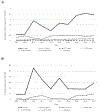
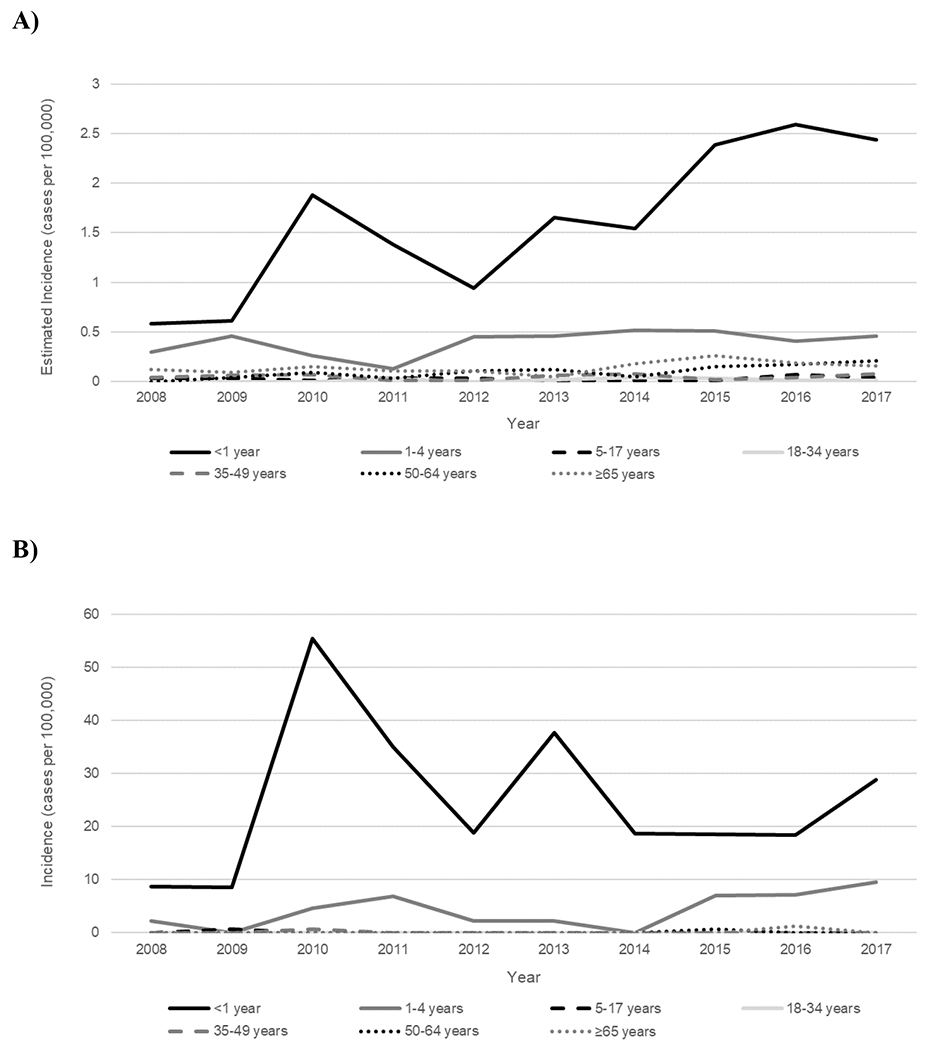
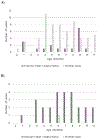
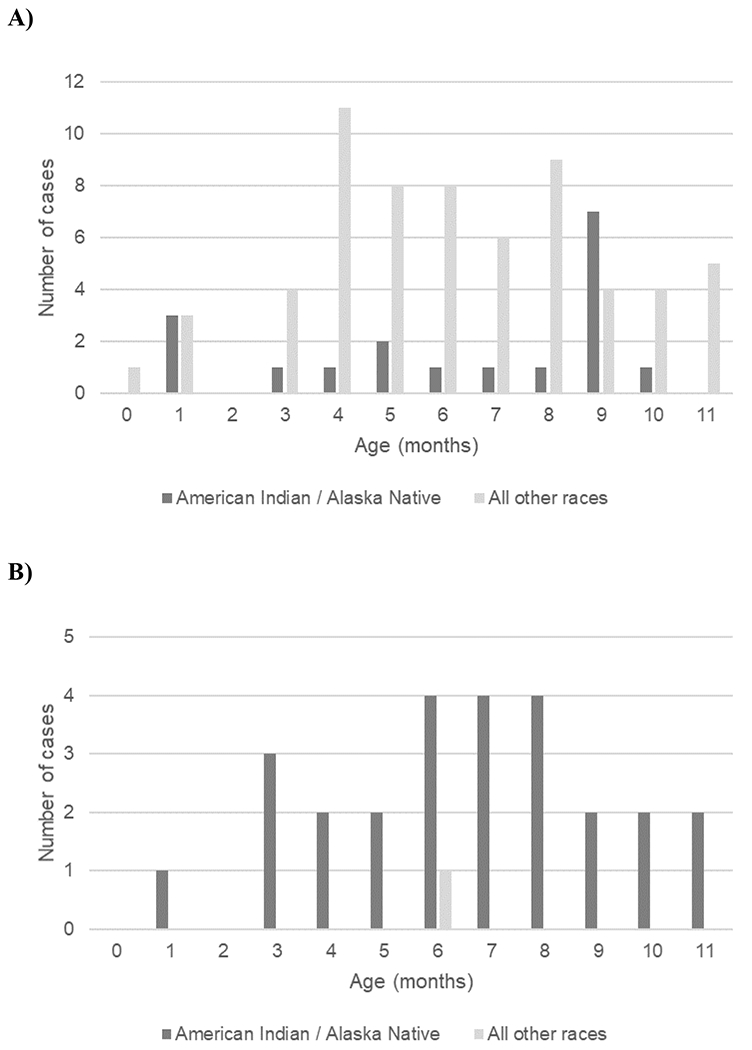
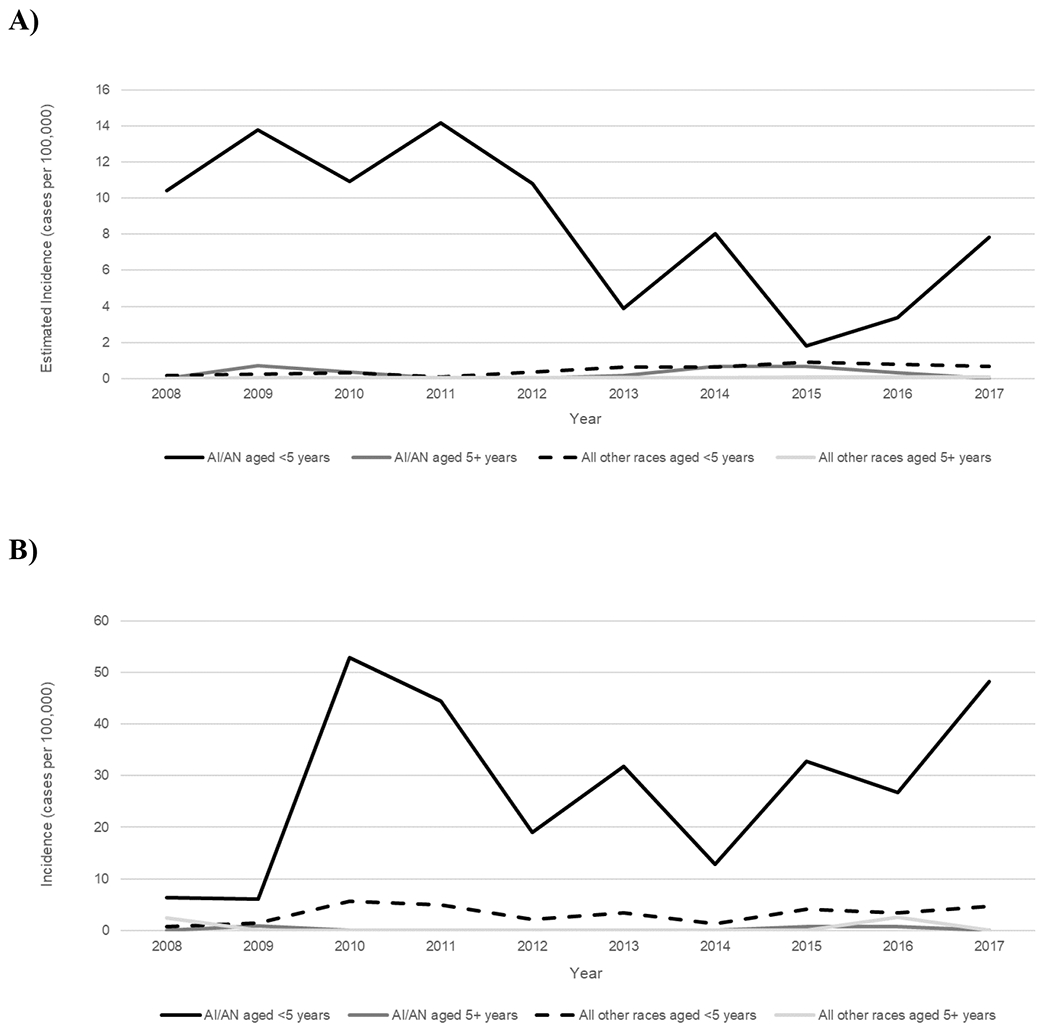
From 2008–2017, an estimated average of 306 invasive Hia disease cases occurred annually in the United States (estimated annual incidence: 0.10); incidence increased by an average of 11.1% annually. Overall, 42.7% of cases were in children aged <5 years (incidence: 0.64), with highest incidence among children aged <1 year (1.60). Case fatality was 7.8% overall and was highest among adults aged ≥65 years (15.1%). Among children aged <5 years, incidence was 17 times higher among American Indians and Alaska Native (AI/AN) children (8.29) than among children of all other races combined (0.49). In Alaska, incidences among all ages (0.68) and among children aged <1 year (24.73) were nearly 6 and 14 times higher, respectively, than corresponding U.S. incidences. Case fatality in Alaska was 10.2%, and the vast majority (93.9%) of cases occurred among AI/AN.
Conclusions:
Incidence of invasive Hia disease has increased since 2008, with the highest burden among AI/AN children. These data can inform prevention strategies, including Hia vaccine development.
-
Subjects:
-
Keywords:
-
Source:Clin Infect Dis. 73(2):e371-e379
-
Pubmed ID:32589699
-
Pubmed Central ID:PMC9628811
-
Document Type:
-
Funding:
-
Volume:73
-
Issue:2
-
Collection(s):
-
Main Document Checksum:urn:sha-512:ecd2c8fde347a899b435a01a723a4d11cb0778192dce49efe5ade08b59b0ca49b2be8d9da7a8dc5c7ee26dd811b91118a429c3ae60d7c5eca85dc3805c9c7c51
-
Download URL:
-
File Type:
 [PDF
- 548.17 KB
]
[PDF
- 548.17 KB
]
Supporting Files


File Language:
English
 Was this page helpful?
 Found an issue?



CDC STACKS serves as an archival repository of CDC-published products including
scientific findings,
journal articles, guidelines, recommendations, or other public health information authored or
co-authored by CDC or funded partners.
As a repository, CDC STACKS retains documents in their original published format to ensure public access to scientific information.
As a repository, CDC STACKS retains documents in their original published format to ensure public access to scientific information.
You May Also Like
COLLECTION
CDC Public Access