



Current Epidemiology and Trends in Invasive Haemophilus influenzae Disease—United States, 2009–2015
Supporting Files

-
8 31 2018 ; 8-31-
-
Available in CDC Stacks on August 31, 2019, 12:00 AM
File Language:
English
Details
-
Alternative Title:Clin Infect Dis
-
Personal Author:
-
Description:Background.
Following Haemophilus influenzae serotype b (Hib) conjugate vaccine introduction in the 1980s, Hib disease in young children dramatically decreased, and epidemiology of invasive H. influenzae changed.
Methods.
Active surveillance for invasive H. influenzae disease was conducted through Active Bacterial Core surveillance sites. Incidence rates were directly standardized to the age and race distribution of the US population.
Results.
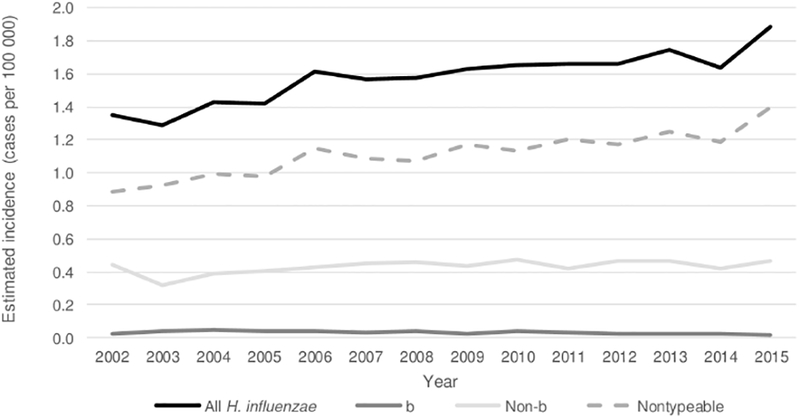
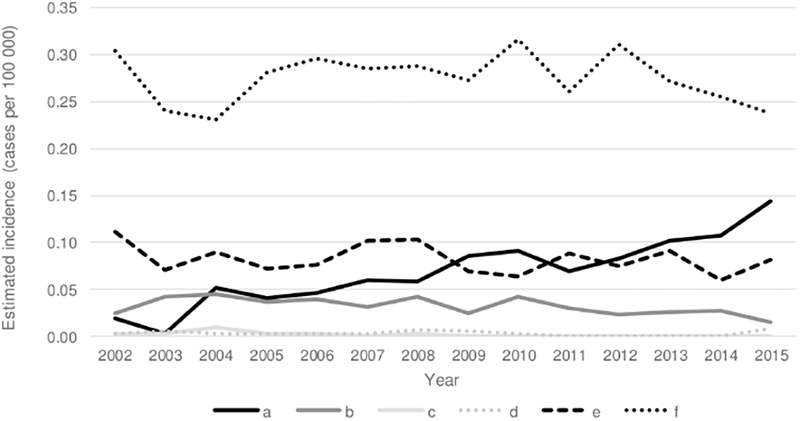
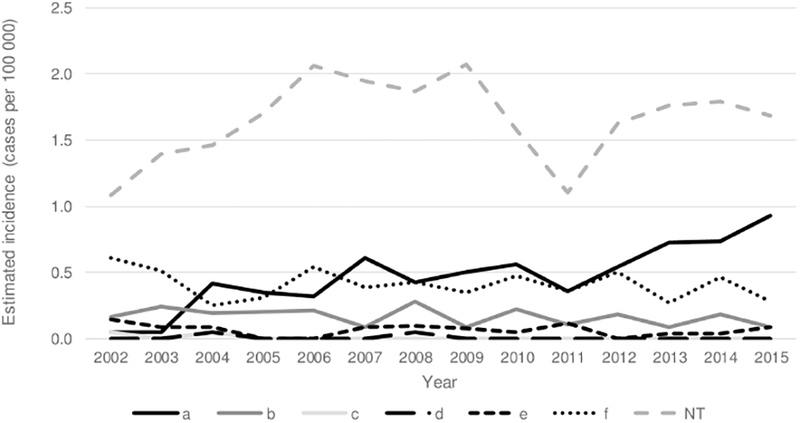
During 2009–2015, the estimated mean annual incidence of invasive H. influenzae disease was 1.70 cases per 100 000 population. Incidence was highest among adults aged ≥65 years (6.30) and children aged <1 year (8.45); many cases in infants aged <1 year occurred during the first month of life in preterm or low-birth-weight infants. Among children aged <5 years (incidence: 2.84), incidence was substantially higher in American Indian and Alaska Natives AI/AN (15.19) than in all other races (2.62). Overall, 14.5% of cases were fatal; case fatality was highest among adults aged ≥65 years (20%). Nontypeable H. influenzae had the highest incidence (1.22) and case fatality (16%), as compared with Hib (0.03; 4%) and non-b encapsulated serotypes (0.45; 11%). Compared with 2002–2008, the estimated incidence of invasive H. influenzae disease increased by 16%, driven by increases in disease caused by serotype a and nontypeable strains.
Conclusions.
Invasive H. influenzae disease has increased, particularly due to nontypeable strains and serotype a. A considerable burden of invasive H. influenzae disease affects the oldest and youngest age groups, particularly AI/AN children. These data can inform prevention strategies, including vaccine development. -
Subjects:
- Adolescent
- Adult
- Age Factors
- Aged
- Child
- Child, Preschool
- Cost of Illness
- Epidemiological Monitoring
- Female
- Haemophilus Infections
- Haemophilus Vaccines
- Haemophilus influenzae
- Haemophilus influenzae type b
- Humans
- Incidence
- Infant
- Infant, Newborn
- Male
- Middle Aged
- Public Health
- Serotyping
- United States
- Young Adult
-
Keywords:
-
Source:Clin Infect Dis. 67(6):881-889
-
Pubmed ID:29509834
-
Pubmed Central ID:PMC6181225
-
Document Type:
-
Funding:
-
Volume:67
-
Issue:6
-
Download URL:
-
File Type:
 [PDF - 532.98 KB]
 -
Collection(s):
-
Main Document Checksum:urn:sha-512:a5c291362125dc889bf7f2e5384aeb1e06643bf29f6642878965b00df6742739b6a2dbadd3f377db7bbca39e770f59dc0227433974cea2b93b874887b8873568
Supporting Files


File Language:
English
 Was this page helpful?
 Found an issue?



CDC STACKS serves as an archival repository of CDC-published products including
scientific findings, journal articles, guidelines, recommendations, or other public health information authored or
co-authored by CDC or funded partners.
As a repository, CDC STACKS retains documents in their original published format to ensure public access to scientific information.
As a repository, CDC STACKS retains documents in their original published format to ensure public access to scientific information.
You May Also Like
COLLECTION
CDC Public Access