


Accuracy of Consumer Marketed Smartphone-Paired Alcohol Breath Testing Devices: A Laboratory Validation Study
Supporting Files

-
5 2021
-
File Language:
English
Details
-
Alternative Title:Alcohol Clin Exp Res
-
Personal Author:
-
Description:Background:
Although alcohol breath testing devices that pair with smartphones are promoted for the prevention of alcohol-impaired driving, their accuracy has not been established.
Methods:
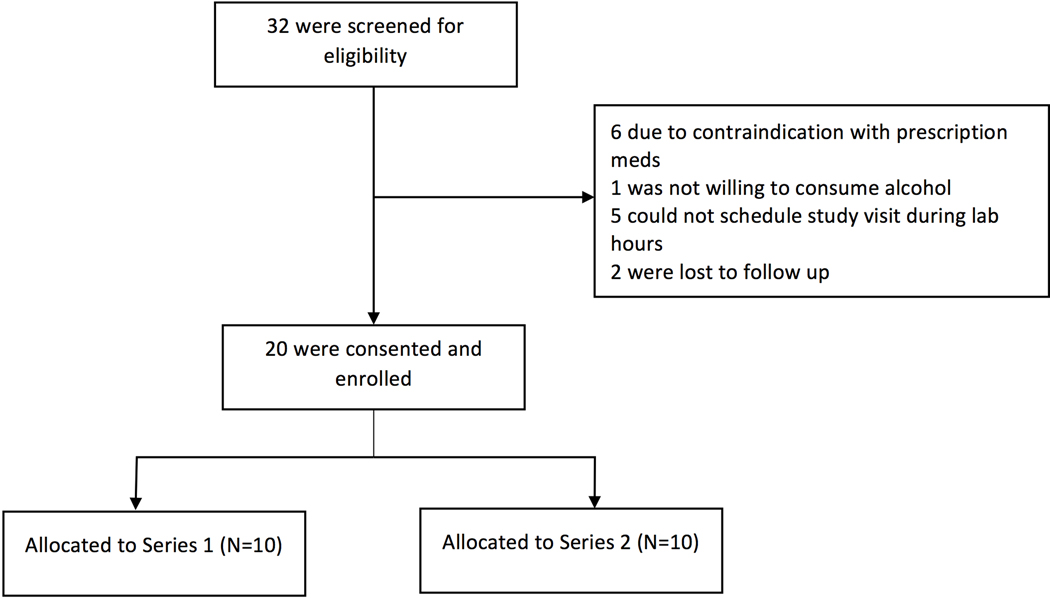
In a within-subjects laboratory study, we administered weight-based doses of ethanol to two groups of 10 healthy, moderate drinkers aiming to achieve a target peak blood alcohol concentration (BAC) of 0.10%. We obtained a peak phlebotomy BAC and measured breath alcohol concentration (BrAC) with a police-grade device (Intoxilyzer 240) and two randomly ordered series of three consumer smartphone-paired devices (six total devices) with measurements every 20 minutes until the BrAC reached <0.02% on the police device. Ten participants tested the first 3 devices and the other 10 participants tested the other 3 devices. We measured mean paired differences in BrAC with 95% confidence intervals between the police grade device and consumer devices.
Results:
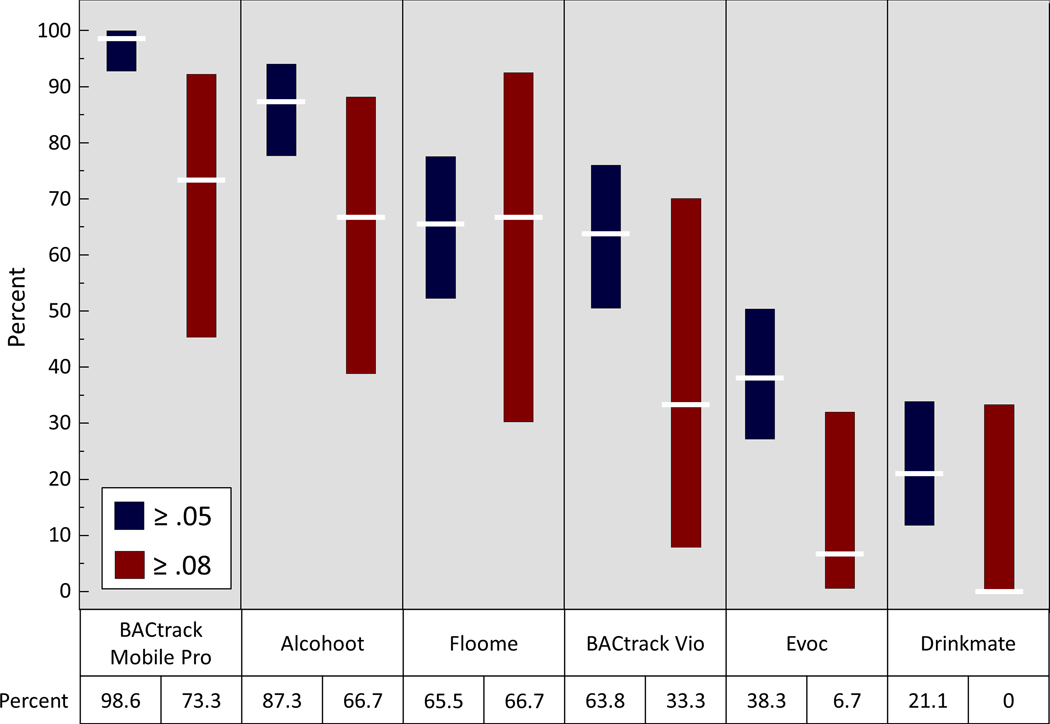
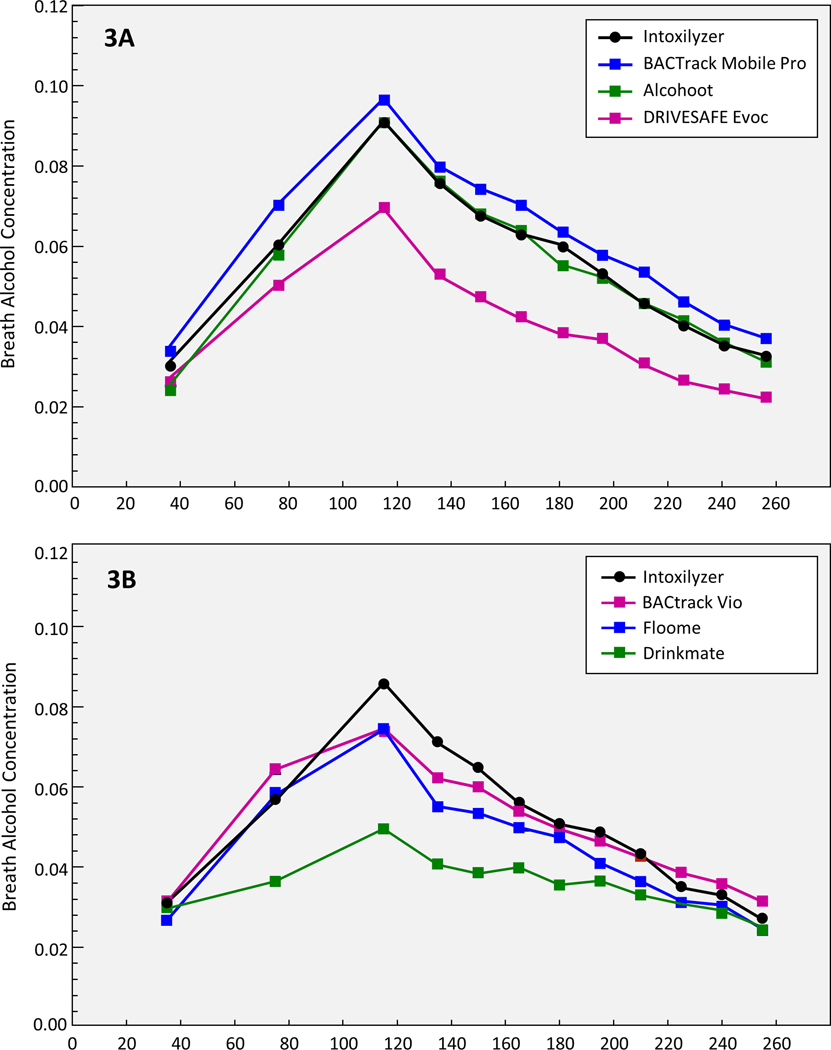
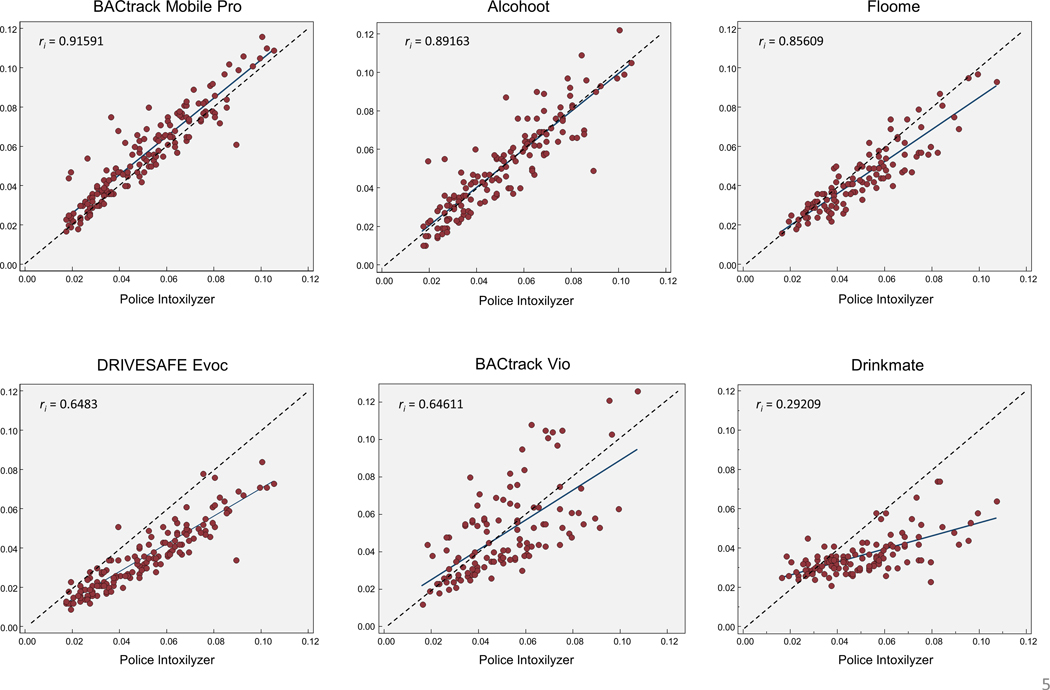
The enrolled sample (N=20) included 11 females; 15 white, 3 Asian, and 2 black participants; with a mean age of 27 and mean BMI of 24.6. Peak BACs ranged from 0.06–0.14%. All seven devices underestimated BAC by > 0.01%, though the BACtrack Mobile Pro and police-grade device were consistently more accurate than the Drinkmate and Evoc. Compared with the police-grade device measurements, the BACtrack Mobile Pro readings were consistently higher, the BACtrack Vio and Alcohoot measurements similar, and the Floome, Drinkmake, and Evoc consistently lower. The BACtrack Mobile Pro and Alcohoot were most sensitive in detecting BAC driving-limit thresholds, while the Drinkmate and Evoc devices failed to detect BAC limit thresholds more than 50% of the time relative to the police-grade device.
Conclusions:
The accuracy of smartphone-paired devices varied widely in this laboratory study of healthy participants. Although some devices are suitable for clinical and research purposes, others underestimated BAC, creating the potential to mislead intoxicated users to think that they are fit to drive.
-
Subjects:
-
Source:Alcohol Clin Exp Res. 45(5):1091-1099
-
Pubmed ID:33966283
-
Pubmed Central ID:PMC9359437
-
Document Type:
-
Funding:UL1 TR001878/TR/NCATS NIH HHSUnited States/ ; K23HD090272001/Eunice Kennedy Shriver National Institute of Child Health and Human Development/ ; R49 CE002474/CE/NCIPC CDC HHSUnited States/ ; UL1TR001878/TR/NCATS NIH HHSUnited States/ ; K23 HD090272/HD/NICHD NIH HHSUnited States/ ; R49CE002474/CE/NCIPC CDC HHSUnited States/ ; R49CE002474/ACL/ACL HHSUnited States/
-
Volume:45
-
Issue:5
-
Collection(s):
-
Main Document Checksum:urn:sha256:813b65fd8a51985cc67b4af9baccc81090b58e46f43e6b9a1ea3296e79a9d708
-
Download URL:
-
File Type:
 [PDF
- 1.11 MB
]
[PDF
- 1.11 MB
]
Supporting Files


File Language:
English
ON THIS PAGE





CDC STACKS serves as an archival repository of CDC-published products including
scientific findings,
journal articles, guidelines, recommendations, or other public health information authored or
co-authored by CDC or funded partners.
As a repository, CDC STACKS retains documents in their original published format to ensure public access to scientific information.
As a repository, CDC STACKS retains documents in their original published format to ensure public access to scientific information.
You May Also Like
COLLECTION
CDC Public Access