



Examining Patterns of Driving Avoidance Behaviors Among Older People Using Latent Class Analysis
Supporting Files

-
7 2022 ; 7-2022
-
Available in CDC Stacks on 2023-07-01T00:00:00Z

File Language:
English
Details
-
Alternative Title:J Appl Gerontol
-
Personal Author:
-
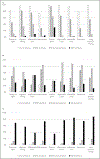
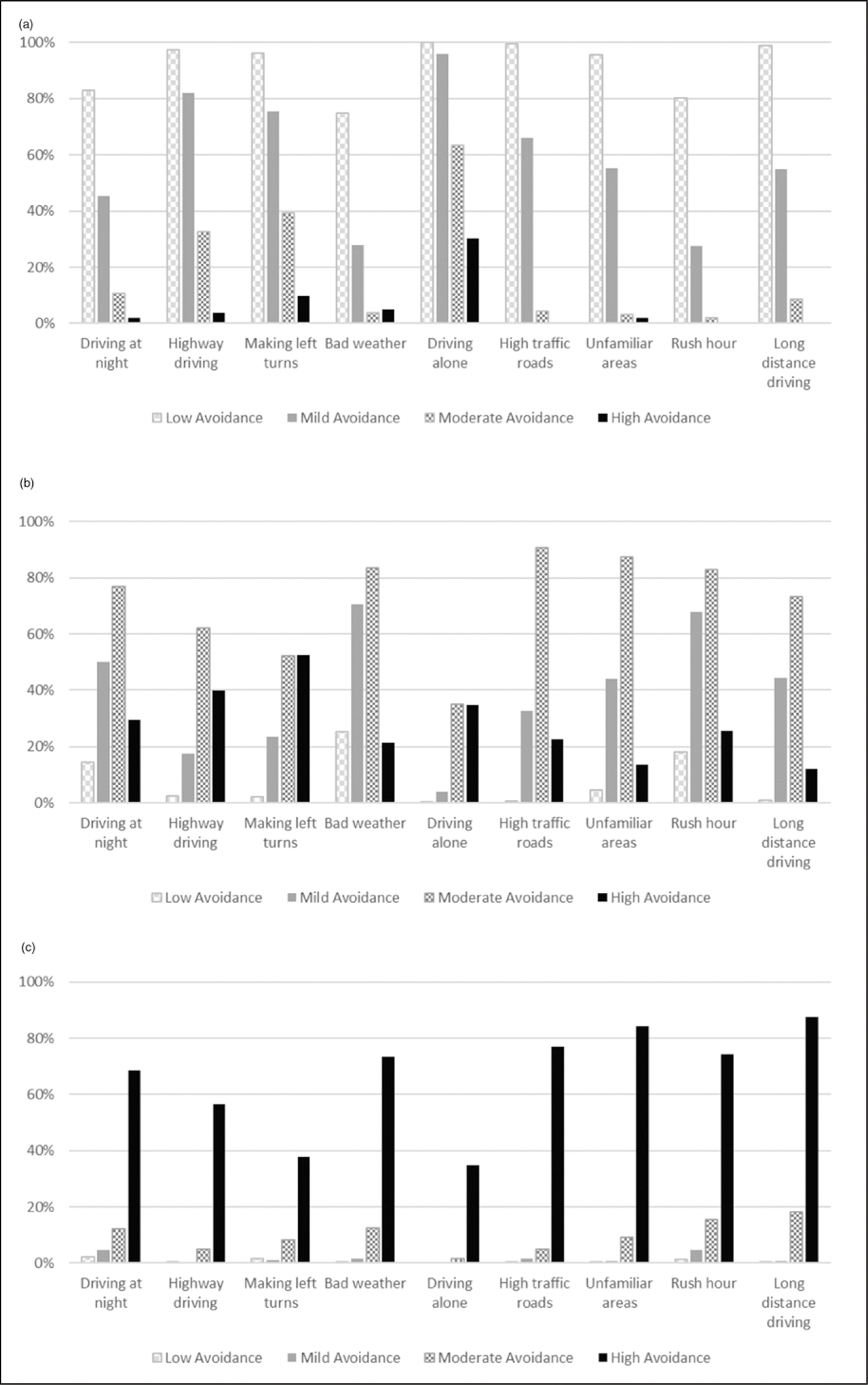
Description:Objectives: ; Some older drivers choose to avoid certain situations where they do not feel confident driving. Little is known about the process by which older drivers may use avoidance in transitioning to non-driving. ; Methods: ; We analyzed 2015 ConsumerStyles data for 1198 drivers aged 60+. Driving patterns were examined by sociodemographic and driving characteristics. Avoidance classes were characterized by latent class analysis. ; Results: ; Among drivers 60+, 79% reported driving 3+ days/week and 84% reported good to excellent health. We identified four driving avoidance classes (low, mild, moderate, and high). High- (versus low-) avoidance drivers were more likely female, 75+, not White/non-Hispanic, and to have income <$25,000/year. ; Discussion: ; Avoidance of selected driving behaviors may be one component of a multi-step process supporting the transition to non-driving. Drivers displaying avoidance behaviors may be receptive to resources to prepare for this transition and minimize negative health and quality of life outcomes that accompany driving cessation.
-
Subjects:
-
Source:J Appl Gerontol. 41(7):1752-1762
-
Pubmed ID:35441554
-
Pubmed Central ID:PMC9233037
-
Document Type:
-
Funding:
-
Volume:41
-
Issue:7
-
Download URL:
-
File Type:
 [PDF - 343.11 KB]
 -
Collection(s):
-
Main Document Checksum:urn:sha256:25c23373ec8abe49cd43d97e609b773c9e1451facfd278f34088a7dcbdd7c87e


File Language:
English
 Was this page helpful?
 Found an issue?

CDC STACKS serves as an archival repository of CDC-published products including
scientific findings, journal articles, guidelines, recommendations, or other public health information authored or
co-authored by CDC or funded partners.
As a repository, CDC STACKS retains documents in their original published format to ensure public access to scientific information.
As a repository, CDC STACKS retains documents in their original published format to ensure public access to scientific information.
You May Also Like
COLLECTION
CDC Public Access