


Mapping the Lay of the Land: Using Interactive Network Analytic Tools for Collaboration in Rural Cancer Prevention and Control
Supporting Files

-
6 01 2022
-
File Language:
English
Details
-
Alternative Title:Cancer Epidemiol Biomarkers Prev
-
Personal Author:
-
Description:Background:
Cancer mortality rates in the U.S. are higher in rural than urban areas, especially for colorectal cancer. Modifiable cancer risks (e.g. tobacco use, obesity) are more prevalent among U.S. rural than urban residents. Social network analyses are common, yet rural informal collaborative networks for cancer prevention and control and practitioner uses of network findings are less well understood.
Methods:
In five service areas in rural Missouri and Illinois, we conducted a network survey of informal multisector networks among agencies that address cancer risk (N = 152 individuals). The survey asked about contact, collaborative activities, and referrals. We calculated descriptive network statistics and disseminated network visualizations with rural agencies through infographics and interactive Network Navigator platforms. We also collected feedback on uses of network findings from agency staff (N = 14).
Results:
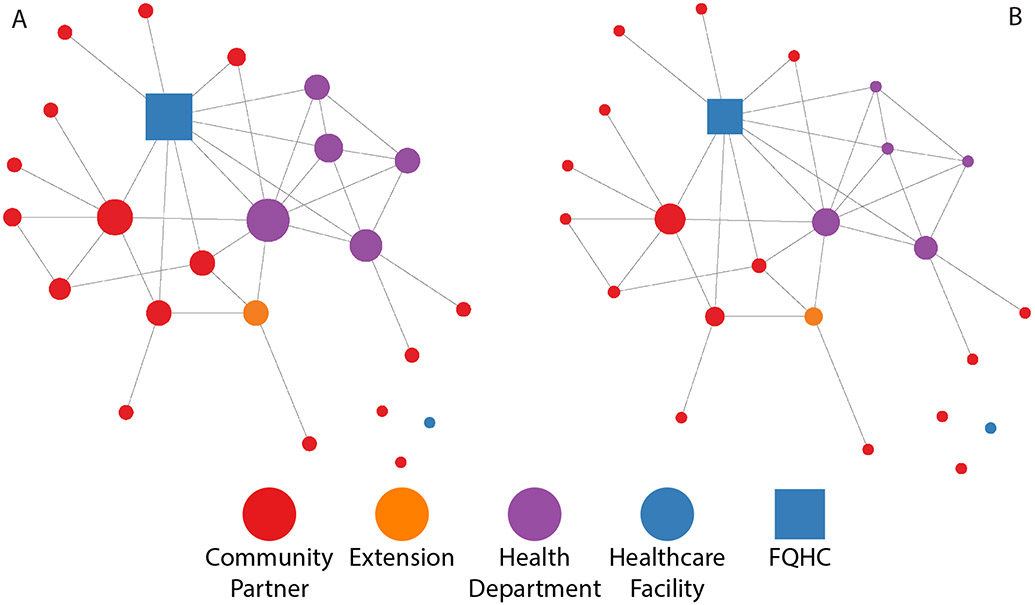
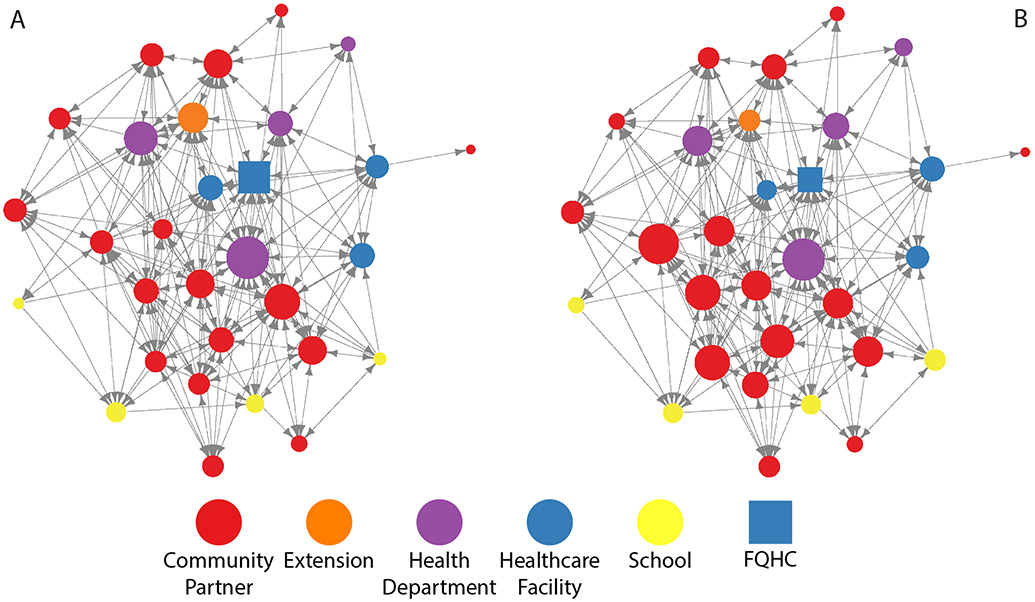
Service areas had more connections (average degree) for exchanging information than for more time-intensive collaborative activities of co-developing and sustaining ongoing services and programs, and co-developing and sharing resources. On average, collaborative activities were not dependent on just a few agencies to bridge gaps to hold networks together. Users found the network images and information useful for identifying gaps, planning which relationships to establish or enhance to strengthen certain collaborative activities and cross-referrals, and showing network strengths to current and potential funders.
Conclusions:
Rural informal cancer prevention and control networks in this study are highly connected and largely decentralized.
Impact:
Disseminating network findings help ensure usefulness to rural health and social service practitioners who address cancer risks.
-
Subjects:
-
Source:Cancer Epidemiol Biomarkers Prev. 31(6):1159-1167
-
Pubmed ID:35443033
-
Pubmed Central ID:PMC9167755
-
Document Type:
-
Funding:T37 MD014218/MD/NIMHD NIH HHSUnited States/ ; T32 CA190194/CA/NCI NIH HHSUnited States/ ; R01 CA211323/CA/NCI NIH HHSUnited States/ ; P50 CA244431/CA/NCI NIH HHSUnited States/ ; P30 CA091842/CA/NCI NIH HHSUnited States/ ; R01 DK109913/DK/NIDDK NIH HHSUnited States/ ; U48 DP006395/DP/NCCDPHP CDC HHSUnited States/ ; UL1 TR002345/TR/NCATS NIH HHSUnited States/
-
Volume:31
-
Issue:6
-
Collection(s):
-
Main Document Checksum:urn:sha256:da9f01e99403b02c1db34c8ee08147cb101927c9dbce871d5ab0e63f8a77a814
-
Download URL:
-
File Type:
 [PDF
- 814.59 KB
]
[PDF
- 814.59 KB
]
Supporting Files


File Language:
English
ON THIS PAGE

CDC STACKS serves as an archival repository of CDC-published products including
scientific findings,
journal articles, guidelines, recommendations, or other public health information authored or
co-authored by CDC or funded partners.
As a repository, CDC STACKS retains documents in their original published format to ensure public access to scientific information.
As a repository, CDC STACKS retains documents in their original published format to ensure public access to scientific information.
You May Also Like
COLLECTION
CDC Public Access